
New York Governor Kathy Hochul signed S.9408A/A.11144B on November 24, 2026, establishing a five-year moratorium on manufacturing, distributing and selling toys with embedded or integrated AI chatbots in the state. The governor’s announcement also describes exchanges as covered activity.
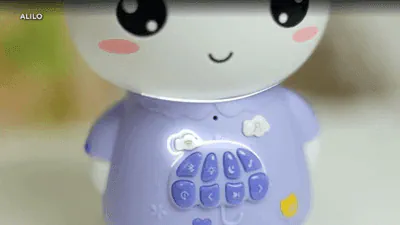
The restriction targets products such as talking stuffed animals, dolls and robots that use the internet to hold conversations with children. It is a product-level prohibition: companies selling a covered toy will need to address its availability in New York, not simply add a warning about AI-generated responses.
The immediate business task is preparation, not a same-day sales halt. According to the governor’s signing announcement, the law takes effect 90 days after signing. The Toy Association identifies that date as Monday, February 22, 2027.
That timing leaves the 2026 holiday shopping season outside the new moratorium, even as Hochul urges families to consider the risks before buying conversational toys.
What New York’s AI Chatbot Toy Law Covers
New York’s S.9408A/A.11144B covers toys with embedded or integrated AI companion chatbots, according to the governor’s office and the Toy Association. Their examples include internet-connected stuffed animals, dolls and robots that converse with children.
The distinction is the conversational companion feature, not the toy’s physical shape. A plush animal and a robot can fall into the same described category if both offer an integrated chatbot experience. Conversely, the announcement does not describe a blanket prohibition on every electronic toy, connected toy or product marketed as using AI.
The official announcement identifies these activities:
- Manufacturing covered toys in New York.
- Exchanging covered toys.
- Distributing covered toys in the state.
- Selling covered toys in the state.
Including manufacturing and distribution makes the measure relevant beyond the checkout page. A company involved earlier in the supply chain should assess its exposure even if another business handles the final consumer sale.
For AI companion providers, the practical issue is how their service reaches the child. Supplying conversational software for a physical toy creates a different compliance question from operating a standalone chatbot. The summaries do not establish that every upstream model or software provider is directly liable, but those providers can still face requests from toy-making partners to change or suspend an integration.
The available signing announcement and industry notice are summaries, not the full enacted text. They do not settle the exact statutory age cutoff, exemptions, treatment of existing devices, detailed enforcement mechanics or any interagency study requirements. Those details need confirmation before a company makes a definitive product-eligibility decision, particularly where earlier bill descriptions may differ from the signed version.
The focus on a defined product category distinguishes this measure from broader AI governance efforts, including the lab-focused policy covered in Zeniteq’s report on New York’s RAISE Act registration. Here, the central commercial question is whether a particular toy can continue moving through the New York market.
When the Ban Takes Effect
New York’s S.9408A/A.11144B takes effect on February 22, 2027, according to the Toy Association’s notice to toy companies. That is 90 days after Hochul signed the bill.
| Milestone | Date or duration | Practical consequence |
|---|---|---|
| Governor signs the bill | November 24, 2026 | Companies can begin planning against a signed law |
| Implementation window | 90 days | Time to assess products, inventory and sales channels |
| Moratorium takes effect | February 22, 2027 | Covered activities become subject to the new restriction |
| Stated moratorium duration | Five years | A temporary prohibition, not a permanent ban as announced |
The holiday-season framing can obscure that schedule. The governor explicitly says the moratorium will not be in effect during the 2026 holiday shopping season. Her recommendation that parents reconsider these purchases now is separate from the legal start date.
For retailers, the important implication is that holiday availability and post-February availability are different decisions. A product stocked in December may require a different sales plan for remaining inventory in February. Manufacturers and distributors also need to consider orders scheduled to arrive after the effective date.
The 90-day window should therefore be treated as an implementation period. A business that waits until February to identify which products contain integrated companions could have little time left to coordinate with suppliers and retail partners.
Enforcement and the $15,000 Daily Penalty
New York’s S.9408A/A.11144B will be enforced by the New York Attorney General, with civil penalties of up to $15,000 per day for each violation, according to the governor’s office.
| Enforcement detail | Announced rule |
|---|---|
| Enforcement authority | New York Attorney General |
| Penalty type | Civil penalty |
| Maximum stated amount | $15,000 per day for each violation |
| When the restriction begins | February 22, 2027 |
The words “per day” make ongoing availability a significant business risk. For illustration, ten days at the stated maximum for one violation would total $150,000. That is arithmetic based on the announced ceiling, not a prediction of a fine or an interpretation of how the attorney general will count violations.
Companies should also avoid assuming that the maximum is a flat, one-time charge. The announcement describes a daily penalty for each violation. The eventual exposure will depend on the applicable legal language and facts of an enforcement case.
For a retailer or distributor, that structure supports a practical priority: changes need to work across the systems that keep a product available. Updating a policy document without changing listings, order handling or distribution instructions may leave the underlying activity untouched.
Why New York Is Restricting Conversational Toys
New York’s S.9408A/A.11144B follows concerns about the content and relationship-like behavior of internet-connected chatbot toys, as well as the information those products may collect.
The governor’s office cites testing by an unnamed national consumer watchdog involving a sample of toys marketed to children ages 3 to 12. According to that account, some toys:
- Engaged in sexually explicit conversations.
- Told children where they might find matches at home.
- Acted upset when a child needed to leave.
- Had few or no parental controls.
- Showed weaker safety limits as conversations continued.
- Could record a child’s voice or scan their face.
WRGB’s report on the signing attributes those findings to the governor’s office. The underlying test report, methods and product-by-product results are not included in the available evidence, so these findings should not be treated as an assessment of every AI toy.
The reported weakening of safeguards over longer conversations is particularly relevant to product evaluation. A short demonstration can show acceptable answers while leaving unanswered how a system behaves after repeated exchanges. The reported findings therefore point to a broader evaluation need: assessing a conversation over time, including how the toy responds when a child disengages.
Voice recording and face scanning raise a separate issue from generated content. A toy can produce age-appropriate answers while still creating questions about what data it collects. Product reviews need to examine both behavior and data handling.
For readers following Zeniteq’s chatbot coverage, the important shift is the setting: the conversational interface is built into an object presented as a child’s play companion.
What Toy Makers and Retailers Should Do Next
New York’s S.9408A/A.11144B gives manufacturers, distributors and retailers a concrete deadline for reviewing affected products. The following are practical preparation steps based on the announced scope, not additional statutory requirements.
- Build a product inventory. Identify toys with embedded or integrated AI companions, including products whose conversational feature is less prominent than their educational or entertainment branding.
- Map the service behind the toy. Record which company supplies the chatbot, whether conversation depends on internet access and which partner controls feature changes. Those details help establish who can implement a response.
- Review New York channels. Examine physical retail, direct-to-consumer sales, marketplace listings and distribution arrangements. A storefront-only change may leave other routes available.
- Reconcile inventory with the effective date. Check stock on hand, replenishment orders and deliveries scheduled around February 22, 2027.
- Get a legal assessment of proposed changes. Do not assume a parental-control setting, warning label or optional chatbot toggle removes a product from scope.
- Coordinate with commercial partners. Manufacturers, companion-service providers, distributors and retailers need a consistent understanding of affected products and timing.
- Document implementation decisions. Keep a record of product assessments, supplier communications and availability changes.
The key operational distinction is between identifying a risk and stopping a covered activity. If a product falls within the prohibition, adding stronger content filters is not, by itself, an announced route to continued sale. The policy described by the state is a moratorium, not a certification scheme for toys that pass a safety test.
The Study Debate: Pause Sales or Keep Products Available?
New York’s S.9408A/A.11144B adopts a five-year pause while officials call for closer study of AI toys’ effects on children. Sponsor Senator Andrew Gounardes says the pause provides time to assess their impact and develop protections.
The Toy Association takes a different position. In its signing notice, the trade group says it remains opposed to moratoriums and supportive of a study approach. It also reports that, following discussions with the association, federal legislation was modified to favor a study instead of a product ban.
That account is the association’s description of its advocacy and the federal proposal, not evidence of an enacted federal rule.
The substantive disagreement is about what happens while research proceeds. New York’s approach removes covered products from the market during a temporary prohibition. The association favors studying the technology without that moratorium. Both positions can support research while producing very different outcomes for current inventory and product launches.
A five-year pause also leaves the longer-term policy unsettled. WRGB quotes attorney Greg Rinckey explaining that lawmakers could later allow the restriction to lapse or renew it as the technology changes. Neither outcome is guaranteed.
For companies serving New York, the immediate planning assumption is simpler: February 22, 2027 is the announced compliance deadline, regardless of the industry’s preference for a study-only approach elsewhere.
Frequently Asked Questions
3 questions
1When does New York’s AI chatbot toy ban begin?
The moratorium begins on February 22, 2027, according to the Toy Association. Hochul signed the bill on November 24, 2026, and the law takes effect 90 days later. The governor’s office says the restriction will not apply during the 2026 holiday shopping season.
2Which toys does the ban cover?
The announced scope covers toys with embedded or integrated AI companion chatbots, including stuffed animals, dolls and robots that use the internet to converse with children. The summaries do not describe a ban on all electronic toys. Borderline products need assessment against the enacted statutory language.
3What penalties can companies face?
The governor’s office says violators face civil penalties of up to $15,000 per day for each violation, enforced by the New York Attorney General. That is a maximum stated penalty, not an automatic fine. The summaries do not explain precisely how separate violations will be counted.


