Google released Nano Banana 2.1, an image generation model based on Gemini 3.6 Flash rather than the latest Gemini 4 Argon. The update introduces four key improvements: enhanced visual quality and realism, mask-based editing for targeted changes, better character consistency across multiple subjects, and improved text rendering. The model demonstrates strong performance in anatomy preservation and spatial reasoning compared to competitors like GPT Image 2.5 and Flux 3. Notable features include region-specific editing while preserving surrounding details and reinterpreting scenes from different camera angles. Nano Banana 2.1 is rolling out globally across Google's products including Gemini, Google AI Studio, and Vertex AI.
Anyway, Nano Banana 2.1 is a minor upgrade to the previous model but has improved across the board. Here are some of the most notable changes:
Improved visual quality and realism
Mask-based editing
Better character consistency for up to 4 characters and object fidelity for up to 10 objects
Enhanced text rendering and infographic layout accuracy
These are just my top picks. You can check the full list of updates in the official blog post from Google.
As for availability, Nano Banana 2.1 has started rolling out globally across Google’s products, including Gemini, Google AI Studio, and Vertex AI. Developers can also look for API access through providers like Fal and OpenRouter.
Now, let’s see how well these upgrades perform in actual image generation.
Improved visual quality and realism
The prompt below isn’t just a test of realism and visual quality. I also wanted to see how well the model understands anatomy, handles multiple subjects, and interprets an unusual physical action.
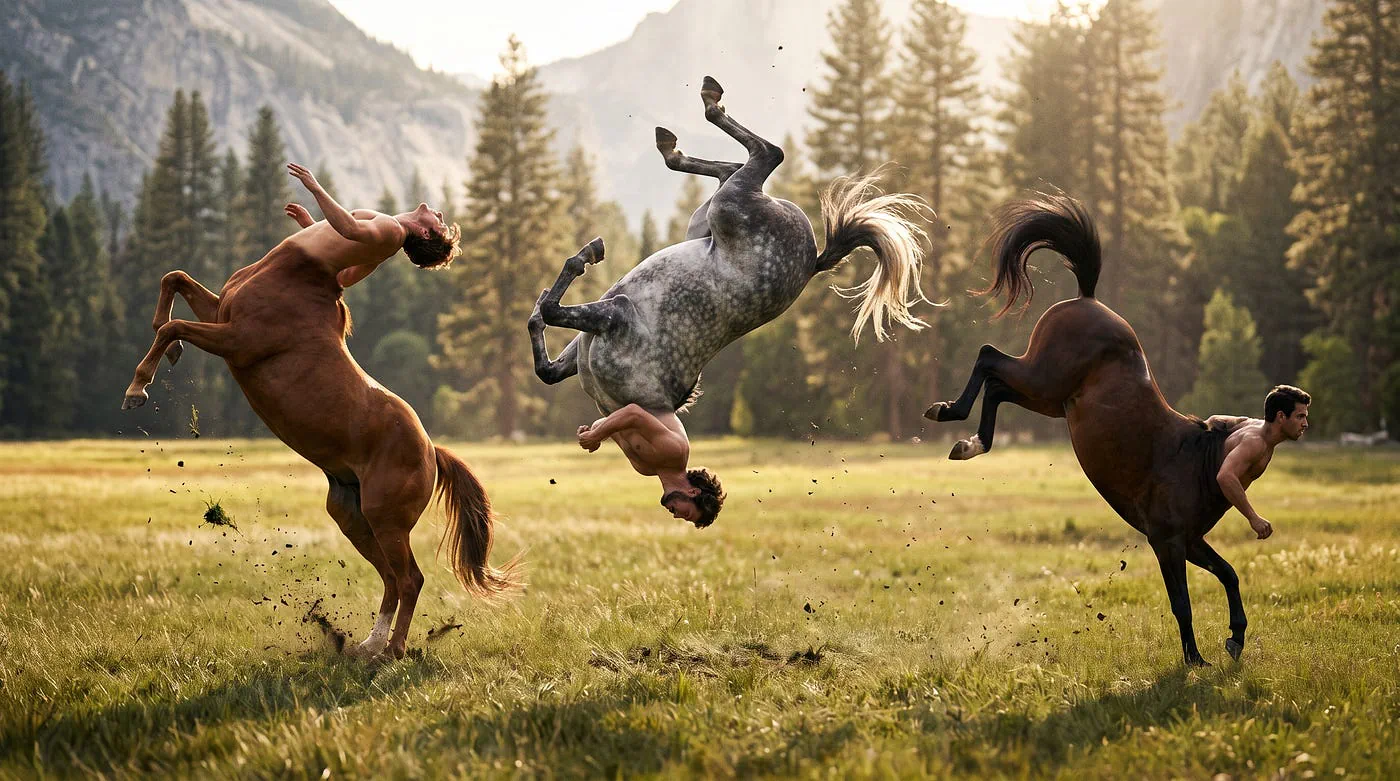
Prompt: 3 centaurs doing backflips
3 centaurs doing backflips. Image generated with Nano Banana 2.1
A centaur has the upper body of a human and the lower body of a horse. That means four horse legs, a human torso, and a very unusual center of mass.
What I like about Nano Banana 2.1’s result is that all three centaurs retain the correct basic anatomy. The model manages to represent the human and horse bodies together without dropping limbs or completely distorting their proportions.
Work with Zeniteq
Let’s work together
We’re open to thoughtful collaborations with teams building in AI. Explore the ways we can work together.
I got curious about how other models would interpret the same prompt, so I tried it with OpenAI’s GPT Image 2.5.
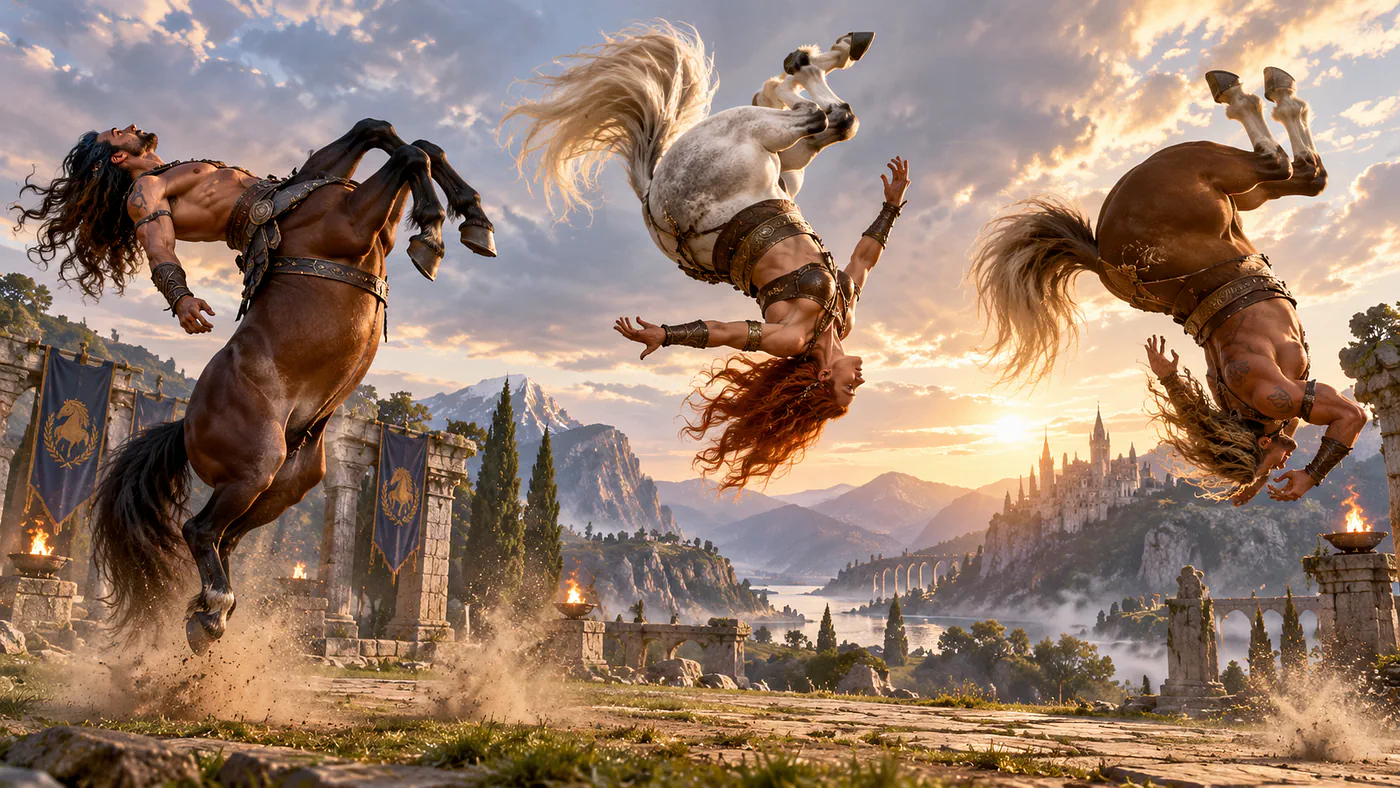
3 centaurs doing backflips. Image generated with GPT Image 2.5
Visually, I actually prefer GPT Image 2.5’s output. The details, lighting, and overall composition are more impressive. It looks more cinematic, and the subjects have better visual definition.
Two of the three centaurs have only two horse legs instead of four. That’s a pretty obvious mistake considering how central the anatomy is to the prompt.
Here’s another result from Black Forest Labs’ Flux 3.
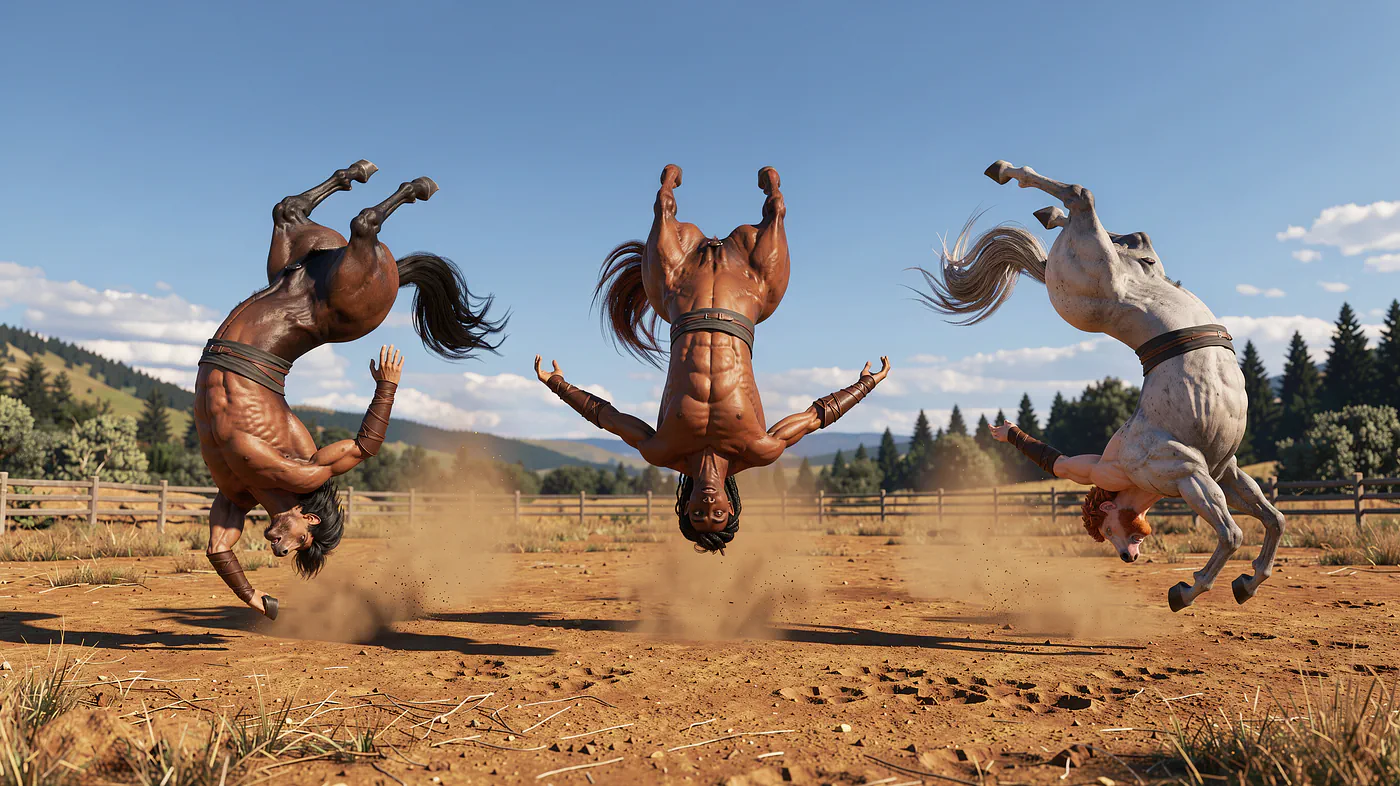
3 centaurs doing backflips. Image generated with Flux 3
Flux 3 did a terrible job here. Among the three, Nano Banana 2.1 did the best job of preserving the centaurs’ basic anatomy. GPT Image 2.5 wins for me in terms of visual quality, but it failed a fairly important part of the prompt.
Of course, none of these results proves that one model is universally better at spatial reasoning. This is just one prompt and one generation from each model. But it’s a fun example of how models can interpret the exact same instruction very differently.
Mask-based editing
One of Google’s biggest highlights in this release is mask-based editing, along with improvements to subject consistency.
The idea is to let the model modify a particular region of an image without unnecessarily changing everything around it.
For example, imagine you have a product photo or a fashion image and want to change the color of someone’s jacket. Ideally, the AI should preserve the person’s face, pose, background, lighting, and the material texture of the clothing.
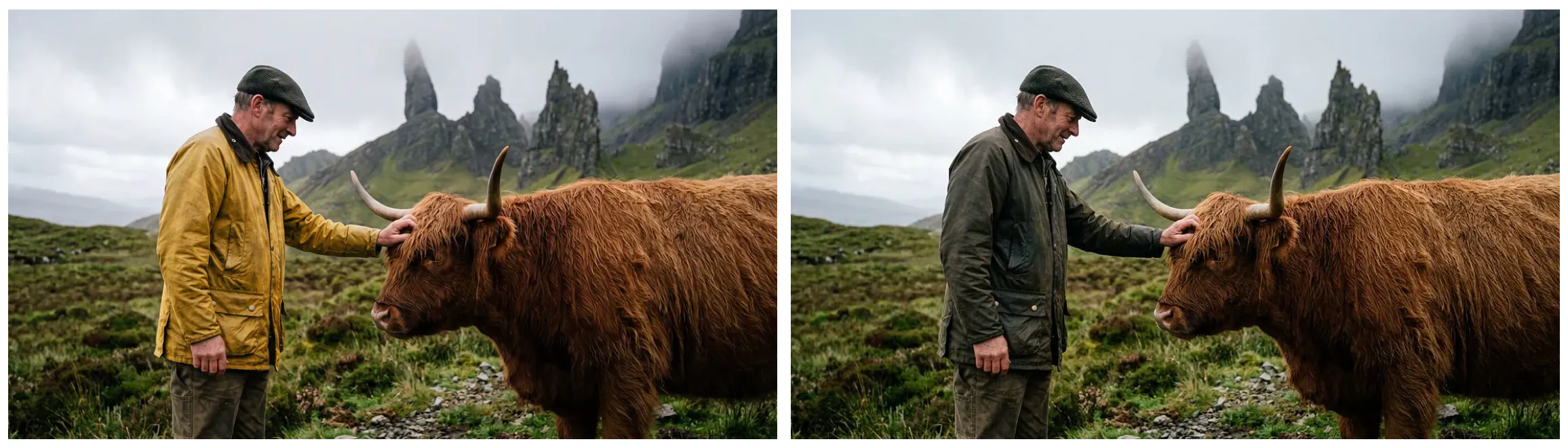
Here’s an example where I asked the model to change the color of the subject’s coat.
Prompt: Change the color of the man’s coat to yellow
Character consistency and targeted editing example with Nano Banana 2.1
Notice how much of the original image remains intact. The coat changes color while the surrounding details stay largely consistent.
I really like this.
For anyone producing marketing materials, product photos, or promotional graphics, this is incredibly useful. You can create multiple variations of the same asset without having to regenerate the entire composition.
There’s also a technical difference between changing only the requested region and generating a new image that merely resembles the original. A convincing local edit needs to maintain texture, shadows, and boundaries around the changed area. Otherwise, you might get a yellow coat, but the person’s facial features, clothing folds, or background will look slightly different.
Google also shared another example on X showing how the model handles targeted changes.
Character consistency and targeted editing example with Nano Banana 2.1
I’ve noticed that similar edits with GPT Image 2.5 or Flux 3 can sometimes introduce small differences in areas I never asked to change. Nano Banana 2.1 seems quite good at keeping the original composition intact in these examples.
That doesn’t mean it’s doing pixel-perfect editing every time. But having more control over which parts of an image should change is a welcome improvement.
Changing the camera angle while keeping the scene consistent
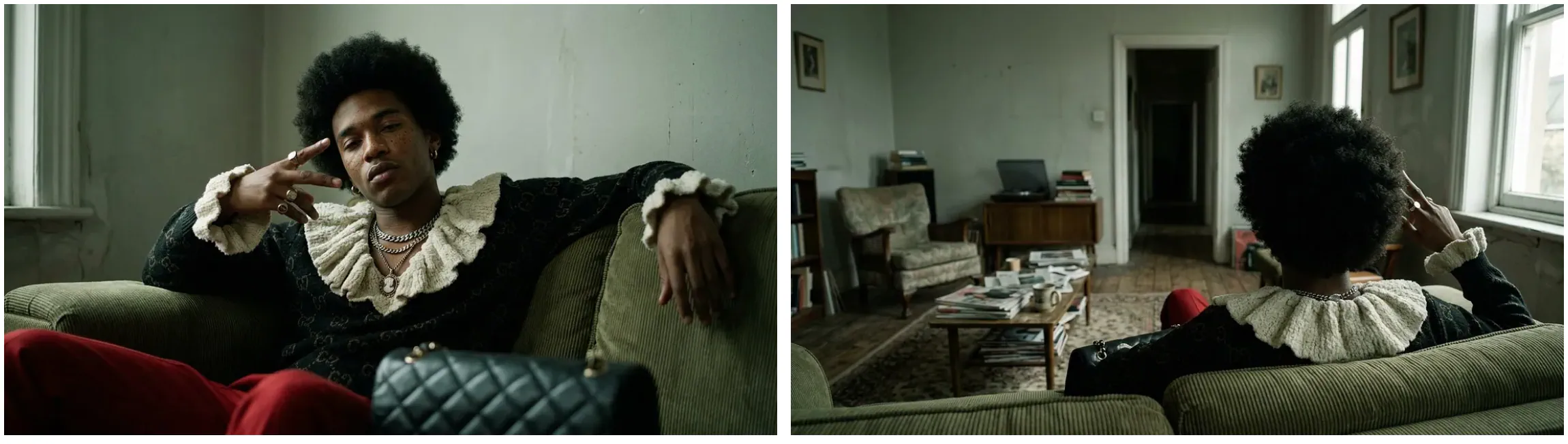
Here’s another capability I find particularly useful. You can ask Nano Banana 2.1 to reinterpret a scene from a different camera angle while preserving the subject’s appearance and the overall environment.
Check out this prompt:
Prompt: Show me this exact scene, but taken from behind the back of the subject’s head. We should see the living room. The window should be on the right-hand side, and the orientation of the sofa and room should also be considered
Character consistency and targeted editing example with Nano Banana 2.1
This is pretty impressive because the model has to do more than change the subject’s pose. It needs to infer what the room might look like from another viewpoint.
Think of it as a basic 3D reasoning problem. When the camera moves behind a character, objects that were previously visible may become hidden, while other parts of the room come into view. The sofa, window, and walls also need to make sense relative to the new camera position.
Of course, the AI isn’t recovering an exact 3D reconstruction of the room. It’s generating a plausible alternative view based on the information available in the reference image and prompt. That’s why some objects may still end up in the wrong position.
But imagine how useful this could be for AI filmmaking.
You could generate a scene showing two characters talking, then ask the model to create an over-the-shoulder shot or a reverse camera angle. Instead of building each frame completely from scratch, you can use the existing image as the reference for the next shot.
For storyboarding, microdramas, and short action sequences, I can see myself using this quite often.
It’s also where the improved consistency across multiple characters and objects becomes useful. Keeping one person recognizable is already challenging. Keeping several characters, their outfits, and the environment consistent while changing the camera angle is considerably harder.
Enhanced text rendering and infographic layout accuracy
Text rendering has improved a lot in AI image models, but I still find it unreliable when working with typography-heavy designs.
Nano Banana 2.1 is supposed to be better at rendering text and arranging elements in infographics. I wanted to see how well it could handle text that forms part of the image itself rather than appearing as a normal caption.
Here’s a relatively simple example.
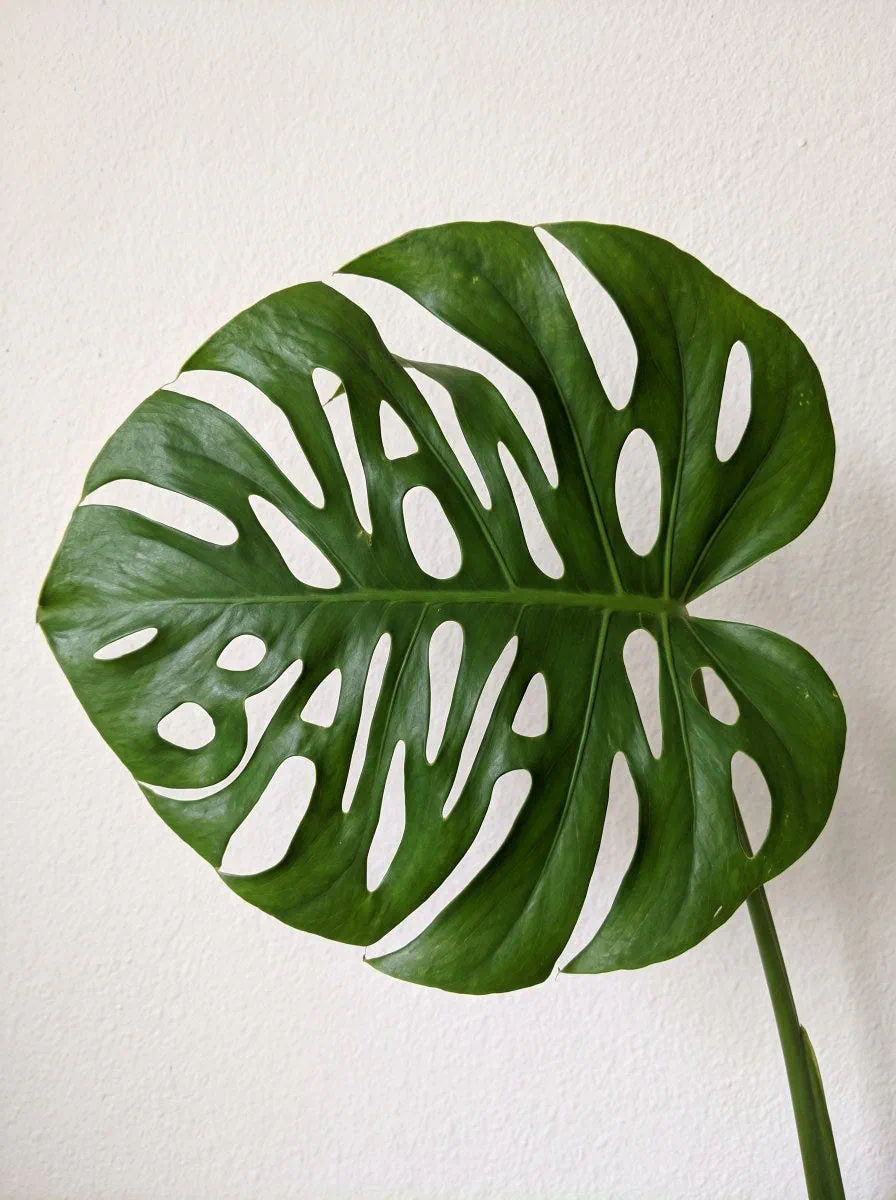
Prompt: A photo of a monstera leaf against a simple backdrop, cleverly and organically appearing within the natural gaps of the leaf are the words Nano Banana
Enhanced text rendering and infographic layout accuracy with Nano Banana 2.1
I like this kind of prompt because it asks the model to consider the actual shape of an object when placing text. The words need to fit into the negative space between the leaves instead of just floating somewhere in the image.
For posters, social media graphics, and simple advertising concepts, this could be useful. You can experiment with typography that interacts with physical objects without manually creating the composition in Photoshop.
However, I noticed that things get much worse when the design requires more deliberate letter placement.
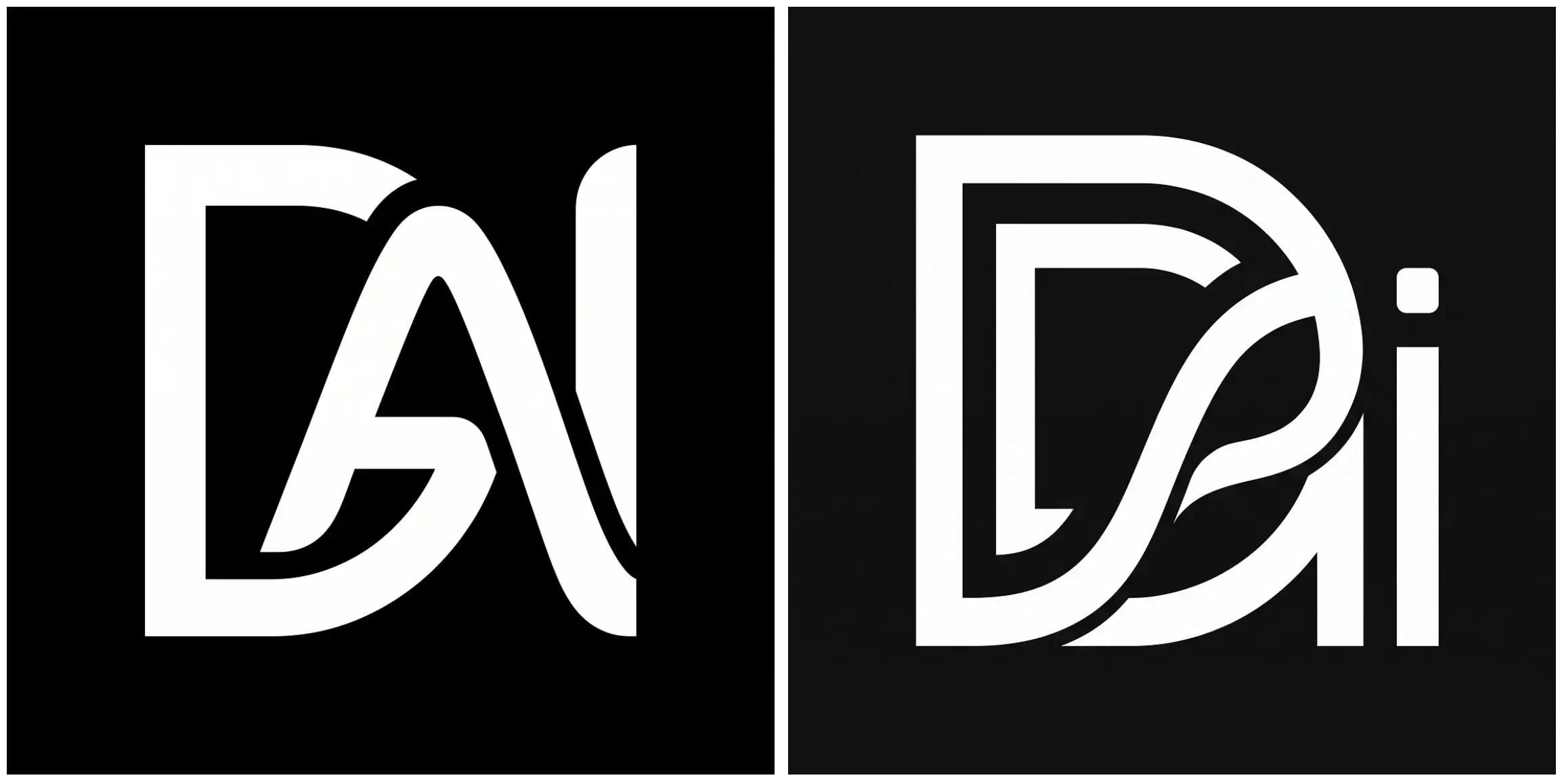
I tried asking Nano Banana 2.1 to generate a logo for my Daily AI news publication using the letters D and AI.
Prompt: Create a nice logo for my Daily AI news publication. I want a square logo with clever design using the letters “D” “AI” use curved thick lines to make them fit into the square logo. Use white foreground and black background. Sleek, modern, and minimalist.
Sample logo design failure with Nano Banana 2.1
These are just… terrible.
I was expecting the model to creatively combine the letters into a recognizable monogram. Instead, the results are nowhere near the sort of logo I’d consider using for an actual publication.
And this is where text rendering and typography design become two different problems.
Generating readable words inside an image is one thing. Designing a good logo requires understanding letterforms, negative space, visual balance, and how shapes can share strokes without becoming unreadable.
If you know a better way to improve the results, maybe tweak the prompt or provide a reference image, let me know in the comments.
Iterative degradation isn’t solved… yet
Have you noticed that when you edit an image in Gemini, the quality of the edited file isn’t as good as the original?
Generational loss is the gradual loss of quality that happens every time an AI copies, re-interprets, or re-saves an image.
What’s happening is that every time you ask the AI to change something, it doesn’t just edit the specific spot you asked for. It actually recreates the entire image from scratch based on its best guess of the previous version.
Check out this demo showing Nano Banana 2.1 doing multiple edits to an image. Notice how the image gradually drops in quality. Compare that to Flux 3, which maintains quality even after over 10 edits.
Aside from the issue above, Google also shared some known limitations of the new image model. Aside from the possible hallucinations, there may also be occasional slowness or timeout issues.
Poor text rendering in small text (often blurry in 1k model), long paragraphs, page length
Character consistency is not always perfect between input images and generated output image
Partial instruction following and ink persistence in masked/doodle based editing
During image editing, we observe rare instances of persistent subject pose, where structural alignment from the input image is retained in the generated output image
Occasional confusion around spatial localisation (e.g. left/right etc.)
Still limited in advanced capabilities with world knowledge, 3D reasoning and factuality
Final Thoughts
I have mixed feelings about Nano Banana 2.1. It’s a welcome upgrade, but nothing here really makes me excited to switch from the image models I’m currently using.
I was hoping Google would finally release a proper Pro upgrade, preferably something based on Gemini 4 Argon. Instead, we got a smaller update built on Gemini 3.6 Flash. I do like the improvements to mask-based editing and character consistency, especially for workflows that require multiple revisions. The centaur test was also a nice surprise.
But I’m still not particularly impressed with the overall image quality. Google’s demos on X looked fantastic, but my own results have been a mixed bag. Iterative editing still degrades image quality, and the safety filters are just as annoying as before. I still get failed generations from prompts that other models handle without any issues.
For now, I’m sticking with GPT Image 2.5 and Flux 3 for the web apps I’m building. Both already do what I need, and Nano Banana 2.1 hasn’t given me a compelling reason to replace either of them. That’s not to say it’s a bad model. I just don’t see enough improvement to justify changing my current setup.
I’ll continue experimenting with it and see if there’s anything I’ve missed. But for now, my reaction to Nano Banana 2.1 is pretty much… meh.
Nice update, Google. I’m still waiting for the big one.