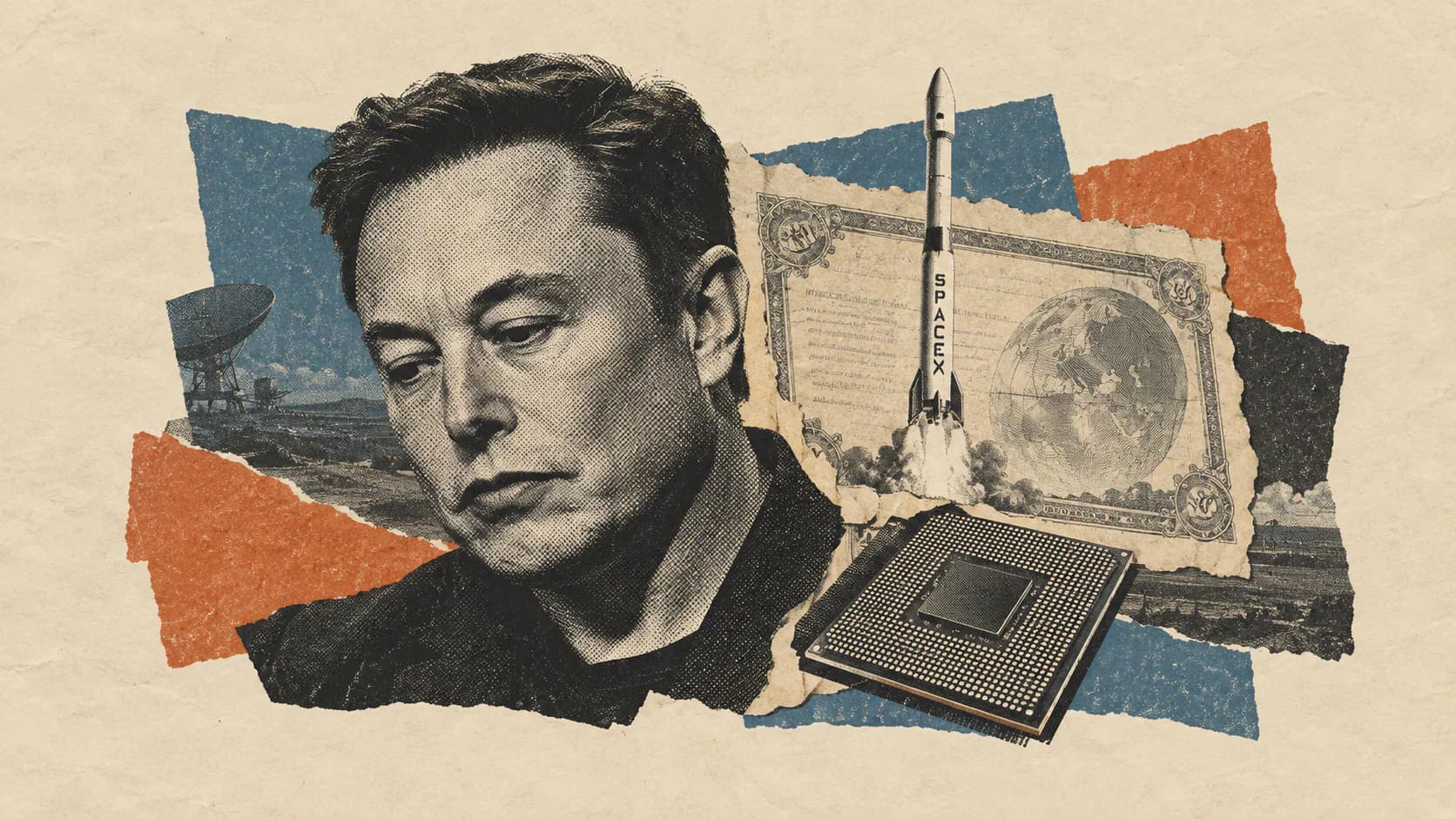
Elon Musk predicted widespread failures among specialist AI cloud providers in an October 25, 2026, X post, arguing that lenders were pulling back from companies dependent on AI data-center revenue. He contrasted their position with SpaceX, which he said had closed $40 billion in debt financing for GPUs, supported by revenue from Starlink and rocket launches.
Musk also separately denied that SpaceX planned to acquire neoclouds. His comments describe a forecast about financing and survival, not an established wave of business failures.
The distinction matters because Nvidia CEO Jensen Huang offered a more optimistic assessment just three days earlier. Huang described strong demand alongside scarce capital. The two executives identify a similar funding problem, but reach different conclusions about how many providers can get through it.
Musk’s Warning Centers on Access to Debt
Neoclouds are specialist cloud companies that supply computing capacity for AI workloads. CoreWeave and Nebius are prominent examples. Their business depends on acquiring expensive hardware, securing data-center capacity and selling access to that infrastructure.
In his October 25 post, Musk claimed that debt markets had almost entirely stopped providing money to companies without substantial revenue independent of AI data centers. He predicted failures and consolidation among what he described as more than 200 neoclouds.
“Some will make it through, but not many,” he wrote.
2114434646914068862Both the provider count and the assessment of credit conditions are Musk’s claims. The cited reporting supplies no lender-by-lender data or company-level credit analysis that would substantiate such a broad survival forecast.
The financial mechanism he describes is nevertheless straightforward. A cloud provider needs to pay for infrastructure before that infrastructure can generate revenue. Borrowing can bridge the gap, but the company must eventually earn enough cash to cover operations, interest and repayment obligations. If lenders withdraw before a project is ready, strong customer interest alone cannot finish the build.
Revenue concentration can intensify that risk. A provider whose income depends overwhelmingly on AI compute has fewer alternative sources of cash if construction slips, equipment sits idle or customers take longer to start using capacity.
My view is that this financing mechanism is the useful part of Musk’s warning. The unsupported leap is from a recognizable business risk to a prediction that only a small fraction of the sector will survive. Different providers can have very different customers, funding arrangements and delivery schedules.