
Vegalabs says it accumulated an approximately $17,600 invoice for Claude usage through Microsoft Foundry while its Azure sponsorship portal still showed $21,168 in unused startup credits. The Norwegian software company is seeking relief from the bill, arguing that the deployment interface did not clearly distinguish Claude’s separate Marketplace billing from the models its credits covered.
Zeniteq has not independently confirmed the underlying account records. Vegalabs’ account supplies the screenshots, timeline, and descriptions of its support exchanges. The company acknowledges that it did not read the credit exclusions or configure a budget alert, and it does not dispute the model usage.
Microsoft’s published policy is clear: Anthropic models are excluded from Microsoft for Startups sponsorship credits, even when users can deploy them through Foundry. Access through Microsoft’s portal does not establish that Azure startup credits will pay for a model.
The unresolved questions concern how clearly that distinction was presented to Vegalabs and who can decide its request for a waiver.
The Credit Balance Did Not Show the Marketplace Bill
According to Vegalabs, Microsoft for Startups provided it with $25,060 in Azure credits. In August 2026, the company deployed Claude alongside GPT models it already used against that sponsorship balance.
The workload involved searching for patterns in five years of stock-exchange data, with large inputs and lengthy analyses. Vegalabs says it chose to run the experiment because it had substantial credits approaching expiration.
Its timeline places the Claude deployment on August 11 and the discovery of the separate charges on September 7. The company says it deleted the deployment within an hour of finding the bill. On September 8, its remaining $21,168 in sponsorship credits expired.
Microsoft attempted to collect roughly $16,500 from its credit card, Vegalabs reports, with the invoice subsequently reaching about $17,600 before VAT. Those dollar figures are approximate: Microsoft bills the company in Norwegian kroner, and Vegalabs converted the amounts at roughly 9.6 kroner to the dollar. Its card issuer reportedly declined the attempted payment as suspected fraud, so this should not be described as a confirmed $17,600 payment.
The screenshots, as described by Vegalabs, show two different spending views. GPT usage appeared against the sponsorship credits, while Claude did not. Marketplace costs appeared elsewhere in Azure Cost analysis, with August charges labeled “SaaS” and “global,” without identifying Claude by name. The company also says its Foundry deployment list placed Claude alongside its GPT deployments without a label identifying the separate Marketplace payment route.
These are Vegalabs’ allegations about its account and interface, not independently authenticated findings about every Foundry deployment. Its complaint is that watching the remaining sponsorship balance did not reveal the spending it says was accumulating elsewhere.
Microsoft Explicitly Excludes Anthropic From Coverage
Microsoft’s Foundry sponsorship guidance states that startup credits apply to models sold and billed directly by Azure. Models purchased through third-party providers, partner services, or Azure Marketplace are not eligible.
The page explicitly names Anthropic among excluded providers and directs startups to the Direct from Azure collection in the Foundry catalog to identify credit-eligible models.
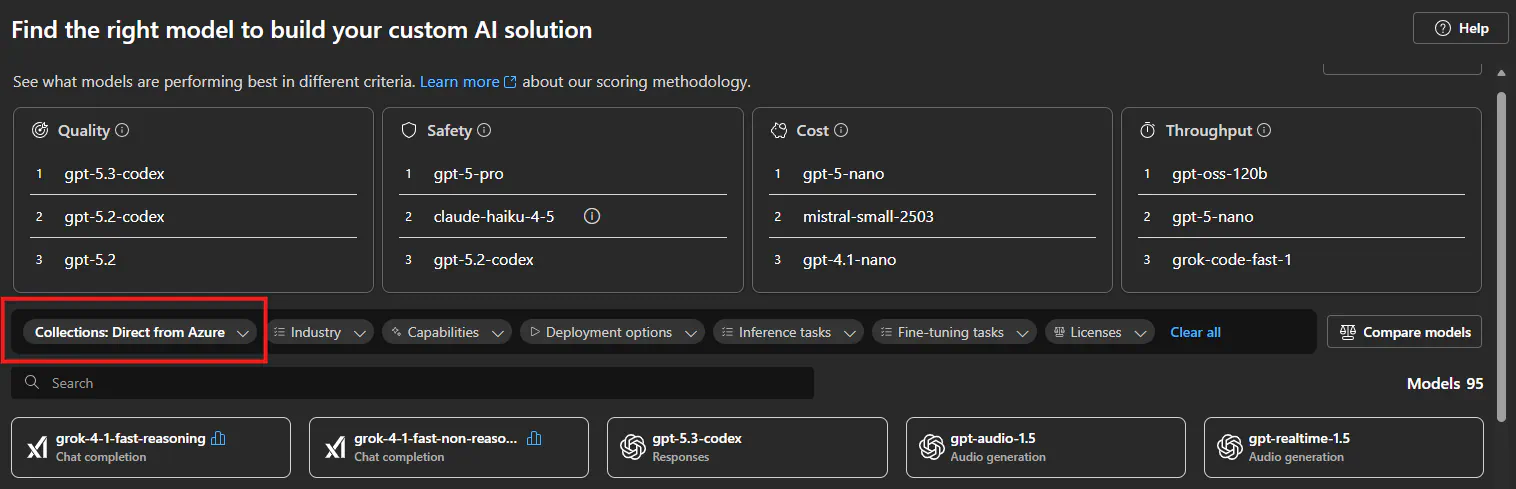
A shared catalog can contain models with different sellers, purchase terms, and credit eligibility. Deploying one model through Foundry does not establish that its usage belongs to the same sponsored billing category as another deployment.
Microsoft’s Claude deployment guide spells out the payment distinction. It lists sponsored subscriptions that only use Azure credits among unsupported subscription types and says that, when an account has a credit card on file, the card will be charged instead of Azure credits.
The guide also instructs users to accept Azure Marketplace terms during deployment. Vegalabs acknowledges this documented step but says neither of its two team members remembers the dialog. If the dialog appeared, the company argues, it did not clearly communicate that the credits would not apply.
Neither those recollections nor the current documentation independently establishes exactly what appeared during the company’s August deployment. The documents establish the published exclusion and described purchase process; Vegalabs’ screenshots and account supply its allegation about the interface.
The Claude guide also describes versions hosted on Azure and versions hosted on Anthropic infrastructure, while still requiring Marketplace acceptance. “Hosted on Azure” should not be treated as interchangeable with “Direct from Azure” credit eligibility. Infrastructure location and the purchase arrangement answer different questions.
The Waiver Request Reached Conflicting Support Answers
The billing dispute includes a disagreement over who could authorize relief.
In its October 9 report, The Register said it had reviewed communications in which Microsoft directed Vegalabs to Anthropic. Microsoft support described Marketplace transactions as using a separate billing pipeline associated with the publisher and said Anthropic could approve the refund request.
Anthropic support, according to the same report, said no publisher authorization was required for Microsoft to process a refund and directed Vegalabs back to Microsoft.
The Register’s reporting corroborates the support exchanges without settling which company has the authority to waive this particular invoice. It also does not independently authenticate the complete account history or every deployment screen.
The publication said it contacted Microsoft on October 6. Beyond an acknowledgment and a request to hear what Anthropic had said, Microsoft supplied no substantive comment for the report. Anthropic did not respond to the publication’s request.
Vegalabs is asking Microsoft to apply its expired sponsorship balance to the invoice or waive the charges. It also wants a clear answer from Anthropic about whether publisher approval is required. No resolution is established in the supplied reporting.
The documented credit exclusion supports Microsoft’s position that Anthropic usage is not sponsorship-eligible. It leaves open whether the deployment warnings were adequate and whether a discretionary adjustment should be offered.
How Foundry Users Can Avoid Separate Marketplace Charges
Foundry users relying on startup credits can take several precautions while this dispute remains unresolved.
-
Choose from the Direct from Azure collection. Microsoft specifically identifies this collection as the route for finding models eligible for startup-credit coverage. Check the current sponsorship guidance for the particular model before deploying. Do not assume eligibility carries over from another model in the same project.
-
Treat Marketplace acceptance as a separate purchasing decision. Review the model card, seller information, and purchase terms before proceeding. If a deployment requires Azure Marketplace acceptance, establish whether it is covered by your sponsorship or needs an out-of-pocket budget. For Anthropic models, Microsoft’s current guidance explicitly says startup credits do not apply.
-
Configure budget alerts against actual cost. Do not use the remaining sponsorship balance as your only spending monitor. Confirm that the budget’s scope includes the relevant Marketplace spending, choose thresholds appropriate to the experiment, and assign someone to receive and act on alerts. Vegalabs says it had no actual-cost budget alert because it treated the credit balance as its cost indicator.
-
Verify the billing route with a limited experiment. Before running a large workload, inspect where its charges appear in Azure Cost analysis and the sponsorship usage view. Vegalabs says filtering Cost analysis for Marketplace invoices exposed costs absent from its credit ledger. If you cannot identify how a deployment is being billed, resolve that uncertainty before increasing usage.
-
Budget separately if Claude is a requirement. Microsoft’s published exclusion means startups should not plan to fund Anthropic usage with sponsorship credits. Ask billing support to clarify any uncertainty about the subscription and payment route before committing to a substantial workload, and keep a record of that answer.
Vegalabs’ account remains an unresolved allegation, not proof that every Foundry user receives inadequate warnings. The documented policy does establish that the same portal can provide access to both credit-eligible Azure services and separately billed partner models. For startups depending on credits, the billing category needs to be clear before an experiment grows into a Marketplace invoice.
Sources
- Vegalabs’ accountvegalabs.no
- Foundry sponsorship guidancelearn.microsoft.com
- Claude deployment guidelearn.microsoft.com
- October 9 reporttheregister.com