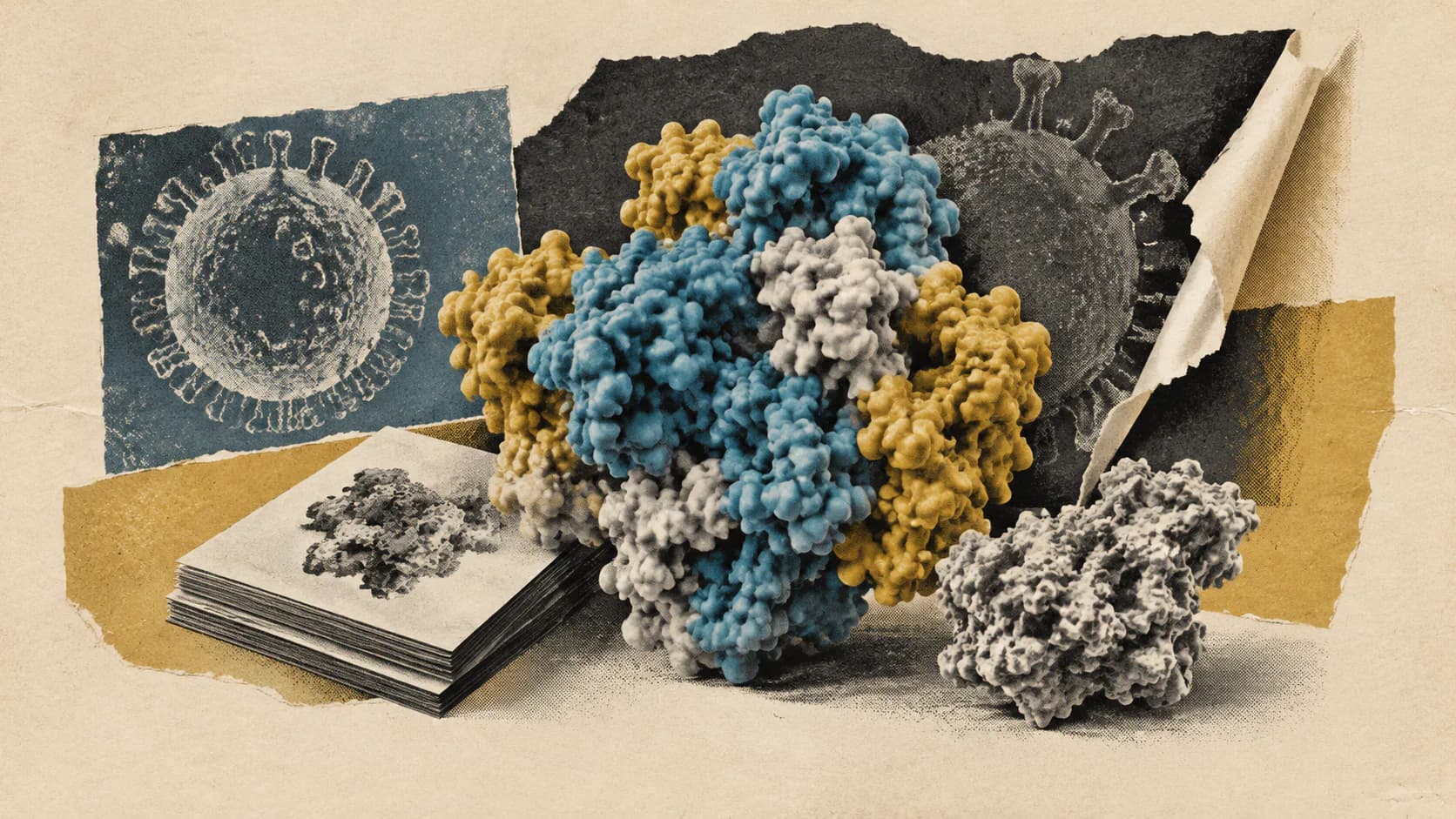
Researchers investigating an unfamiliar virus often have protein sequences before they have experimentally determined structures. A new release in the AlphaFold Database gives them another place to start: predicted 3D structures of protein complexes drawn from more than 2,800 viral proteomes, including families relevant to human health.
Announced on September 24, 2026, the dataset is accessible through a Pandemic Preparedness Portal. Google DeepMind, EMBL-EBI, NVIDIA and academic research groups collaborated on the release. NVIDIA has also published the GPU workflow used to produce the predictions, allowing labs with suitable infrastructure to apply it to their own sequences.
These models are predictions. They can help scientists decide which viral proteins and possible interactions warrant closer investigation. They do not establish that a complex forms in an infected cell, explain a virus’s behavior or replace laboratory validation.
The Portal Puts Viral Complexes in One Place
The Pandemic Preparedness Portal brings viral structure predictions together in a browsable view. According to the database’s September update, the new collaborative effort used AlphaFold2 and AlphaFold-Multimer to analyze 2,812 viral proteomes across 23 families relevant to human health. It yielded 5,279 high-confidence predictions for complexes of different proteins, called heterodimers, and 2,749 for pairs of the same protein, called homodimers. The portal also includes another 4,681 high-confidence viral homodimer predictions from a separate dataset.
The figure describes viral proteomes, the sets of proteins encoded by viruses, rather than 2,812 experimentally characterized infections. The resource combines new predictions with existing viral data and labels models by confidence; its entries should not be counted as newly validated protein interactions.
EMBL-EBI’s account of the release says the collaborators prioritized families known to infect humans, guided by a UK Health Security Agency priority-pathogen tool. The collection ranges from viruses associated with the common cold to emerging threats such as mpox. It offers a starting point where researchers have sequence data but little structural information for the proteins they want to study.
A complex prediction proposes how protein chains might fit together, adding to what a model of one protein folded on its own can show. The proposed arrangement can suggest a surface or interface worth examining experimentally, even when it cannot establish whether the interaction occurs in living tissue.