Most enterprise AI agent stacks today are a patchwork. A vision model here, a speech model there, an LLM stitching it all together. They still rely on fragmented model chains, separate stacks for vision, audio, and text, which increases inference hops and orchestration complexity, driving up costs while weakening cross-modal context consistency.
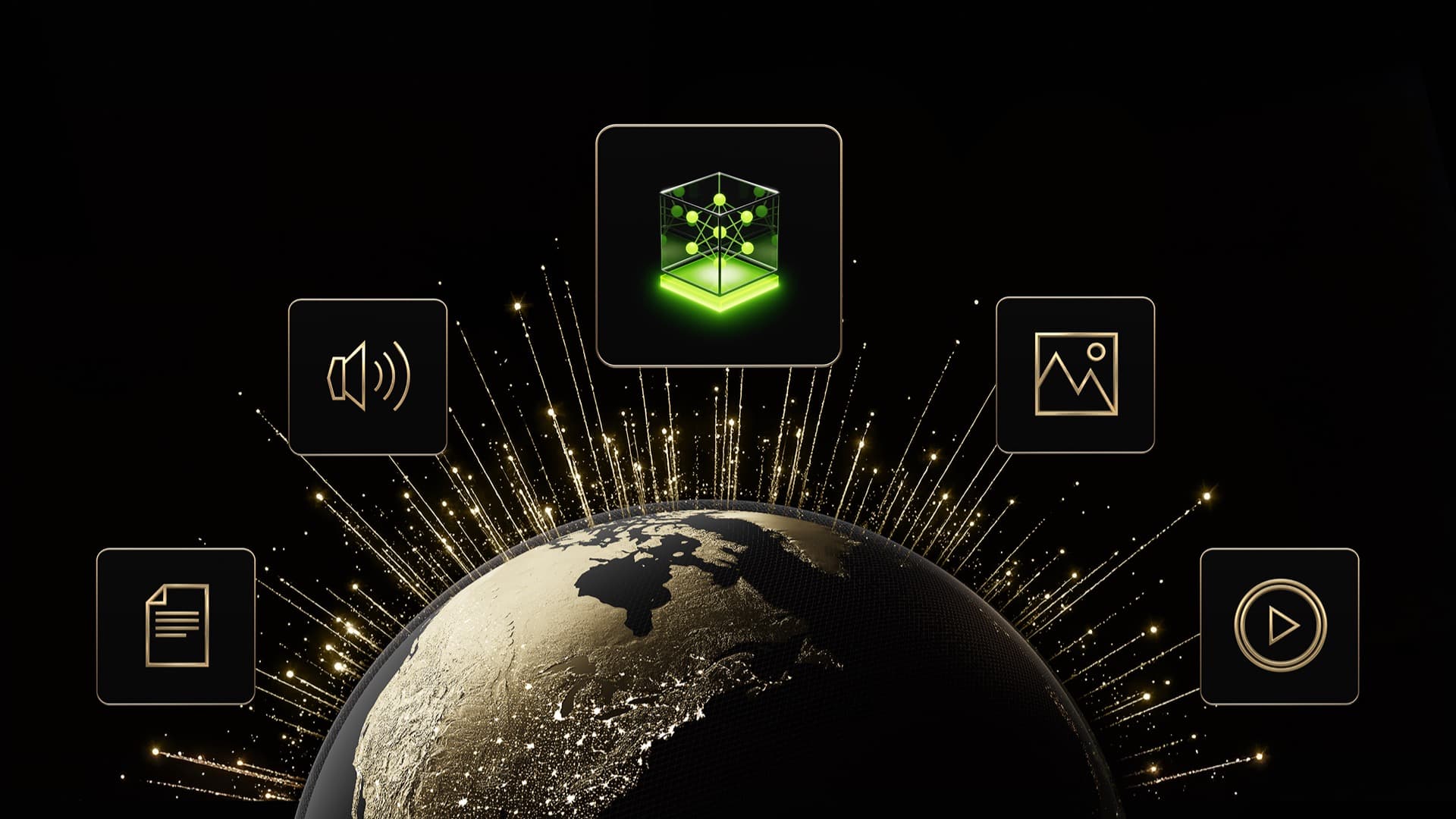
NVIDIA just shipped a direct answer to that problem. Nemotron 3 Nano Omni is an open multimodal model that brings vision, audio, and language capabilities together into one system, enabling agents to deliver faster, smarter responses with advanced reasoning across video, audio, image, and text. It's the first omni-modal model in the Nemotron 3 family, and the efficiency numbers are hard to ignore.
As someone who covers this space daily, the architectural approach here is what stands out. Collapsing a fragmented perception stack into a single model isn't just a latency win. It fundamentally changes how you build and maintain agentic systems at scale.
What Is Nemotron 3 Nano Omni?
Nemotron 3 Nano Omni is a new omni-modal understanding model built for real-world document analysis, multiple image reasoning, automatic speech recognition, long audio-video understanding, agentic computer use, and general reasoning.
It is an open, multimodal large language model with 30 billion total parameters and 3 billion active parameters (30B A3B), built on a Mamba2 Transformer Hybrid Mixture of Experts (MoE) architecture. The model supports a 131K token context and runs in FP8 precision, available for commercial use under the NVIDIA Open Model Agreement.
It is the first multimodal model in the Nemotron 3 family. The broader Nemotron 3 line already includes Nemotron 3 Super and Nemotron 3 Ultra for execution and planning tasks. Nano Omni slots in as the perception layer.
How the Architecture Works
The design choices here are worth unpacking carefully.
The model backbone interleaves three key components: 23 Mamba selective state-space layers for efficient long-context processing; 23 MoE layers with 128 experts, top-6 routing, and a shared expert for conditional capacity; and 6 grouped-query attention layers to preserve strong global interaction and expressivity.
It routes each token to six of 128 experts within a unified model, meaning vision tokens, audio tokens, and text tokens all flow through the same architecture but activate different expertise depending on the modality. That's the key efficiency lever. Only 3B of 30B parameters activate per forward pass, so you get inference economics closer to a small dense model without giving up quality.
On the encoder side: