You’ve finally finished the agent. The demo cost almost nothing to run, so you shipped it. Then the first month of real traffic arrives, along with an invoice that looks suspiciously like a mortgage payment.
This side of AI engineering gets far less attention than it should. We talk a lot about model quality, latency, and evals. The actual line items on the bill usually come later, once the system is already in production.
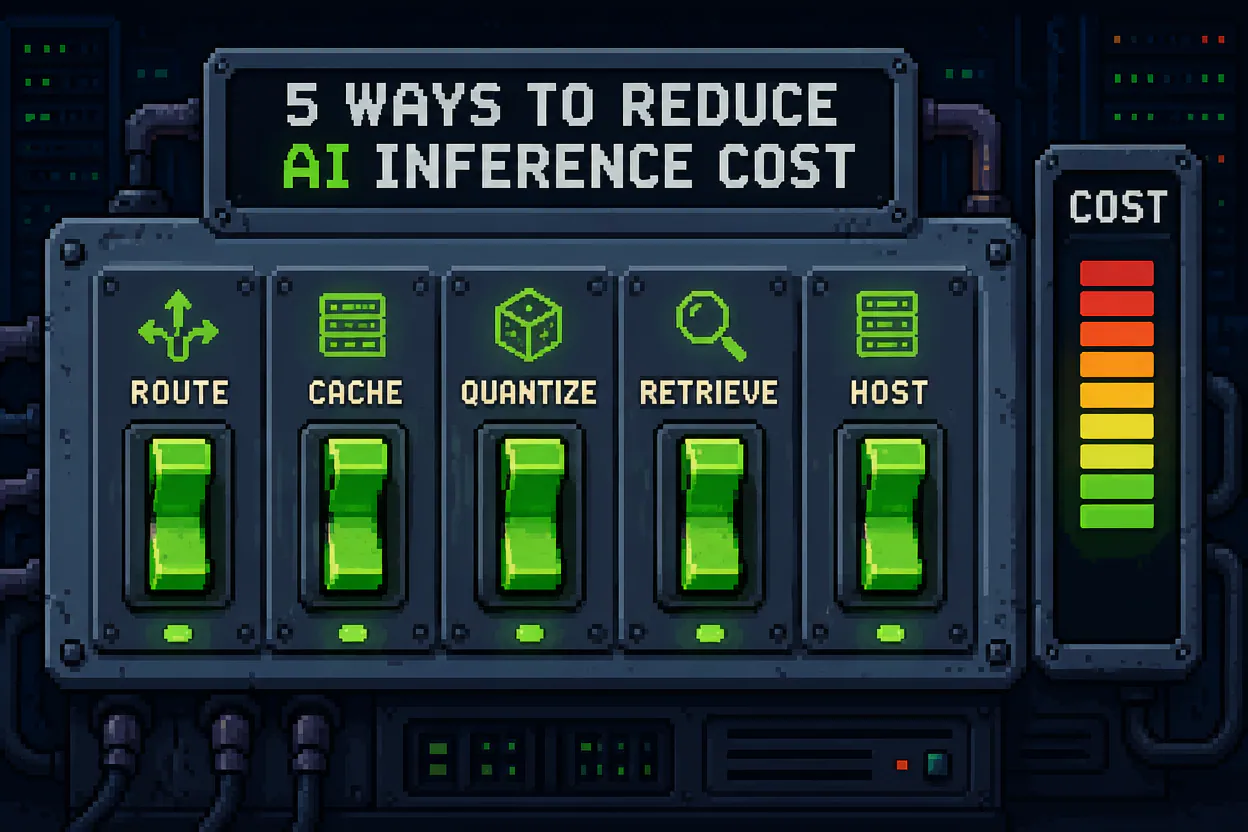
The good news is that you can cut inference costs without quietly making your agent worse. Below are five changes that target different parts of the stack, and the savings can be combined.
Ways to Reduce AI Inference Cost
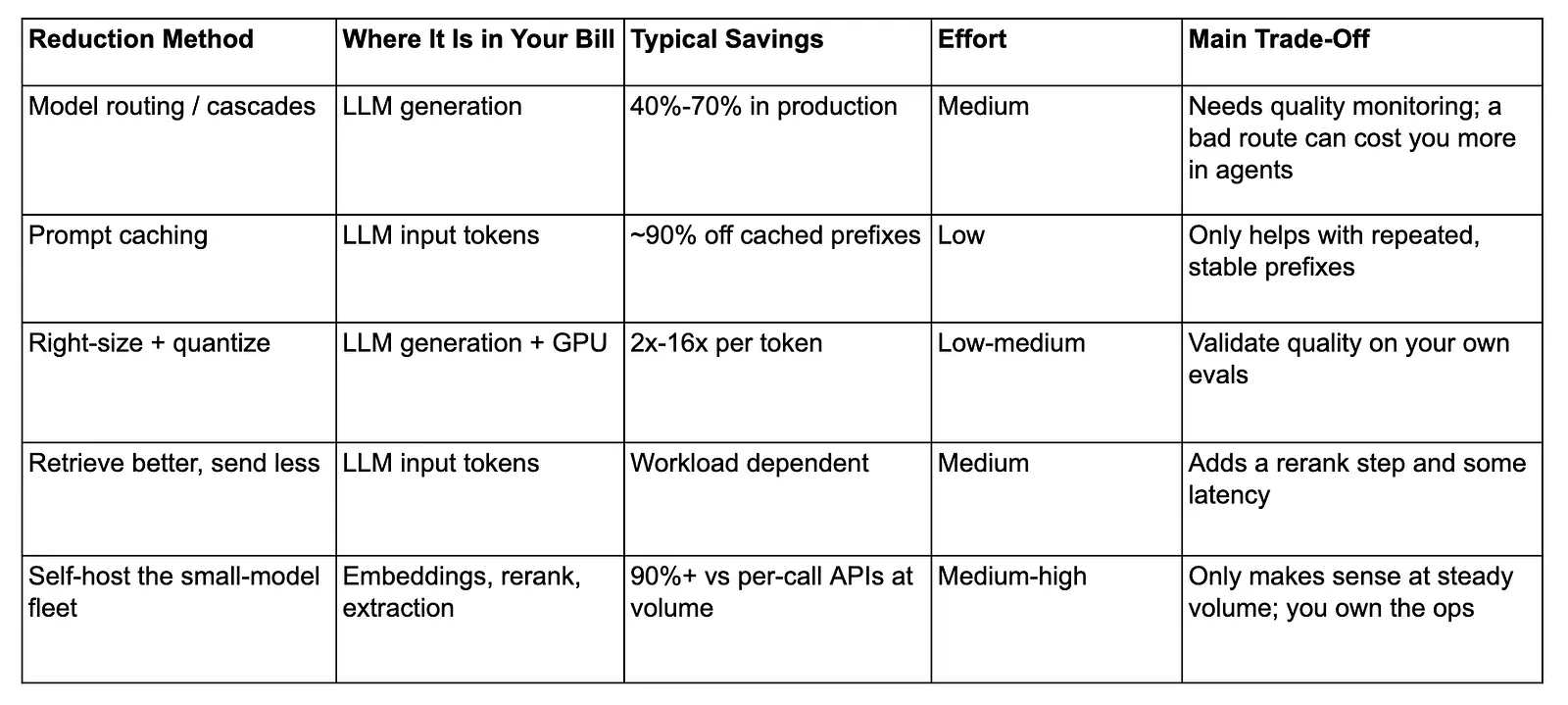
Before getting into the details, here’s how the five approaches compare:
1. Route Each Query to the Cheapest Model
For many agents, most of the money disappears because of one decision: every request goes to a frontier model. That is convenient during development, but plenty of production queries do not need that much model.
Model routing, also known as a cascade, puts a lightweight classifier or cheaper model in front of your model pool. Straightforward requests stay on the cheaper path. More complex ones get escalated to the larger model.
Watch out in agents: A routing miss in a chatbot is usually recoverable because the user can ask again. In an agent, the cheaper model might choose the wrong tool or pass the wrong argument. The next step fails, a retry kicks in, and the route that looked cheaper ends up costing more.
When one model still makes sense: If you handle fewer than roughly 10,000 requests a day, the engineering and monitoring work behind a router may cost more than it saves. I would check the request mix before building one.
2. Cache the Parts of Your Prompt That Never Change
Say you run a 5,000-token system prompt across 10,000 requests a day. You have already paid for 50 million input tokens before the model processes a single word from a user.
Prompt caching avoids paying full price to process the same prefix every time. That prefix might contain your system instructions, tool definitions, schemas, or few-shot examples. Once cached, repeat requests become much cheaper.