
The Nvidia Southeast Asia server halt is a reported order from Nvidia telling Dell, Supermicro and other server builders to stop shipping AI servers with its chips to Malaysia, Singapore, Thailand and Indonesia. The Financial Times first reported it on November 26, 2026, and The Wall Street Journal reported the same instruction separately. It came one week after a US export rule took effect on November 19.
That rule, from the Commerce Department's Bureau of Industry and Security (BIS), requires a license to send advanced AI chips to those four countries and Brazil, and it adds a second license for data centers anywhere that rent large amounts of US-chip compute to Chinese-headquartered companies. The pause is the first place the rule has visibly hit hardware moving through ports, and lenders reacted within days.
This article separates what's confirmed from what's only reported, explains why the rule landed at the server order desk, lays out who is affected and what it costs them, and lists the dated checkpoints to watch through February 2027.
Key takeaways
- The halt is reported, not confirmed. The FT and the WSJ reported it; Reuters said it couldn't verify it, and Nvidia, Dell and Supermicro didn't respond to requests for comment.
- The trigger is a BIS interim final rule that took effect on November 19, 2026 and requires licenses for advanced chips going to Indonesia, Malaysia, Singapore, Thailand and Brazil.
- Brazil is in the rule but not in the halt. The reports name only the four Southeast Asian countries.
- US-headquartered buyers are exempt from the new country license if the exporter files monthly reports to BIS, but no report says whether Nvidia's pause spares them.
- Data centers already serving Chinese-headquartered customers have 90 days, until about February 17, 2027, to get a separate remote-access license.
- Money moved first. Bankers reportedly froze roughly $480 million to $500 million in credit for Singapore-based Aolani Cloud, and other data center loans went under review.
What exactly did Nvidia stop shipping?
Nvidia reportedly stopped its manufacturing partners from delivering finished AI servers, the racks and trays built around its GPUs, to buyers in four countries. According to the FT account summarized by Tom's Hardware, Dell, Supermicro and other server makers told customers that Nvidia had forbidden them to ship their orders.
The instruction reportedly came from Nvidia, not from the US government. That distinction matters. The rule doesn't ban shipments to these countries; it makes them subject to a license reviewed case by case, plus an exemption for US-headquartered buyers that file reports.
Nobody has said how long the pause lasts. The WSJ, as cited by TechCrunch, described it as lasting "an unspecified period" while Nvidia checks whether regional partners meet the new requirements.
What the reports agree on and where they differ
The two original reports frame the reason a little differently. TechTimes compared the accounts and found that the FT, as summarized by The Decoder, says Nvidia and its partners are still working out how to comply, while TechCrunch, citing the WSJ, says Nvidia is using the pause to assess partners. TechTimes notes the two aren't necessarily in conflict.
| Claim | Status | Who says so |
|---|---|---|
| BIS rule took effect November 19, 2026 | Confirmed | BIS; Federal Register (91 FR 74970) |
| Nvidia told partners to hold orders | Reported | FT (three people familiar), WSJ |
| Dell and Supermicro told buyers in 4 countries | Reported | FT |
| The pause is temporary | Unknown | FT sources said it's unclear |
| Brazil shipments paused | Not reported | Absent from all halt reports |
| Nvidia, Dell, Supermicro comment | No response | Reuters |
The confirmed layer is thin on purpose. Export-control decisions about individual shipments are rarely explained in public, so silence from the companies isn't a signal in either direction.
Why did the BIS rule trigger an Nvidia Southeast Asia server halt?
The BIS rule made every advanced-chip shipment into the four countries a compliance question, and server makers can't answer it shipment by shipment yet. Rather than risk shipping to the wrong customer, Nvidia reportedly told partners to wait.
BIS framed the rule around remote computing. In its November 16 announcement, BIS said the rule is designed to keep existing restrictions on sensitive American technology from being circumvented through remote computing arrangements in third-country data centers. The release also says the rule was written by and at the direction of the Treasury Department and the National Security Council.
In BIS's own words, the rule addresses a gap that cloud computing opened:
"Rapid advancement in cloud computing and SI infrastructure have made it increasingly possible to access advanced American computing capabilities remotely, including through data centers located outside countries subject to U.S. export restrictions."
SI is the rule's term for AI. It calls AI "super intelligence" throughout, following an executive order.
The knowledge standard moves enforcement to the order desk
The remote-access provision turns on what the exporter knows. A knowledge standard is a legal test under which a seller is liable if it knew, or had reason to know, that an item would end up in a prohibited use. Under this rule, a license is required when the exporter has knowledge that chips are headed to a data center giving Chinese-headquartered companies access above a set compute threshold.
That design shifts the work from Commerce's license office to the companies that build, sell and ship servers. Tech AI Wire, which read the full rule PDF, reports that if a foreign data center declines to say who owns its customers, the rule treats that refusal as a "red flag" giving the seller legal knowledge of a violation. For Dell or Supermicro, an unanswered ownership question could become a violation.
Read that way, a pause is the cheapest way to stop accruing risk while partners collect ownership data. That's an inference from the rule's structure, not a reason Nvidia has given.
How does the remote access rule work?
The rule has two separate controls, and the halt mostly touches the first one. Both took effect on publication in the Federal Register on November 19, 2026, as an interim final rule, meaning it applied immediately and BIS takes public comments afterward.
The main provisions, as reported by Tech AI Wire and TechTimes from the rule text:
- Country license. A license is now needed to export, reexport or transfer advanced AI chips and servers to or within Indonesia, Malaysia, Singapore, Thailand and Brazil, which BIS describes as presenting a "higher-than-normal risk of diversion."
- US-headquarters exclusion. No license is needed when the buyer or end user is headquartered in the US, or its ultimate parent is, but the exporter must report each sale to BIS by the first business day of the following month.
- Remote-access license. A license is needed for chips going to any data center, anywhere, that offers more than 12 million aggregate TPP to companies headquartered in China, Macau or other Country Group D:5 nations.
- Existing customers. Data centers already serving those companies must get a license within 90 days of November 19.
- In-transit orders. Shipments already en route on November 19 may proceed if completed by December 21, 2026.
- Recommender exemption. Commercial recommender systems, software that ranks or suggests products or content, are excluded, but generative systems are not.
TPP, or total processing performance, is the US government's score for a chip's computing power. "Aggregate TPP" adds up the chips behind one service, and the rule counts digitally linked data centers together.
How much hardware is 12 million aggregate TPP? A TechCrunch author estimated roughly 750 Nvidia H100 or H200 chips, according to TechTimes. That's an outside approximation; the rule doesn't state a chip count.
The rule also removes two license exceptions, AIA and LPP, revokes the Data Center Validated End User authorization, and formally rescinds the Biden-era AI Diffusion Rule. Applications from companies headquartered in D:5 countries face what the rule calls "a presumption of denial."
Where sources disagree on timing
One account conflicts with the rest. The Star's Singapore report says the rule comes into effect 90 days after it is published in the Federal Register. TechTimes, VLSI Korea and Tech AI Wire all say it took effect on November 19, with 90 days only for data centers already serving covered customers. The majority reading matches how interim final rules normally work, and it's the one this article uses.
Who builds and ships the servers that stopped?
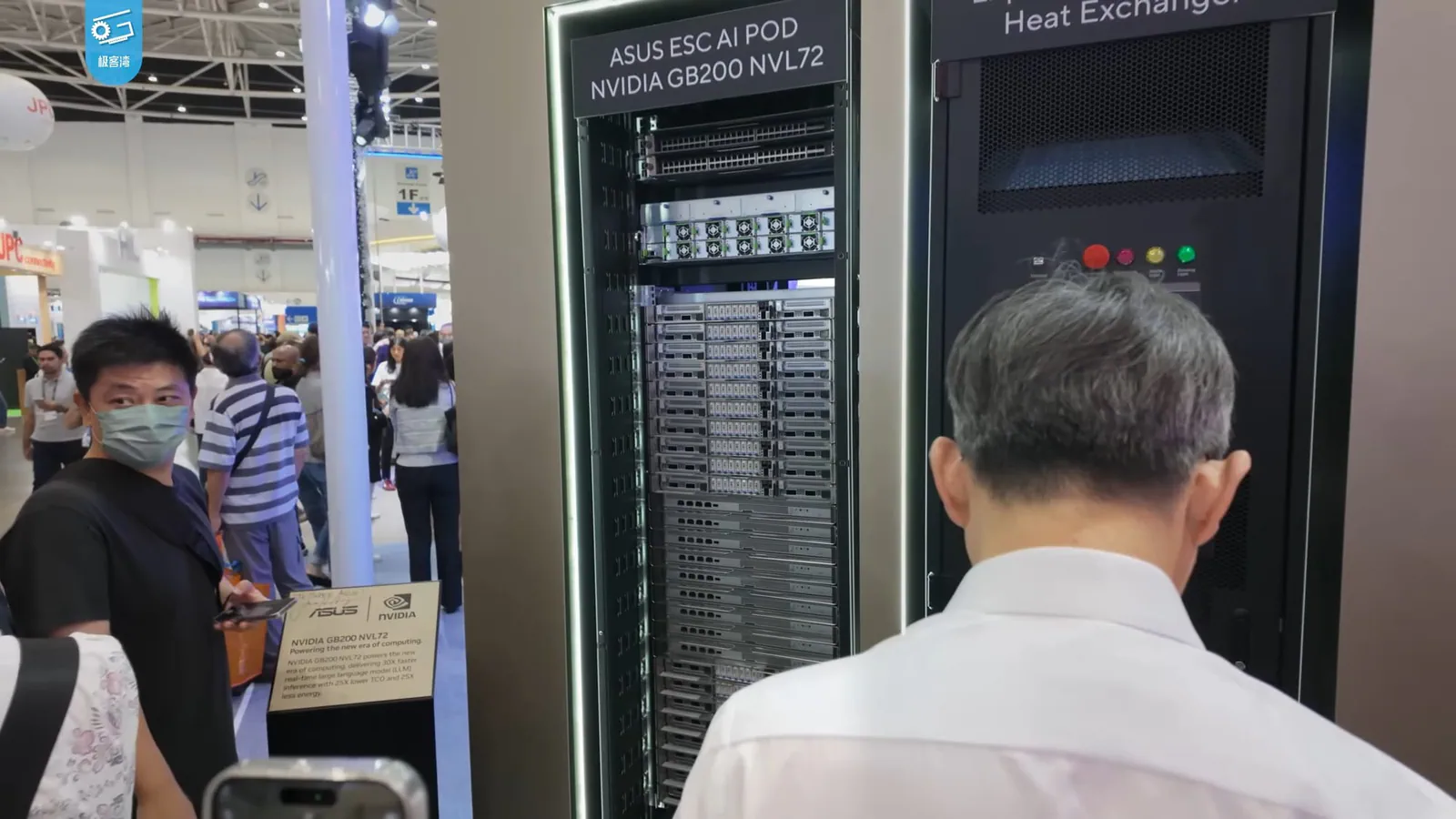
Original design manufacturers and server brands, not Nvidia itself, ship most finished AI systems. Dell and Supermicro are the two partners named in the reports, and both sit between Nvidia's chips and the data centers that rent compute to tenants.
The GB200 NVL72, Nvidia's rack-scale system that links 72 GPUs, is the kind of product these partners assemble and sell. VLSI Korea's cross-check stresses that the case concerns finished partner-built servers rather than bare chips, and it lists Nvidia, Dell and Supermicro as not responding to Reuters.
Both companies have appeared in regional enforcement stories before. TechTimes recounts that in March 2025 Singapore investigated servers shipped to Malaysia to determine whether they contained chips barred from China, and Dell said then that it screens all sales orders through internal trade-compliance checks.
Nvidia's own screening tightened earlier in 2026. According to TechTimes, Nvidia cut more than half of its authorized Asian buyers in July after adding a customer whitelist and sending staff to inspect data centers in Singapore, Malaysia and Japan.
Why does Southeast Asia matter so much to Nvidia and to China?
Southeast Asia is both a large Nvidia revenue base and the main route Chinese AI developers used to rent US-chip compute they couldn't legally buy. The rule targets that second use, and the halt puts the first at risk.
On the China side, the numbers come from outside analysts, not the US government:
- Institute for Progress: remote data centers supply about 24% of China's AI computing power, as cited by TechCrunch and reported by TechTimes.
- Center for a New American Security: remote access will account for about 23% of China's access to AI chips by the end of 2026, per TechTimes.
- Distance: major Southeast Asian data center hubs sit four to six hours by air from Hong Kong, Shenzhen and Shanghai, Tom's Hardware notes.
Until November 16, renting that capacity to Chinese companies was legal. The Star reports that data centers in the region could serve Chinese tech giants such as Alibaba, ByteDance and Tencent before the rule.
On Nvidia's side, the FT reported that revenue booked through Nvidia's Singapore subsidiary reached $104 billion in 2025, up 72% from a year earlier, though part of that comes from customers in Taiwan and China. TechTimes adds a caution: in Nvidia's fiscal year that ended in January 2025, Singapore accounted for 18% of revenue by billing location but less than 2% by products shipped there. Billing location isn't where servers end up.
Who is affected, and what does it cost them?
The pause hits regional cloud providers and data center operators first, their lenders second, and Chinese tenants third. US hyperscalers may be the least affected, since they qualify for the reporting-based exclusion, but no report confirms that Nvidia's pause spares them.
The financial fallout, all at the reported layer, as compiled by VLSI Korea and TechTimes from FT and Bloomberg reporting:
| Borrower or project | Amount | What reportedly happened | Reported by |
|---|---|---|---|
| Aolani Cloud (Singapore), for ByteDance | About $500M (FT); $480M (Bloomberg) | Bankers froze work on a loan for Nvidia chips for a Malaysian data center | FT, Bloomberg |
| Bridge Data Centres | $6.6B upsized loan | Put under extra review; Malaysian sites serve clients including ByteDance | Bloomberg |
| Digital Halo (Malaysia) | $372M | One bank passed on a fully underwritten loan; tenant reported as Alibaba | Bloomberg |
| GMI Cloud-operated Thai data center | $300M | At least one private fund dropped out; user reported as Tencent | Bloomberg |
The two figures for Aolani reflect different outlets reporting the same facility. An Aolani spokesperson told Bloomberg the company has spent significant time with banking partners assessing regulatory risk, according to TechTimes.
Why do loans freeze over an export rule? A data center's ability to repay depends on tenants keeping access to compute, and that access now depends on license outcomes. Bloomberg also reported that Citigroup, Standard Chartered and Singapore's largest banks have begun wider reviews of their data center clients.
What the operators say
One cloud provider executive described the mood to the FT, as quoted by Tom's Hardware:
"There's this new rule but no guidance on execution. No one knows how to apply for this license while the 90-day clock is ticking. It's causing sheer chaos in the region."
Hardware is also coming back onto the market. CNBC reported that dealers have listed thousands of Nvidia B300 chips originally meant for data centers serving Chinese renters, according to TechTimes, though listings are offers rather than completed sales.
How are Southeast Asian governments responding?
All four governments have said they'll comply or are studying the rule, and Malaysia and Singapore are asking Washington how licensing will actually work. None has announced retaliation.
Malaysia was the most direct. Investment, Trade and Industry Minister Johari Abdul Ghani told reporters on November 18 that Malaysia will inform all 117 approved data center projects once Washington communicates the requirements, and that operators unwilling to comply shouldn't operate in the country. He also said the government had not yet seen documents showing data center tenants re-exported chips.
Johari's advice to operators was blunt:
"If you want that GPU chip for your data centre that comes from the US, you have to comply with the US rules and regulations. Whoever is willing to comply, comply, then you can buy the chip."
Singapore's digital and trade ministries issued a joint statement on November 16 saying they are studying the measure, engaging affected companies and "exploring how to facilitate trusted access for Singapore companies," as The Star reported. Neither ministry has said what trusted access would involve.
Minister Josephine Teo told a Semafor event that she had spoken with US Deputy Secretary of State Christopher Landau about the rule, and she noted Singapore hosts about 6,000 US firms. The Next Web also reports that Megaspeed, the Singapore-based company at the center of a US diversion probe, denies wrongdoing.
Indonesia's Government Communications Agency said on November 18 that it was reviewing the restrictions and seeking industry input, per TechTimes. Thailand's foreign minister, Sihasak Phuangketkeow, told Bloomberg Television that the rules could hurt Thailand's data center ambitions, while saying they aim to keep chips out of China rather than target Thailand.
What is still unknown about the halt?
The biggest unknowns are duration, scope and how licenses will be granted. Every answer currently depends on statements that Nvidia, BIS and the server makers haven't made.
- Duration. The FT's sources said it's unclear whether the halt is temporary. It might end when partner compliance is sorted out, or it might track how fast BIS issues licenses.
- Scope. No report says whether all shipments to the four countries stopped, or only those needing license checks for specific buyers. The US-headquarters exclusion makes a blanket halt look broader than the law requires.
- License procedure. Law-firm summaries reviewed by TechTimes describe case-by-case review but set out no application process for data centers.
- Brazil. The rule covers Brazil, but none of the halt reports mention it. That could mean shipments continue there, or simply that no one has reported on it.
- Loan outcomes. A review isn't a cancellation. No lender or borrower has issued an on-record position on the facilities listed above.
- Compute threshold in practice. The 750-chip estimate for 12 million TPP is one author's approximation, and real configurations vary by chip generation.
It's also worth separating the rule from politics around it. Paul Triolo of DGA Group told The Star he rates the chances of a rollback as low and expects heavy industry comment, but he doesn't think the rule is "a death knell" for regional data centers because inference demand keeps rising. That's one analyst's view.
What should you watch next?
These are the dated, checkable events that will show whether the pause becomes a de facto ban or a short compliance stop.
- December 21, 2026: cutoff for completing shipments that were already in transit on November 19, according to Tech AI Wire's reading of the rule.
- January 19, 2027: the public comment deadline on the interim final rule, under docket BIS-2026-0628 on regulations.gov.
- February 17, 2027: the end of the 90-day window for data centers already serving Chinese-headquartered customers to obtain a remote-access license.
- First BIS license decisions: the first grants or denials under either license will show how fast shipments can restart.
- An on-record statement from Nvidia, Dell or Supermicro: that would move the halt from reported to confirmed and should say whether US-headquartered buyers are covered.
- Lenders returning: resumed disbursement or new terms on the Aolani or Bridge Data Centres facilities would mark the end of the financing freeze.
- A Singapore "trusted access" arrangement: any US-Singapore framework would be the first country-specific route through the license requirement.
Frequently Asked Questions
5 questions
1Did Nvidia confirm the Southeast Asia server halt?
No. Nvidia hasn't publicly confirmed it. The Financial Times reported on November 26, 2026, citing three people familiar with the matter, that Nvidia told Dell, Supermicro and other partners to hold orders for Malaysia, Singapore, Thailand and Indonesia, and The Wall Street Journal reported the same instruction. Reuters said it couldn't verify the report, and Nvidia, Dell and Supermicro didn't respond to its requests for comment.
2Why are only four countries affected when the rule covers five?
The BIS rule requires licenses for advanced chips going to Indonesia, Malaysia, Singapore, Thailand and Brazil, but the reports of Nvidia's pause name only the four Southeast Asian countries. Brazil hasn't appeared in any halt report. That could mean shipments to Brazil continue, or that no outlet has reported on Brazil yet; neither has been confirmed.
3Can US companies still get Nvidia servers in Singapore or Malaysia?
Under the rule, yes, in principle. Buyers headquartered in the United States, or whose ultimate parent company is, don't need the new country license if the exporter files monthly sale reports with the Bureau of Industry and Security. However, none of the reports on Nvidia's pause say whether those buyers are exempt from the halt itself.
4What is the 90-day deadline in the BIS remote access rule?
Data centers that were already giving companies headquartered in China, Macau or other Country Group D:5 nations access to more than 12 million aggregate TPP of compute must obtain a license within 90 days of November 19, 2026. By that count the window closes on about February 17, 2027. The rule itself doesn't name a calendar date.
5How much compute is 12 million aggregate TPP?
It's roughly 750 Nvidia H100 or H200 chips, according to an estimate by a TechCrunch author reported by TechTimes. TPP, or total processing performance, is the US government's measure of a chip's computing power, and the aggregate figure adds up the chips behind one service, including digitally linked data centers. The rule doesn't state a chip count, so treat 750 as an approximation.
Sources (8)
- 01tomshardware.comTom's Hardware, Dell, Supermicro and other server makers told customers (opens in a new tab)
- 02techtimes.comTechTimes compared the accounts and found (opens in a new tab)
- 03bis.govNovember 16 announcement, BIS said the rule is designed (opens in a new tab)
- 04techaiwire.comTech AI Wire, which read the full rule PDF, reports (opens in a new tab)
- 05thestar.com.myThe Star's Singapore report says the rule (opens in a new tab)
- 06vlsi.kren / nvidia sea server halt delta en (opens in a new tab)
- 07thestar.com.myInvestment, Trade and Industry Minister Johari Abdul Ghani told reporters (opens in a new tab)
- 08thenextweb.comMinister Josephine Teo told a Semafor event (opens in a new tab)


