
Drax, Brookfield and Radiant have signed an agreement to develop a strategic partnership for a gigawatt-scale AI data center at Drax Power Station in North Yorkshire. Announced on 3 November 2026, the proposal targets up to 100 megawatts of capacity from the first quarter of 2028, followed by substantial expansion.
Brookfield estimates that potential investment across the development, including semiconductor chips, could exceed £20 billion. An initial £2.5 billion is associated with the first phase. Those figures describe the opportunity the partners are pursuing, not an announcement of fully committed construction spending.
Drax’s regulatory announcement makes the distinction explicit. Phase 1 depends on planning, regulatory and network approvals, an acceptable tenant, commercial agreements and final investment decisions by each party.
The proposal’s strongest practical advantage is its location. Drax already has a large industrial estate, grid infrastructure and generation capacity. The important detail for the opening phase, however, is that it would draw electricity from the grid.
What the Partners Have Signed
Drax describes a signed agreement to develop a strategic partnership to jointly develop, deliver and operate the AI data center. The announcement assigns responsibilities across the project:
- Drax will lead on land, power integration and planning, and manage the first phase’s grid electricity imports.
- Radiant, Brookfield’s UK-headquartered AI infrastructure platform, will lead design, customer engagement and commercialization.
- The Brookfield-Qai AI infrastructure joint venture will provide investment capital and operating capabilities.
Qai therefore has a financing role even though Drax, Brookfield and Radiant are the three companies named in the partnership agreement’s opening description. The joint venture was announced in 2025, according to Drax’s regulatory statement.
Radiant intends to secure anchor customer commitments before construction begins. That connects the development schedule directly to demand from customers willing to contract for substantial capacity.
My reading is that this is a meaningful agreement about who will develop the project and how they will pursue it. It is still a development-stage arrangement: the announcement separately identifies the decisions required before the first phase can proceed.
The Route From 100MW to More Than 1GW
The regulatory announcement divides the development into three phases, with different levels of detail and certainty.
| Phase | Published capacity target | Timing | Proposed power arrangement |
|---|---|---|---|
| Phase 1 | Up to 100MW | Operational from Q1 2028 | Grid electricity imported using existing infrastructure |
| Phase 2 | An additional 500MW | Expansion between 2028 and 2031 | Existing generation supplying the data center behind the meter under a long-term power purchase agreement, subject to consents |
| Phase 3 | Further capacity toward the overall target above 1GW | After 2031 | No detailed arrangement specified in the announcement |
The word additional matters. Drax’s general news release describes Phase 2 as ramping up to 500MW, while its regulatory statement specifies an additional 500MW. CNBC’s coverage also reports the additional-capacity interpretation.
Using the more explicit regulatory wording, the first two phases would total 600MW if Phase 1 reaches its full 100MW target. Exceeding one gigawatt, equivalent to 1,000MW, would then require more than another 400MW. The announcement gives no specific completion date or capacity figure for that final expansion.
These numbers describe electrical capacity, not AI performance. They do not reveal GPU counts, model-training speed or how much computing customers could buy. Drax calls Phase 1 “compute capacity,” but the published material provides no chip configuration or facility-efficiency assumptions that would allow a reliable conversion into usable AI throughput.
For readers tracking delivery, 100MW in early 2028 is the first concrete target. The gigawatt-scale development remains the longer-term ambition.
What the £20 Billion Estimate Includes
Brookfield’s estimate covers potential investment in the development, including semiconductor chips. That scope matters because an AI campus combines several expensive components: buildings, electrical systems, cooling infrastructure and computing equipment.
A figure that includes chips cannot be compared directly with a construction-only data center budget. The announcement does not provide a breakdown showing how much would go toward servers, buildings, power infrastructure or later expansions.
The initial £2.5 billion is also presented as part of the potential investment associated with Phase 1. It should not be read as proof that every funding agreement has closed or that construction spending has been authorized. The same document makes final investment decisions a condition of progression.
There is also no reason to treat £20 billion as a ceiling. Brookfield says potential investment could exceed that amount. The estimate communicates possible scale, while leaving both the eventual expenditure and the delivered capacity dependent on subsequent decisions.
I would put more weight on a named anchor tenant and a completed investment decision than on changes to the headline investment estimate. Those milestones would show that a defined first phase has customers and an approved commercial basis.
Why Drax’s Existing Infrastructure Matters
The partners identify several assets on the power station estate:
- 1,000 acres of land
- 4GW of grid access
- 2.6GW of active dispatchable generation
- Existing cooling systems
- Proximity to the UK fiber network
These are company-reported site characteristics in the main announcement. Together, they explain why the partners see Drax as a candidate for faster development.
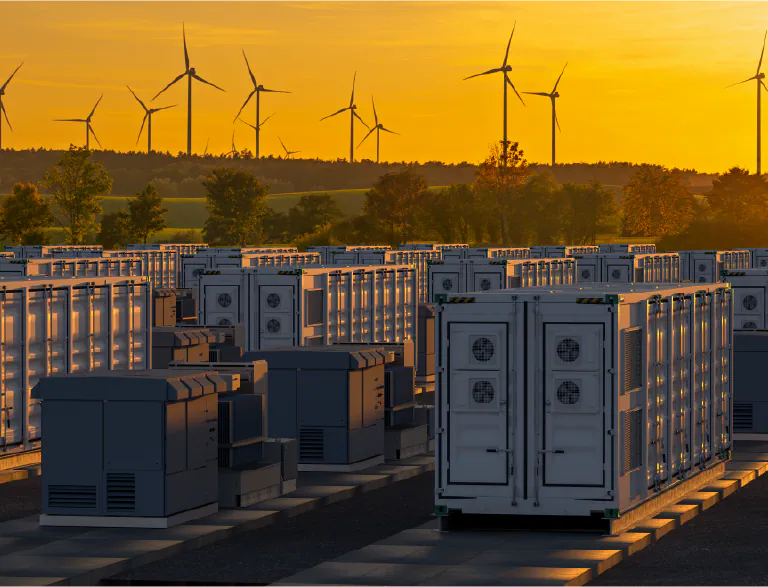
Land alone cannot support an AI campus. Servers need electricity, cooling and high-capacity network connections. Locating those requirements around an established power station could reduce some of the infrastructure work associated with developing an entirely new site.
The 4GW grid-access figure nevertheless needs careful interpretation. The announcement does not translate it into an approved allocation of electricity imports reserved for the data center. Required network approvals remain among the project’s conditions.
The two initial phases also have different electricity models.
Phase 1 would import power from the grid. Its early-2028 target therefore depends on the arrangements needed to supply the new load through that infrastructure.
Phase 2 is expected to use Drax’s generation behind the meter. In this context, that means supplying the data center directly through an on-site arrangement, with electricity sold under a long-term power purchase agreement, or PPA. Drax describes an ambition for around-the-clock supply, subject to the necessary consents.
Dispatchable generation can be scheduled to produce electricity when needed. Its rated capacity alone does not specify availability, commercial terms or the approvals for a particular supply arrangement. Those details will determine how much of the site’s energy advantage becomes usable data center capacity.
Frequently Asked Questions
3 questions
1Is the £20 Billion Investment Committed?
No. Brookfield estimates that potential investment, including semiconductor chips, could exceed £20 billion. Phase 1 still requires final investment decisions and other conditions.


