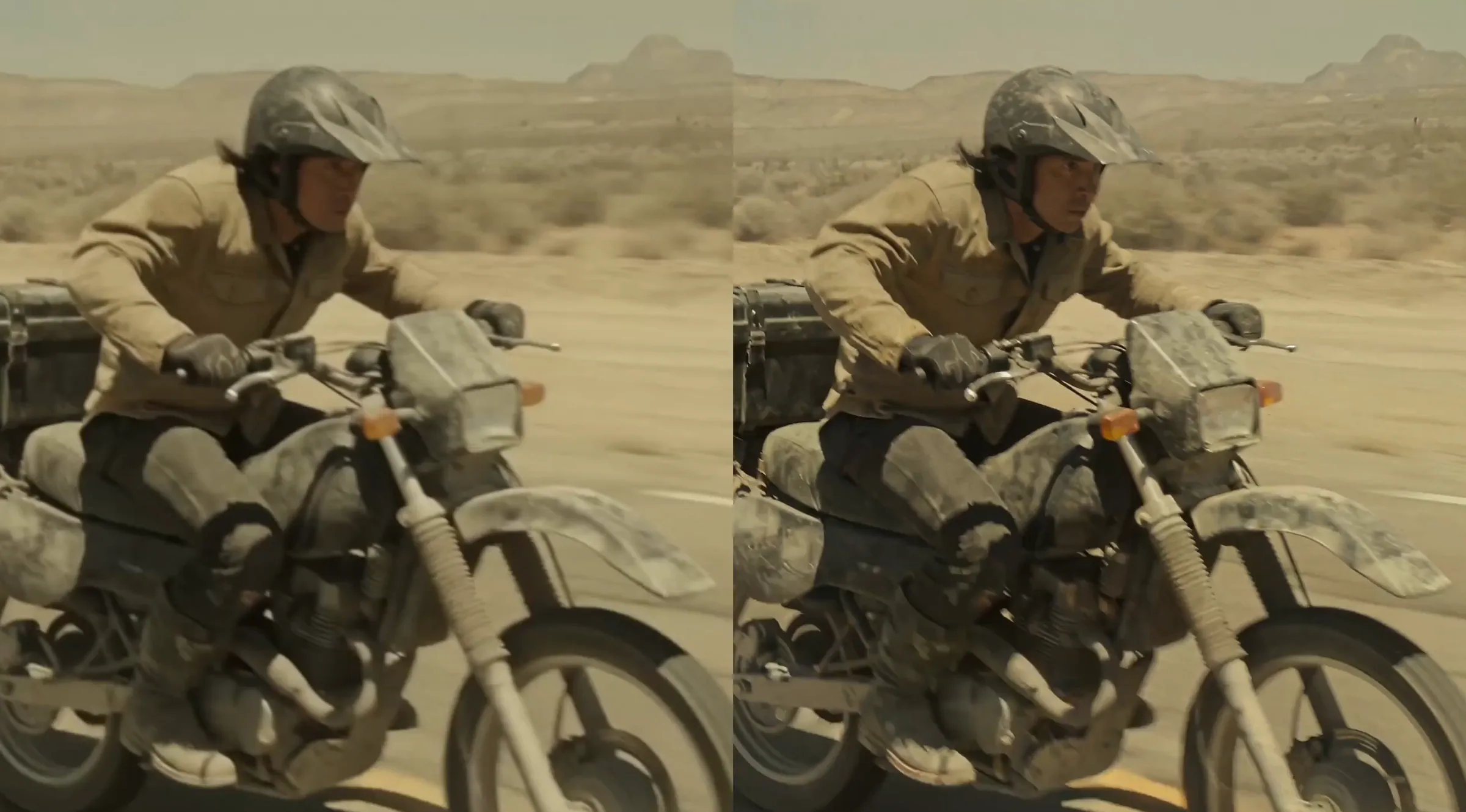
PrismML has announced Bonsai Image 4B, a family of compressed image-generation models designed to make high-quality diffusion inference practical on local hardware, from laptops to phones. This is the company's first move beyond language models, and it's a significant one.
Available in both 1-bit and ternary variants, Bonsai Image 4B reduces the footprint of a modern 4B-class diffusion transformer by up to 8.3x while preserving strong visual quality, making it the first image model in its parameter class to run directly on the iPhone.
Both 1-bit and Ternary Bonsai Image 4B are released with open weights and code under the Apache 2.0 license. For a field that has largely kept high-quality image generation locked behind cloud APIs, that combination of compression depth and open weights is worth paying close attention to.
What Is Bonsai Image 4B?
The models are built for local inference across iPhone, Apple Silicon Macs, CUDA GPUs, and local or small-scale serving environments. The underlying compression approach follows the same philosophy PrismML has applied to its language model line, but now extended to diffusion transformers, which present different architectural challenges.
The 1-bit variant uses binary {−1, +1} transformer weights with group-wise FP16 scaling, targeting maximum compression and designed for deployments where memory pressure and model footprint are the primary constraints.
The ternary variant uses ternary {−1, 0, +1} transformer weights with group-wise FP16 scaling. The additional zero state gives the model more representational flexibility, improving visual quality and prompt fidelity while remaining extremely compact.
This is the same weight-quantization philosophy PrismML used in its LLM work, now applied to image generation. The company addresses the challenge of model size by fundamentally rethinking neural networks at the mathematical level. Instead of traditional 16- or 32-bit architectures, it creates models with a native low-bit structure, which dramatically reduces inference compute and memory requirements without sacrificing performance.
Key Technical Highlights
The 1-bit variant compresses the diffusion transformer to 0.93 GB, an 8.3x reduction from the full-precision model. The ternary variant compresses it to 1.21 GB, a 6.4x reduction from the full-precision transformer.
Other notable specs:
- The compressed variants retain up to 95% of the image-generation quality of the full-precision model.
- On iPhone 17 Pro Max, Bonsai Image 4B generates a 512×512 image in about 9.4 seconds.
- On Mac M4 Pro, the same resolution takes about 6 seconds.
- Open weights and code are available under the Apache 2.0 license.
- PrismML is also introducing Bonsai Studio, its iOS app for trying Bonsai Image 4B directly on iPhone.
The 9.4-second generation time on an iPhone 17 Pro Max is slower than a cloud API call, but the tradeoff is entirely local inference with no data leaving the device.
How the Compression Works
The core technique is weight quantization applied natively through training, not as a post-training approximation. PrismML's models are fully binarized end to end, with all weights constrained to a single bit across embeddings, attention layers, and MLP blocks, with "no higher-precision escape hatches."
The models employ a group-wise quantization scheme in which each weight is constrained to one of three values: {-s, 0, +s}, encoded as (-1, 0, +1) using 1.58 bits per weight, together with a shared FP16 scale factor (s) for each group of 128 weights.
For the 1-bit variant, the math is even more aggressive. PrismML's Bonsai architecture uses a design where "each weight is represented only by its sign, {−1, +1}, while a shared scale factor is stored for each group of weights," instead of a 16-bit or 32-bit floating point number.
The key distinction from standard post-training quantization is that this compression is baked into the training process itself. This is not just another compressed checkpoint. PrismML positions it as a true low-bit model family, meaning the compression logic is built through the network architecture instead of being treated like a last-minute packaging trick.
The Broader Bonsai Context
Bonsai Image 4B is the third major release from PrismML in under three months. The company emerged from stealth in late March 2026 with its 1-bit language model family, then followed with Ternary Bonsai LLMs in April. Backed by $16.25M from Khosla Ventures and built on years of mathematical research at Caltech, Bonsai has made a credible claim to being a turning point for efficient AI.
PrismML is built on proprietary Caltech intellectual property and backed by Khosla Ventures, Cerberus Ventures, and compute grants from Google and Caltech.
On the LLM side, the compression numbers give useful context for what Bonsai Image 4B is attempting to replicate. The 1-bit language models have a 14× smaller footprint than their full-precision counterparts, run 8× faster, and are 5× more energy efficient, while matching leading models at similar parameter counts on benchmarks. The image models don't quite reach that compression ratio, but applying the same framework to a diffusion transformer is a different and harder problem.
As Babak Hassibi, CEO and co-founder of PrismML and Professor at Caltech, put it: "Local image generation is the next major milestone for creative AI." With Bonsai Image 4B, the company is showing that high-quality diffusion models can run closer to users without giving up the capabilities that make modern image generation useful.
Why This Matters for On-Device AI
The privacy and latency arguments for local inference are well understood. What hasn't existed until now is a compressed image model that can run on consumer hardware without a dramatic quality collapse. PrismML foresees its models powering on-device agents, real-time applications, secure enterprise systems, and other projects where memory bandwidth, power, or compliance constraints can hinder deployment.
With Bonsai Image 4B, the company is showing "that high-quality diffusion models can run closer to users without giving up the capabilities that make modern image generation useful," opening "a practical new path for private, on-device image generation."
The 95% quality retention figure will need independent verification, and real-world prompt fidelity across diverse use cases will be the actual test. But the compression ratios are measurable and the open weights let anyone run their own evaluation today.
Final Thoughts
The 0.93 GB 1-bit variant is the number that stands out to me. A full-precision 4B diffusion transformer runs well above 7 GB, which means it's simply not deployable on most consumer devices without a cloud backend. Getting that down to under 1 GB while retaining 95% of visual quality, if that figure holds under independent testing, is a genuinely difficult engineering result. The fact that PrismML is applying the same mathematical framework it used for LLMs to a diffusion transformer architecture suggests the underlying approach is more general than a one-off compression trick.
The 9.4-second generation time on iPhone is the honest constraint here. It's usable for creative workflows where you're iterating on prompts, but it's not going to replace real-time or near-instant generation for production apps. What I'd watch next is whether PrismML can push that inference speed down further, and whether the open-weight release attracts fine-tuning work from the community that extends the base model's style range.
Open weights under Apache 2.0, a native iOS app in Bonsai Studio, and CUDA support out of the box gives developers everything they need to start testing immediately. What do you think? Is on-device image generation a workflow you'd actually use, or does cloud inference still win on speed? Drop your thoughts in the comments.
Frequently Asked Questions
5 questions
1What is Bonsai Image 4B?
Bonsai Image 4B is a family of compressed image-generation models from PrismML, available in 1-bit and ternary variants, that reduces the footprint of a 4B-class diffusion transformer by up to 8.3x while preserving strong visual quality.