A16z Bets $1.1 Billion on AI's Hardware Bottleneck
The Machine Age Fund targets chips, memory, networks, power, cooling, data centers, robots, and devices as AI scaling collides with physics.
Last updated on
AI Summary
Andreessen Horowitz announced a $1.1 billion Machine Age Fund on August 28, 2026, betting that AI’s biggest constraints are shifting from software to physical infrastructure.
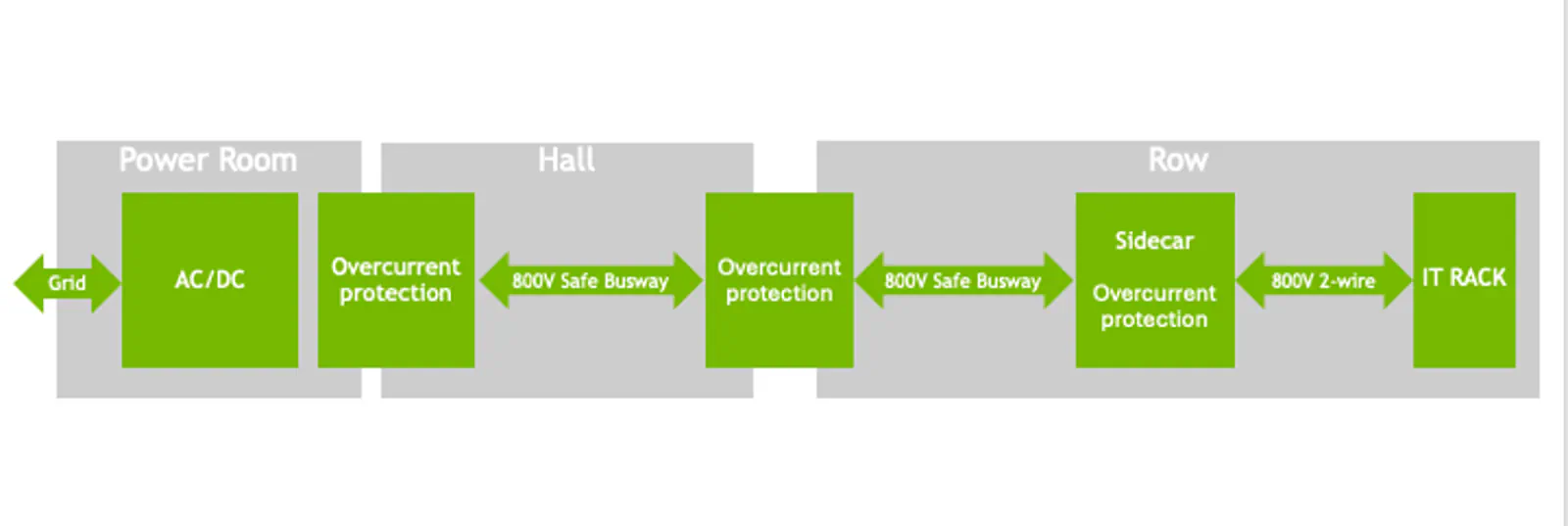
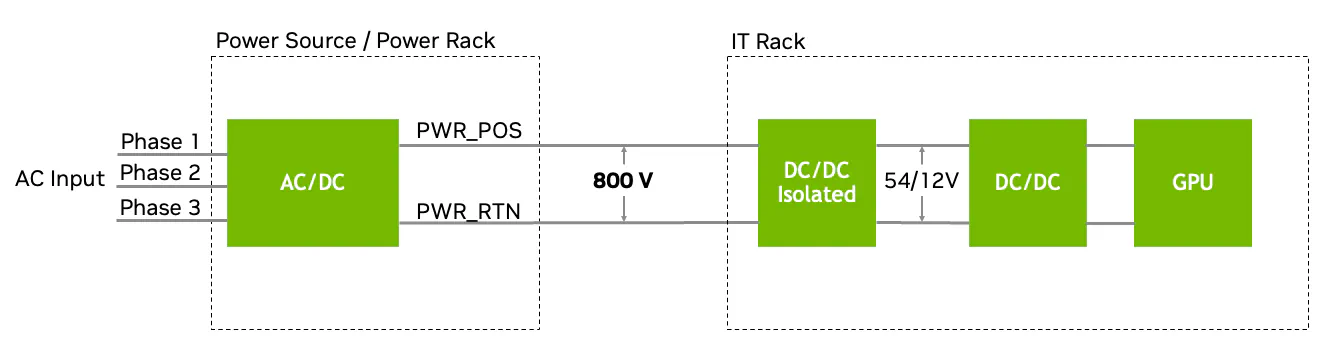
The new capital, separate from a16z’s January 2026 $15 billion fundraise, targets chips, memory, networking, storage, data centers, robotics, and consumer AI devices; hardware already exceeds 20% of the firm’s deal flow. A16z projects rack compute density will rise roughly 28-fold from NVIDIA H100 systems to Rubin, while rack power could climb from today’s 100–250 kilowatts to 1 megawatt within three years. NVIDIA is developing 800 VDC power and co-packaged optical networking for these systems. The IEA expects high-bandwidth-memory constraints through 2027 and forecasts global data-center electricity use rising from 485 TWh in 2025 to about 950 TWh by 2030.
The opportunity is in technologies that reduce cost per token, improve performance per watt, accelerate deployment, or ease power, cooling, memory, and networking bottlenecks.
Andreessen Horowitz built much of its reputation during the software era. Its newest fund argues that AI is shifting a growing share of the opportunity back into the physical world.
On August 28, 2026, a16z announced the $1.1 billion Machine Age Fund, a dedicated pool of capital for chips, memory, networking, storage, data centers, robotics, and consumer AI devices. The firm says hardware startups now account for more than 20% of its deal flow, which suggests the fund is responding to an existing pipeline rather than trying to create one through branding.
The fund is important because of the diagnosis behind it. Better models and applications remain valuable, but AI performance increasingly depends on whether the infrastructure underneath them can move data, deliver electricity, remove heat, and add capacity quickly enough. The next model breakthrough cannot abstract away a power shortage or an overloaded memory bus.
The Machine Age Fund Targets the Entire Physical Stack
The Machine Age Fund is unusually broad for a hardware investment vehicle. Its mandate stretches from semiconductor components to complete computing systems, the buildings that house them, and machines that operate outside the data center.
According to Bloomberg’s reporting on the fund, the $1.1 billion represents new capital rather than money carved out of a16z’s $15 billion fundraise announced in January 2026. That makes the fund a deliberate allocation to physical AI infrastructure, not simply a theme attached to a larger general-purpose pool.
This is not a sudden rejection of software. A16z already holds investments in companies including Anduril, Applied Intuition, SpaceX, Skydio, Waymo, Coactive, Ideon, and photonics startup Teramount. Partners involved in the new fund also have backgrounds spanning Intel’s data-center business, VMware, networking, infrastructure software, and American manufacturing.
What has changed is the level of commitment. Hardware is becoming what a16z calls an “official motion” within the firm, supported by a dedicated fund and a thesis that treats components, systems, and facilities as connected investment categories. A startup improving memory efficiency may affect server design, networking requirements, cooling capacity, and the economics of the entire data center.
The first phase of the generative AI boom made accelerators the most visible constraint. Companies competed to secure NVIDIA GPUs, cloud capacity, and the enormous clusters required to train frontier models.
That constraint has expanded. Reasoning models consume more inference compute because they generate and evaluate longer chains of tokens. Video generation, autonomous coding agents, and multimodal systems also create sustained demand after training has finished. AI infrastructure must now support both massive training runs and continuous inference at production scale.
A16z estimates that compute density per rack is increasing by roughly 28 times between NVIDIA’s H100 systems and its Rubin generation. The firm says typical rack power density has already moved from around 5-10 kilowatts to 100-250 kilowatts and could reach 1 megawatt within three years. These are a16z’s projections, but the broader direction is visible across current infrastructure designs.
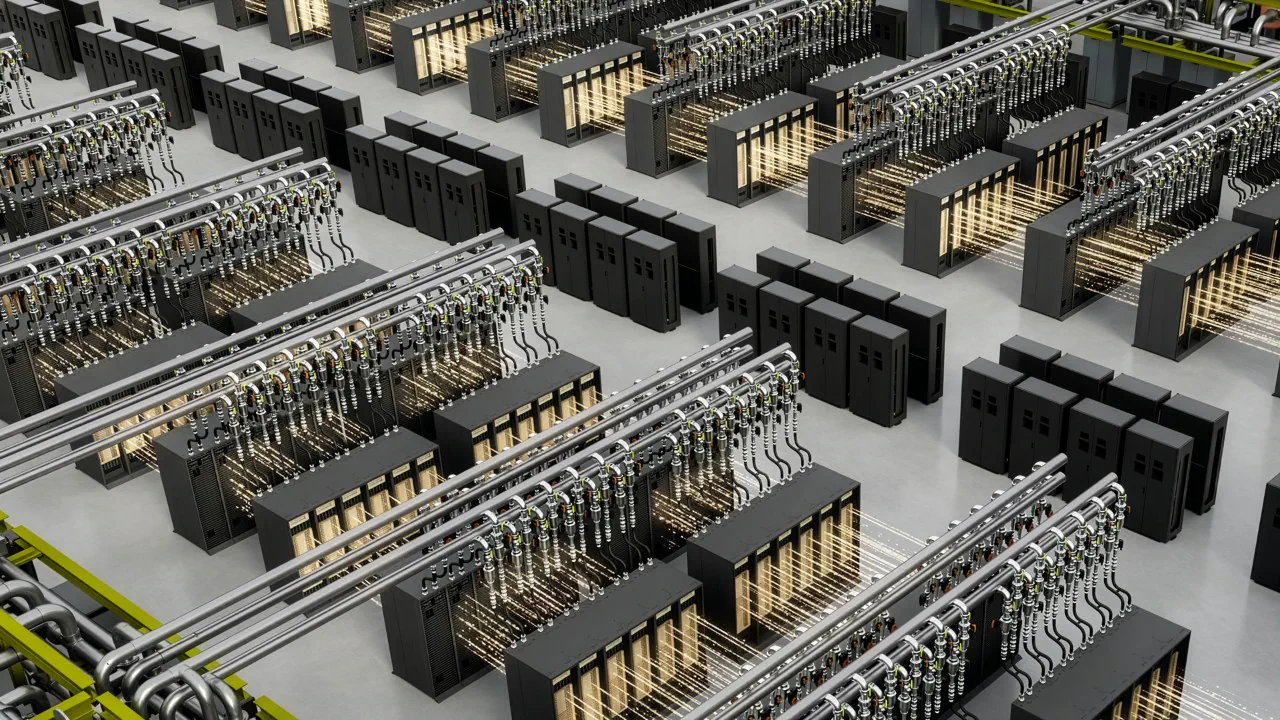
NVIDIA’s own AI factory architecture now treats compute, networking, storage, power, cooling, and operations as one coordinated system. Its 800 VDC power initiative is explicitly designed for megawatt-scale racks because conventional in-rack power distribution starts hitting physical limits as systems move beyond 200 kilowatts.
That changes the unit of competition. A faster processor provides limited value if memory cannot feed it, network congestion leaves accelerators waiting, or the facility cannot deliver enough power without overheating. Performance increasingly depends on the whole machine, including parts of that machine located far beyond the chip package.
Memory, Networking, Power, and Cooling Are the New Chokepoints
The infrastructure race creates several overlapping bottlenecks. Solving one can simply move the constraint somewhere else.
Memory: AI accelerators need high-bandwidth memory to keep model parameters and intermediate data close to the compute. The International Energy Agency’s 2026 energy and AI assessment says demand for HBM is growing by more than 50% annually and expects supply constraints to persist through the end of 2027. Memory capacity, bandwidth, advanced packaging, and efficient data movement can therefore matter as much as raw arithmetic performance.
Networking: Large AI jobs operate across thousands of accelerators, making the network part of the computation. A slow or unreliable connection can leave expensive hardware idle while it waits to exchange data. Copper connections also become less practical as bandwidth, distance, and power requirements rise. NVIDIA is already developing co-packaged optical networking to move more traffic while reducing the power consumed by network interfaces.
Power and cooling: The IEA estimates that global data-center electricity consumption rose from about 200 terawatt-hours in 2015 to roughly 485 TWh in 2025. Its base case puts demand near 950 TWh by 2030, while consumption from data centers optimized for AI is projected to more than triple. The agency also says leading AI rack densities increased elevenfold between 2020 and 2025 and could quadruple again by 2027.
Those densities require different electrical equipment, liquid-cooling systems, power electronics, transformers, backup systems, and facility layouts. A data center designed around conventional cloud servers cannot necessarily accept the newest rack-scale AI system without extensive reconstruction.
The time mismatch makes the problem harder. AI models can change within months, while memory factories, electrical substations, transmission lines, and large data centers take years to plan and build. Infrastructure providers must make expensive decisions before they know exactly what future workloads will require.
AI Makes Hardware Look Venture-Scale Again
Hardware has traditionally been difficult territory for venture investors. Startups can face large upfront costs, long product-validation cycles, manufacturing risk, complex supply chains, and incumbents with deep customer relationships. A software company can ship an update overnight; a chip or cooling system may need qualification across multiple generations of equipment.
AI changes the potential return because infrastructure spending has reached a scale where modest improvements can carry enormous economic value. The IEA says the five largest technology companies spent more than $400 billion on capital projects in 2025 and expects that figure to increase by about 75% in 2026, largely because of AI infrastructure.
A $1.1 billion venture fund is still small next to hyperscaler capital budgets. That suggests a16z is more likely to finance technologies that change the economics of data centers than to bankroll entire gigawatt campuses itself. The attractive targets include specialized chips, memory systems, optical links, power conversion, cooling equipment, simulation tools, and components that remove expensive constraints from larger deployments.
The strongest companies will need more than temporary scarcity. A business built solely around a current shortage could struggle once suppliers add capacity or customers redesign their systems. More durable opportunities should lower cost per token, increase performance per watt, shorten deployment times, or make dense infrastructure easier to operate.
The Bet Reaches Robots, but the Risks Rise Too
The Machine Age thesis extends beyond data centers to robots, autonomous machines, and AI appliances for the home. Improved models provide more capable perception and planning, but physical products still require sensors, actuators, batteries, efficient edge processors, manufacturing capacity, and safety systems.
That creates another layer of potential investment. A robot may use a cloud model, but latency, connectivity, energy use, and reliability determine how much intelligence must run locally. Consumer devices face similar constraints because always-on AI cannot depend on unlimited power, memory, or network access.
Physical AI also moves more slowly than software. Hardware failures can damage property or injure people. Inventory must be manufactured before demand is certain, and field maintenance can consume margins that look attractive in a prototype. Model progress does not remove those operational realities.
Efficiency presents a broader risk to the infrastructure thesis. The IEA estimates that the energy required for a given AI task is falling by at least an order of magnitude each year. So far, usage growth and more compute-intensive workloads have outweighed those gains, but that relationship is not guaranteed indefinitely.
A16z is therefore making a directional bet rather than proving that every current shortage will persist. Some infrastructure categories will attract excessive capacity, and large chipmakers or cloud companies may integrate technologies that otherwise could have supported independent startups. The fund’s returns will depend on separating temporary congestion from structural engineering problems.
Final Thoughts
The important signal is not that a16z has discovered hardware. The firm has backed physical technology for years. The change is that one of software’s best-known investors now sees hardware as central enough to AI’s future to deserve a dedicated $1.1 billion investment strategy.
Models can improve on software timelines. Power plants, memory factories, cooling loops, transmission equipment, and data centers cannot. The Machine Age Fund will be judged by whether it finds technologies that bridge that mismatch and remain valuable after the present capital-spending cycle ends. AI’s next major winners may still produce software, but some will win because they move electricity, heat, and data better than anyone else.
Frequently Asked Questions
4 questions
1
What Is the A16z Machine Age Fund?
The A16z Machine Age Fund is a $1.1 billion venture fund announced on August 28, 2026. It is dedicated to companies building the physical infrastructure behind AI, including semiconductors, memory, networking, storage, data centers, robotics, and consumer AI hardware. A16z says hardware businesses now represent more than 20% of its investment deal flow.
2
Why Does A16z Think Hardware Is AI’s Biggest Bottleneck?
A16z believes AI systems are becoming so dense that performance is increasingly limited by memory bandwidth, network capacity, electricity, cooling, and construction. Faster processors alone cannot solve these problems. As racks consume hundreds of kilowatts and models run across thousands of accelerators, every supporting part of the infrastructure affects performance, cost, and deployment speed.
3
Is A16z Moving Away From Software Investing?
No, A16z is not abandoning software. The Machine Age Fund adds a dedicated hardware strategy to the firm’s existing AI, infrastructure, growth, and American Dynamism activities. A16z also has a history of investing in physical technology companies such as Anduril, Skydio, SpaceX, and Waymo, making the new fund an expansion and formalization of existing work.
4
How Much Electricity Could AI Data Centers Use?
The IEA projects that total global data-center electricity consumption could approach 950 terawatt-hours in 2030, up from roughly 485 TWh in 2025. Data centers optimized for AI are expected to more than triple their electricity use over that period, although efficiency improvements, deployment delays, and infrastructure constraints could alter the final outcome.