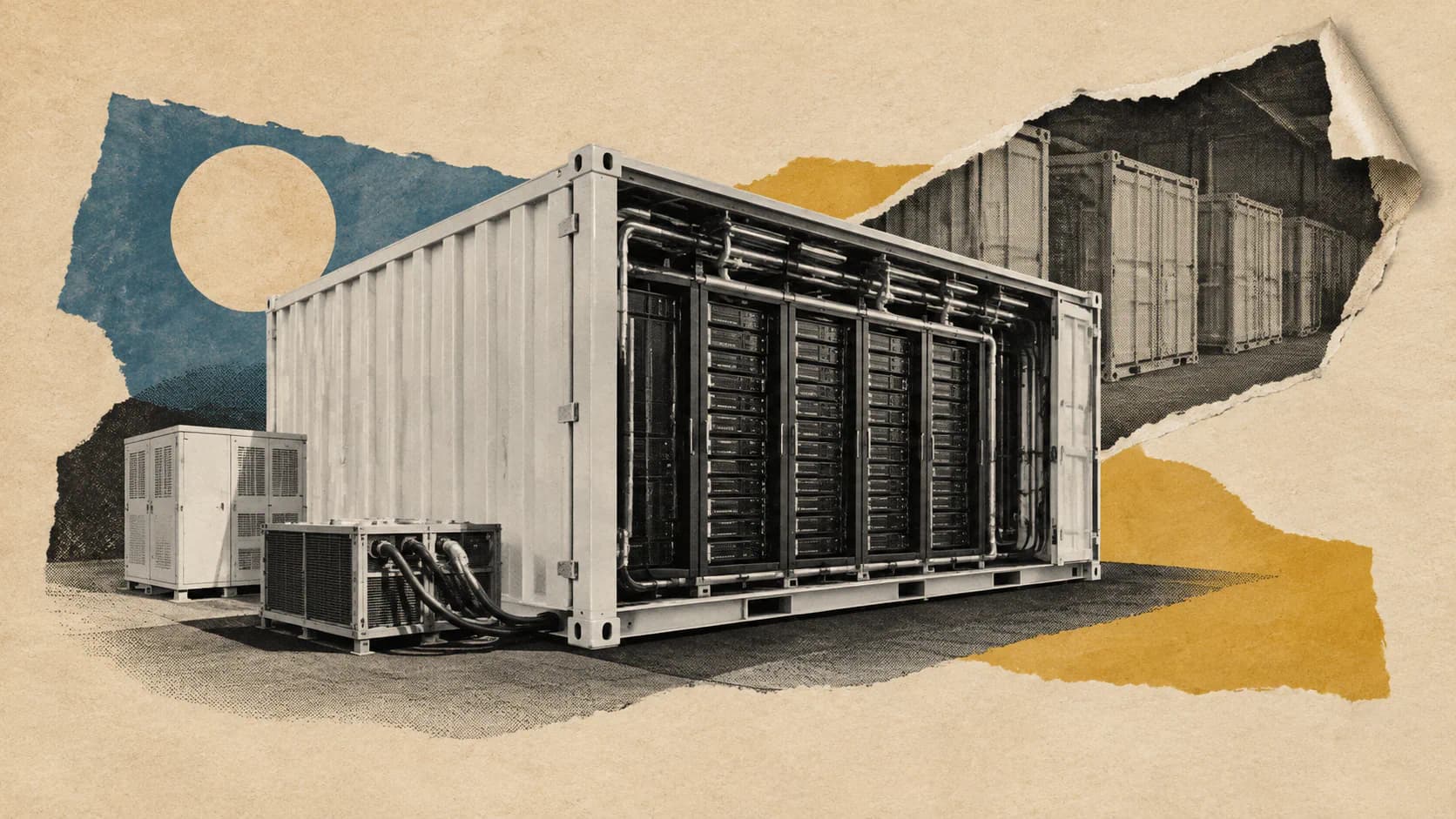
NVIDIA says its new DSX POD reference design can cut deployment at a prepared AI infrastructure site from roughly six months to as little as 14 days. The proposed shortcut is to assemble, connect and validate the AI factory before it reaches the customer, rather than perform that work onsite.
Announced at GTC Berlin on October 21, 2026, DSX POD is a modular, containerized reference design for complete Vera Rubin AI factories. It brings computing systems together with networking, power distribution, liquid cooling and supporting infrastructure in units that partners will manufacture.
That distinction matters for buyers. NVIDIA has announced a design foundation for partner-built infrastructure, not an immediately available, finished NVIDIA appliance. Worldwide delivery through its partner ecosystem is expected in early 2027.
The deployment claim also has a consequential boundary: the site must already be prepared. DSX POD could compress the work between infrastructure delivery and productive operation, but it does not promise to build an operational AI facility from an unprepared site in two weeks.
Partners Build the Factory Around NVIDIA’s Design
DSX POD extends NVIDIA’s DSX infrastructure framework into a specific physical implementation: factory-built containers with defined interfaces between them. NVIDIA supplies the design foundation, while ecosystem partners turn that foundation into deployable systems.
According to NVIDIA’s technical explanation, the reference architecture covers compute, networking, storage, power, cooling, cabling and mechanical requirements. Partners handle manufacturing, regional engineering, customization, deployment and support.
A reference design, in this context, is more substantial than a suggested collection of compatible equipment. It defines how the components should fit together, how they connect and what partners should validate before shipment. But it is still the basis for partner products and projects, rather than a single universally specified system that every customer receives unchanged.
NVIDIA lists Dell Technologies, HPE, Lenovo, Foxconn, Schneider Electric and Vertiv among the participating companies. The broader ecosystem spans computing suppliers, infrastructure specialists and operators, reflecting how much of the project sits beyond the GPUs themselves.
Containerization is not the invention here. NVIDIA’s technical post explicitly acknowledges that modular and prefabricated data centers already exist. The relevant development is a coordinated design for Vera Rubin rack-scale infrastructure, including the electrical, thermal, network and mechanical constraints involved in moving an integrated system from a factory to a customer site.
Factory Validation Replaces Some Onsite Assembly
The proposed time savings come from moving work upstream.
In a conventional onsite integration process, equipment arrives and teams must connect racks, install cabling and piping, check electrical and cooling systems, and validate the resulting cluster. DSX POD moves much of that assembly and testing into the manufacturing facility while another team prepares the destination.
NVIDIA says partners will complete rack-to-rack cabling, wiring, piping and functional validation before shipment. Its technical description also identifies checks that a validation plan can cover, including equipment inventory, firmware baselines, fabric connectivity, sensor operation, cooling integrity and system-level functionality.
This changes the unit being tested. Instead of delivering separate racks that still need to become a working cluster, partners can validate the installed compute environment as a deployment unit.
That is particularly relevant when power, cooling and networking must work together. A rack that passes an individual hardware check does not establish that the wider deployment has the correct connections, cooling behavior or configuration. Testing more of those relationships before shipment could reduce the number of problems discovered during final installation.
The engineering extends to transportation and serviceability. The design addresses structural support, weight distribution, equipment restraint, access clearances and cooling connections. Factory integration only saves time if the assembled equipment can reach the destination safely and remain accessible for maintenance.
None of this removes final commissioning. It changes where a substantial share of the integration work happens and how much has been checked before the system arrives.
The 14-Day Claim Begins With a Prepared Site
NVIDIA’s six-month-to-14-day comparison is a vendor projection for prepared-site deployment, not a published result from an independently documented customer installation. The supplied announcement and technical material do not establish that customers have achieved that timetable in production.
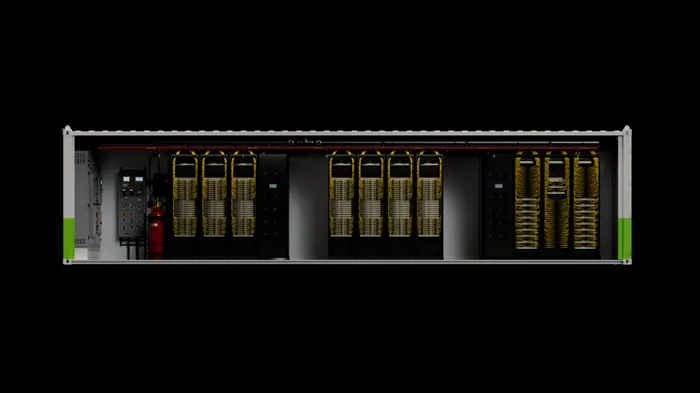
The company says the containers arrive ready to connect to the site’s power, cooling, networking and other supporting infrastructure. Those prerequisites remain outside the promise of rapid onsite deployment.
The technical design makes that boundary concrete. It specifies an 800 VDC input power design for the core containers, while partners engineer the upstream generation, conversion and regional electrical solution. A standardized container interface does not eliminate the need to supply suitable power to it.
Cooling follows a similar division. NVIDIA’s description covers internal plumbing, manifolds, isolation, instrumentation, leak detection and pressure integrity. The destination still needs the supporting cooling infrastructure to which the containers connect.
For project planning, the useful distinction is between three periods:
- Site preparation: establishing the foundations, power and external connectivity needed for installation.
- Factory integration: assembling and validating the containerized infrastructure.
- Onsite deployment: connecting the delivered units and bringing the installation into operation.
NVIDIA’s argument is that the first two can proceed in parallel, leaving less integration work for the third. That can shorten the overall schedule when onsite assembly would otherwise be a bottleneck.
It does not establish a two-week timeline for the whole project. Buyers should ask partners exactly which activities start and stop the deployment clock, and which site conditions must be satisfied before that clock begins.
Sources
- DSX PODnvidianews.nvidia.com
- technical explanationdeveloper.nvidia.com
- GTC Berlin keynote coverageblogs.nvidia.com