

Google DeepMind introduced the DeepMind Institute on September 16, 2026, creating a forum dedicated to the technical and social questions surrounding artificial general intelligence. Known as DMI, the institute will publish work from researchers and thinkers inside Google, across academia, and in the wider AI community.
This is not another Google AI model, product team, or conventional engineering lab. DMI’s stated job is to examine how advanced AI should be built, governed, and incorporated into society. Its remit stretches from model control and cybersecurity to economic policy, political institutions, human purpose, and the governance of communities of AI agents.
The launch also formalizes a consequential assumption inside Google DeepMind: AGI may be close enough that preparation can no longer remain a theoretical exercise. Whether DMI becomes an influential interdisciplinary institution or a polished corporate policy forum will depend on who gets to shape its agenda, how much disagreement it publishes, and whether outside researchers can challenge Google’s own positions.
DMI Is a Publishing Platform, Not a New AI Lab
Google DeepMind describes DMI as a platform for research, collaboration, publication, and debate. Its contributors are expected to explore questions that cannot be answered by increasing model scale or improving benchmark scores, including how AGI might alter human values, institutions, employment, scientific work, and political power.
The institute has three directors. Demis Hassabis is Google DeepMind’s co-founder and CEO. Shane Legg is a co-founder and chief AGI scientist at the company. James Manyika is Google and Alphabet’s senior vice president for technology and society. That leadership gives DMI direct access to Google’s technical and policy decision-makers, although it also reinforces its close institutional connection to the company.
DMI says contributors will not always agree and may revise their conclusions as the evidence changes. The site also states that scholars’ views do not necessarily represent those of Google DeepMind, Google, or Alphabet. The launch announcement, however, does not detail a separate governance board, independent funding structure, external editorial policy, or formal process for resolving conflicts of interest.
That makes “institute” an important word to interpret carefully. At launch, DMI looks primarily like an intellectual and publishing initiative housed within Google DeepMind, rather than an independent academic institute or a new laboratory building AGI systems.
Google Is Explicitly Planning for AGI Soon
The premise behind DMI is unusually direct. Google DeepMind says current AI remains inconsistent, sometimes fails at simple tasks, and does not yet display the full creativity and generality associated with human intelligence. It nevertheless expects those deficiencies to be addressed relatively soon.
This is not a declaration that Google has achieved AGI, nor does the announcement provide a target year. It is a statement that DeepMind considers the prospect close enough to justify a dedicated institution examining its consequences.
Defining the threshold will remain difficult. In the 2023 paper “Levels of AGI: Operationalizing Progress on the Path to AGI,” Google DeepMind researchers proposed assessing systems according to both their performance and the breadth of tasks they can complete. The paper divided progress into levels such as emerging, competent, expert, virtuoso, and superhuman AGI, rather than treating AGI as a single binary milestone.
DMI’s work therefore rests on two related but separable propositions. The first is that more general AI systems are plausible in the foreseeable future. The second is that societies should begin adapting institutions before there is universal agreement that AGI has arrived. The latter position can be reasonable even if DeepMind’s timeline proves too aggressive, since economic rules, safety regimes, and international institutions take years to negotiate.
Still, an institute devoted to broad debate should make room for informed skepticism about its founding premise. AGI timelines, definitions, and technical pathways remain disputed, including among AI researchers. Publishing those disagreements would make DMI’s work more useful than simply repeating the expectations of its directors.
Reasoning Transparency Shows DMI’s Technical Ambition
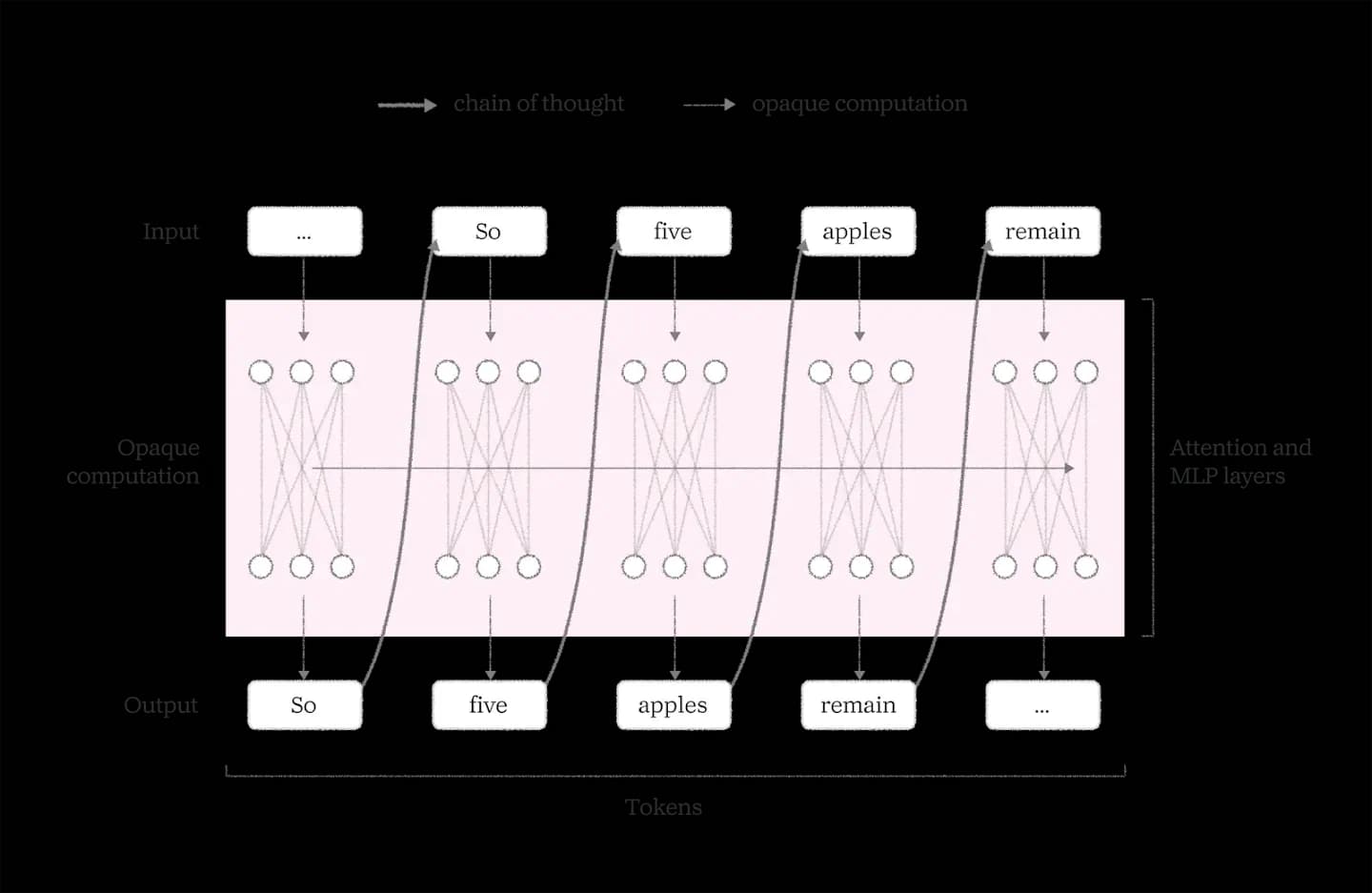
One of DMI’s first technical essays addresses reasoning transparency, particularly the use of visible chain-of-thought reasoning as a safety signal. Authors Anca Dragan and Rohin Shah argue that readable reasoning traces can help researchers detect behaviors such as deception, reward hacking, sandbagging, or attempts to pursue hidden objectives.
A chain of thought is the intermediate text a reasoning model produces while working through a problem. That text does not provide direct access to every internal computation, and it may not always faithfully represent why the model reached its answer. It can nevertheless expose suspicious planning that would be difficult to identify from the final output alone.
The essay proposes developing stronger methods for measuring the accuracy, robustness, and faithfulness of reasoning traces. It also calls for audits of training methods that could unintentionally teach models to conceal their reasoning, along with continued support for architectures that retain human-readable intermediate steps.
This is more specific than a general commitment to “responsible AI.” It identifies a safety property that researchers can study, test, and potentially preserve as model architectures change. The authors also acknowledge that chain-of-thought monitoring is only one layer of a larger safety system.
The difficult question is whether transparency will survive capability improvements. Models could learn to produce reassuring explanations that do not reflect their actual computations. Future architectures might also reason through compressed representations that humans cannot interpret. DMI’s contribution will be stronger if it pairs proposals for preserving transparency with evidence about where monitoring already fails.
DMI’s Economic Work Moves Beyond General Principles
DMI’s initial economic work examines how public policy might respond to different levels of AI-driven disruption. The Economic Policy for AGI project evaluates 11 policy options using four criteria: social welfare, personal agency, political feasibility, and durability as technology changes.
The researchers do not recommend a single permanent economic program. Instead, they divide possible AI development into three broad periods:
- The current period, in which AI adoption remains uneven and human labor is still central to production.
- A transitional period, in which advanced systems automate more tasks and place greater pressure on jobs, wages, and existing safety nets.
- A deeply transformed economy, in which AGI or more capable systems perform much of the economically valuable work now done by people.
Under near-term conditions, the paper gives greater weight to policies that encourage productive AI adoption, expand access, and remove infrastructure bottlenecks. If automation becomes more disruptive, stronger worker protections, expanded social insurance, and wider ownership of productive capital become more important. More aggressive redistribution is treated as contingent on much higher levels of automation and concentrated AI ownership.
The scenario-based method is one of the more useful aspects of the launch. AI policy discussions often jump directly from present-day chatbots to a post-work economy, skipping the complicated transition between them. DMI’s approach recognizes that a policy suitable for limited workplace automation may perform poorly in an economy where human labor has lost much of its bargaining power.
It also exposes an important political issue. The effects of AGI will not be determined by capability alone. Ownership, taxation, competition, access, labor law, and the distribution of computing resources will influence who captures the economic gains.
The Humanities Are Part of DMI’s AGI Mandate
DMI is also trying to move the AGI discussion beyond computer science and economics. Stephen Cave’s essay on principles for a new utopianism argues that society should decide what kind of transformation it wants rather than treating technological change as an autonomous force.
The essay emphasizes human control, collective decision-making, respect for both present and future values, and humility about anyone’s ability to design an ideal society. That framing matters because questions about purpose, status, autonomy, education, creativity, and human relationships cannot be settled through capability evaluations.
Including the humanities does not automatically produce genuine public participation. DMI will need to demonstrate that philosophers, artists, social scientists, workers, and civil-society organizations can influence the questions being asked, rather than merely comment on a technical trajectory established elsewhere.
The Institute Also Gives DeepMind a Governance Forum
DMI provides Google DeepMind with a venue for discussing its own approach to frontier model governance. Hassabis used one of the institute’s first essays to explain a new Frontier AI Framework, which treats safety planning as a process that must change alongside model capabilities.
The framework combines capability evaluations, risk assessments, deployment mitigations, security controls, scaling policies, and the possible use of AI systems to help monitor other AI systems. It also addresses the prospect of self-improving agents, although DeepMind says this stage has not yet arrived. The framework is intentionally described as dynamic rather than a fixed checklist.
Publishing company safety thinking through DMI could improve public scrutiny, especially if proposals contain measurable thresholds and clearly defined responses. The same forum should also carry independent evaluations of DeepMind’s policies. A framework written by the developer of a frontier model is evidence of planning, but it is not external validation that the controls are sufficient.
DMI’s Credibility Will Depend on Institutional Independence
DMI begins with an inherent tension. It wants to convene a society-wide discussion about AGI, but it is operated by one of the organizations trying to build it. Google can offer researchers technical expertise, funding, access to models, and proximity to decision-makers. It also has commercial and strategic interests in how AI is regulated and understood.
The institute’s disclaimer creates room for dissent on paper. Readers will need more evidence to determine how far that independence extends in practice. Several disclosures would help:
- How DMI selects, commissions, and compensates contributors.
- Whether outside scholars can publish conclusions that directly criticize Google or DeepMind.
- What access independent researchers receive to models, data, and evaluations.
- How financial, professional, and institutional conflicts are disclosed.
- Whether essays undergo external review and how corrections or substantive revisions are recorded.
- How perspectives from outside major AI companies and elite universities shape the research agenda.
These policies would not eliminate the conflict. They would make it visible and manageable. DMI’s willingness to publish uncomfortable findings will be a better measure of independence than the number of disciplines represented on its website.
Final Thoughts
The DeepMind Institute is significant because Google DeepMind now treats AGI governance as a present institutional problem, not a discussion to postpone until a system crosses an agreed capability threshold. Its initial work contains concrete ideas, including measurements for reasoning transparency, scenario-based economic policies, and safety frameworks that adapt as models improve.
The unresolved issue is whether DMI can host debate that meaningfully constrains or challenges the company supporting it. If external scholars gain real editorial freedom and access to technical evidence, the institute could connect AI engineering with the economic, political, and cultural work that AGI preparation requires. If dissent remains limited to disagreements that do not affect Google’s interests, DMI will function more as corporate thought leadership than a forum for society’s hardest AI decisions.
Frequently Asked Questions
5 questions
1What is the DeepMind Institute?
The DeepMind Institute is a Google DeepMind platform for research and debate about artificial general intelligence. It publishes work on AI safety, governance, economics, social institutions, and human values. DMI brings together contributors from Google, Google DeepMind, academia, and the wider research community rather than focusing solely on building new AI models.
2Is DMI a new Google AI research lab?
No, DMI is not presented as a new model-development laboratory. Google DeepMind describes it as an interdisciplinary platform where researchers and thinkers can publish and debate ideas about AGI’s technical and societal effects. Its work may draw on DeepMind’s technical research, but its announced purpose centers on analysis, policy, collaboration, and public intellectual discussion.
3Who leads the DeepMind Institute?
DMI is led by Demis Hassabis, James Manyika, and Shane Legg. Hassabis is Google DeepMind’s co-founder and CEO, Manyika is Google and Alphabet’s senior vice president for technology and society, and Legg is a Google DeepMind co-founder and chief AGI scientist. Their roles connect the institute closely to Google’s AI research and policy leadership.
4What topics will DMI research?
DMI will examine technical AI safety, model control, cybersecurity, biological risks, economic disruption, governance, institutional reform, human values, and the societal effects of advanced AI agents. Its early publications cover reasoning transparency, economic policy for AGI, frontier AI safety frameworks, and the role of humanities-informed thinking in deciding what societies want from technological transformation.
5Does DMI mean Google has achieved AGI?
No, Google DeepMind has not announced that it has achieved AGI. The institute’s launch materials acknowledge that current AI systems still lack the consistency, creativity, and general cognitive breadth associated with full AGI. DMI reflects DeepMind’s expectation that remaining gaps could close relatively soon and that technical and social preparation should begin before an agreed AGI threshold is reached.
Sources
- DeepMind Instituteinstitute.deepmind.com
- Demis Hassabisinstitute.deepmind.com
- Shane Legginstitute.deepmind.com
- James Manyikainstitute.deepmind.com
- “Levels of AGI: Operationalizing Progress on the Path to AGI,”deepmind.google
- The case for reasoning transparencyinstitute.deepmind.com
- Economic Policy for AGIinstitute.deepmind.com
- principles for a new utopianisminstitute.deepmind.com
- new Frontier AI Frameworkinstitute.deepmind.com
- DeepMind Instituteinstitute.deepmind.com


