
Anthropic has reportedly agreed to spend $3.4 billion on commitments for 1.7 gigawatts of Caterpillar gas-fired generators, taking over equipment orders originally placed by OnePWR Solutions. The Financial Times first reported the transaction on November 8, 2026, saying the agreement was reached in late September.
The distinction matters: Anthropic reportedly secured existing equipment commitments and installation capabilities. It did not acquire OnePWR, and the supplier’s employees did not transfer to the AI company, according to Reuters’ account of the FT reporting, published by CNBC.
Reuters said it could not immediately verify the report, and Anthropic and OnePWR had not responded to its requests for comment. The transaction should therefore be treated as a reported agreement, not a company-confirmed announcement.
The move would push frontier-model competition further into energy procurement. Access to advanced chips and cloud services remains essential, but those resources become useful only when a data center can supply them with dependable electricity.
What Anthropic Reportedly Bought
OnePWR, a San Antonio-based equipment supplier, ordered the Caterpillar generators roughly two years ago, according to Data Center Dynamics. DCD reports that the orders predated recent price increases, but OnePWR needed financing to complete the transaction.
Anthropic had planned to become a OnePWR customer. Instead, it reportedly took over the equipment orders directly. The package also includes engineering and construction capabilities needed to install the generators, with OnePWR helping with that work.
That structure separates three things that are easily blurred together:
- Equipment commitments: Access to generators already ordered from Caterpillar.
- Installation support: Engineering and construction capabilities to help turn the equipment into working power infrastructure.
- Corporate ownership: OnePWR itself remains outside the reported transaction, with no employee transfer.
Taking over existing orders could give Anthropic access to an earlier position in a constrained equipment supply chain. It also puts the company closer to the responsibilities associated with deploying that equipment.
DCD describes the transaction as the largest known single purchase of power-generation equipment by a frontier AI lab. That is a characterization of the publicly known market, not an independently verified ranking of every private infrastructure agreement.
My reading is that the delivery position may be as strategically important as the generators themselves. Equipment ordered before the latest surge in demand can be valuable because of when it might arrive, even before considering its purchase price.
What 1.7GW Actually Means
The reported capacity is 1,700 megawatts, or 1.7 million kilowatts. That is a power rating: the rate at which the equipment could produce electricity under its rated conditions.
It is not a statement that Anthropic has already brought that much capacity online. Nor does it mean 1.7GW would reach AI processors. A data center also needs electricity for cooling, networking, power conversion and other equipment.
Two calculations help put the headline figures in context:
| Measure | Calculation or reported figure | What it tells us |
|---|---|---|
| Reported commitment | $3.4 billion | The headline transaction value |
| Reported generating capacity | 1.7GW | The generators’ combined stated capacity |
| Commitment per rated kilowatt | $3.4 billion ÷ 1.7 million kW = $2,000/kW | A way to express the package’s scale, not its full installed cost |
| Hypothetical annual output | 1.7GW × 8,760 hours ≈ 14.9TWh | Output if the full capacity ran continuously at its rating for a non-leap year |
The last two figures are calculations from the reported deal terms, not disclosed operating results.
The $2,000-per-kilowatt figure is not an electricity price. It does not establish the cost of a completed power plant or data center. The reported package includes installation-related capabilities, but the coverage does not provide a complete accounting of site work, fuel connections, electrical infrastructure, financing or operating expenses.
Likewise, 14.9 terawatt-hours is a hypothetical full-utilization figure. Maintenance, outages, operating schedules and site conditions would affect actual output. The reporting also leaves the distinction between rated generation and usable power at the data center unresolved.
Those qualifications have practical consequences. Without operating hours, efficiency and a delivered gas price, readers cannot reliably calculate annual fuel demand, emissions or the cost of each kilowatt-hour.
Existing Orders Could Help With the Power Bottleneck
TechCrunch’s November 9 report describes natural-gas turbine backlogs stretching into the early 2030s and grid-connection queues that can be similarly long. DCD reports that Anthropic’s generators are expected to become available within the next two years.
That contrast explains the appeal of taking over an existing order. A company may be able to arrange buildings and computing hardware on one schedule, only to discover that the electricity supply follows a much slower one.
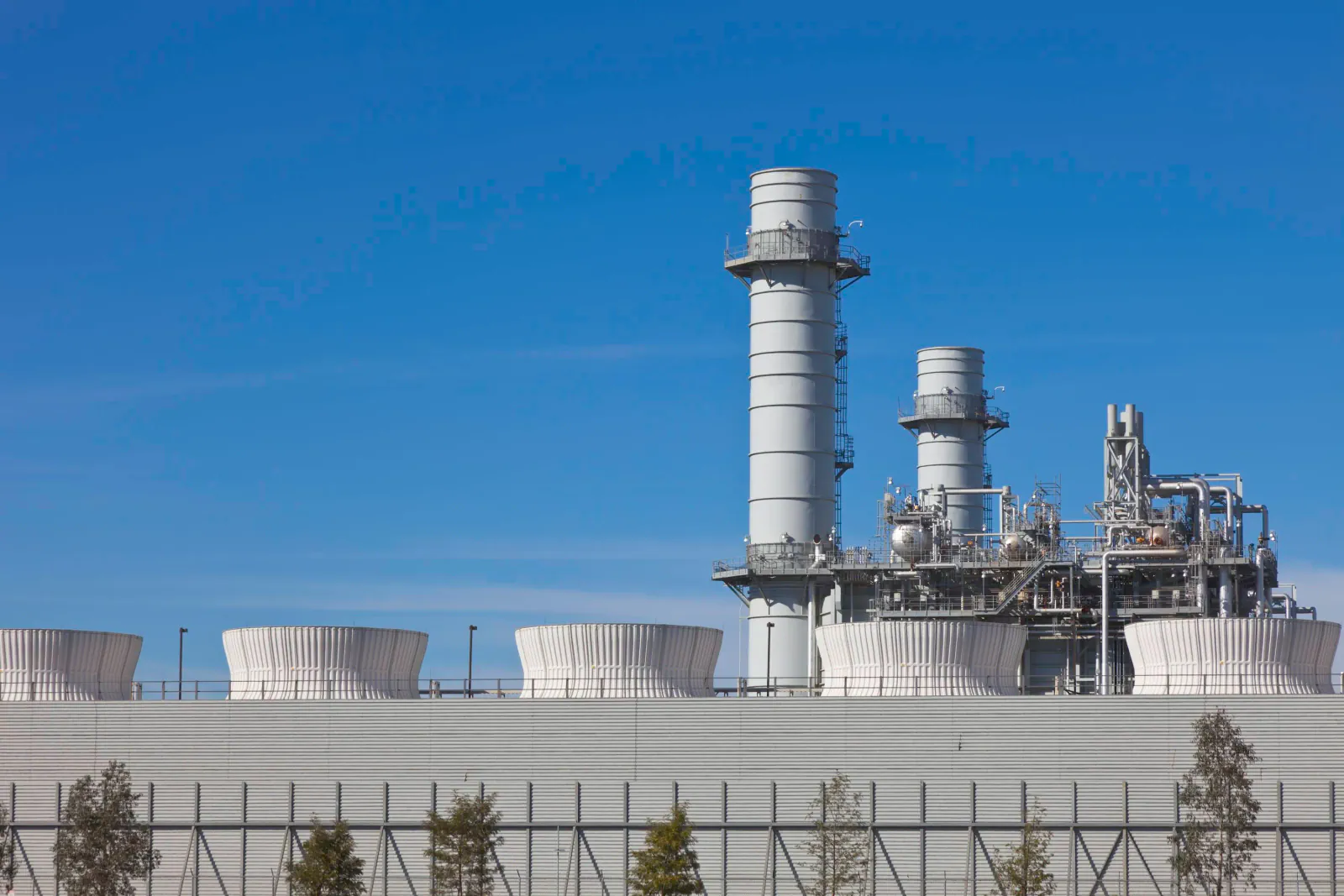
However, equipment availability and a working data center are different milestones.
A generator delivery still needs a suitable site, installation, electrical integration, fuel supply, commissioning and permission to operate. Availability within two years should not be read as a promise that the full 1.7GW will be powering AI workloads within that period.
The equipment terminology also deserves care. TechCrunch calls the purchase turbines, while DCD describes Caterpillar generator sets. The supplied reporting does not identify the exact models or configuration. That limits any comparison of efficiency, maintenance requirements or delivery schedules with other gas-generation projects.
On-site generation could reduce dependence on a delayed utility connection, depending on the eventual design. But it introduces another infrastructure dependency: a gas supply capable of supporting the intended operating schedule.
I would judge the project by its eventual ready-to-operate dates, not generator delivery dates alone. A secured manufacturing slot is meaningful progress; installed equipment without fuel, permits or a completed electrical system cannot run a data center.
A Selective Shift Beyond Renting Compute
Anthropic has historically preferred renting infrastructure, according to TechCrunch. Its report cites an S-1 disclosure that Anthropic is paying SpaceX subsidiary xAI $1.25 billion per month through May 2029 for computing services.
The generator transaction would add a different kind of commitment. A compute-services contract buys access to a functioning service. Securing generation equipment gives Anthropic more direct influence over one of the inputs needed to deliver that service.
This does not imply an end to cloud rentals. Equipment procurement can coexist with leased computing capacity and partner-operated facilities. The reported deal also does not reveal who will own or operate every associated data center.
The practical change is more selective: Anthropic appears willing to take a direct position in a scarce infrastructure component when relying on suppliers alone may leave its expansion schedule exposed.
TechCrunch reports that Google, Amazon, Microsoft and Meta have also announced plans for large on-site gas power developments. Anthropic would therefore be competing for energy infrastructure alongside the hyperscalers that supply much of the AI industry’s computing capacity.
That creates an awkward economic position. An AI lab can use cloud providers to avoid managing every physical asset, yet still find it necessary to commit capital further down the supply chain to protect access to future compute.
The Risks Move Beyond the Purchase Price
The reported $3.4 billion commitment addresses equipment access. Several other costs and execution risks remain unresolved.
Financing and Total Installed Cost
Frequently Asked Questions
3 questions
1Did Anthropic Buy OnePWR?
No. According to the FT reporting summarized by Reuters, Anthropic took over generator commitments and obtained installation-related capabilities. OnePWR itself and its employees were not acquired.


