Two of the biggest AI companies, OpenAI and Anthropic, released new models on the same day. Yes, GPT-6 Sol and Luna and Claude Opus 5.5 both arrived on September 22 with a ninety-minute difference.
Forget the AI slowdown drama for now. These companies are working hard to stay ahead of each other.
We know, especially the devs out there, how bad Fable 5.1 is when it comes to token and cost management. As an indie dev, it’s such an eyesore seeing my daily token allowance get depleted in merely minutes of assisted coding.
Opus 5.5 seems to address this problem.
Anthropic cut its price, increased subscription usage limits, and says the model generates text faster. I’ve only spent a little time with it, but my immediate reaction was that it feels crazy fast. I haven’t given it a proper coding test yet.
What Changed From Opus 5?
Anthropic designed Opus 5.5 for long coding tasks and knowledge work.
According to its model documentation, it has a one-million-token context window, accepts text and images, and can generate up to 128,000 output tokens in a standard request.
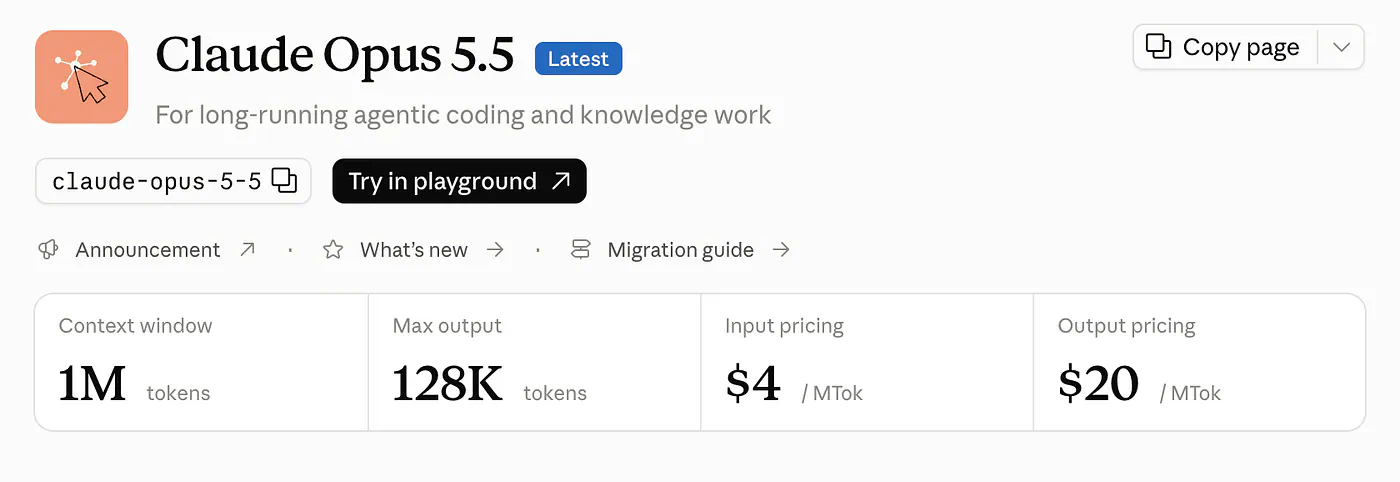
Opus 5.5 overview. Image from Anthropic
Anthropic says it’s better at working through large codebases and checking its own changes. It also worked on the way Opus writes. They also say 5.5 puts the answer up front, uses less jargon, and is easier to follow during a long session.
Not really sure if all these are true, as I haven’t tested them myself yet.
Another welcome upgrade is the “less talk” feature. If I ask a coding agent to fix a bug, I want to know which files it changed, what caused the bug, and whether the fix passed the tests. Opus 5 sometimes took too long to tell me those things.
Anthropic’s before-and-after example shows a more focused explanation from 5.5, but I want to see it stay that way after hours of work.
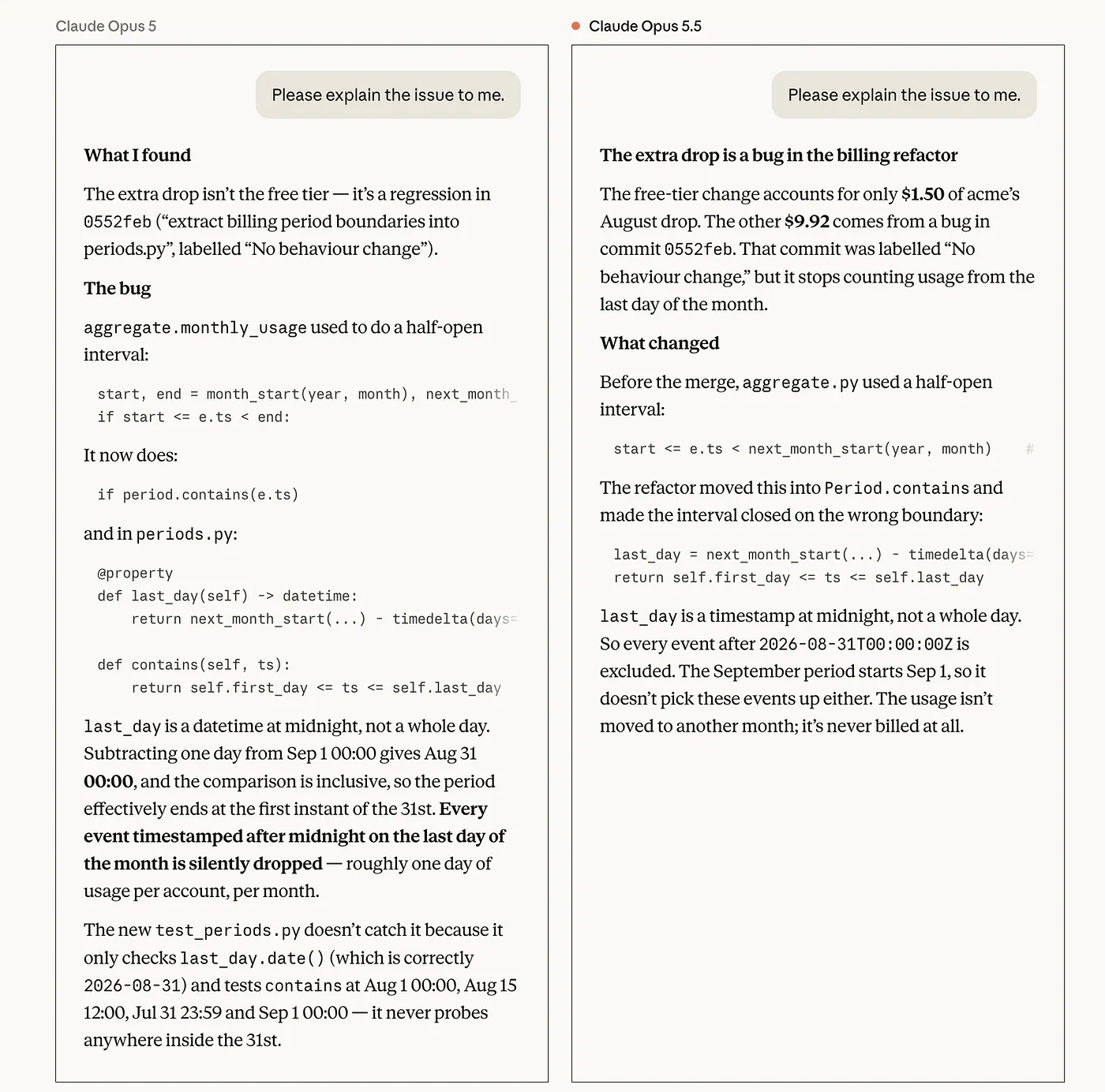
Opus 5.5 being more focused than Opus 5. Image from Anthropic
Opus 5.5 also uses adaptive thinking on every request.
You can choose how much effort it spends, but you can’t switch thinking off. Anyone moving an existing API app from Opus 5 should read the migration details first. Anthropic changed a few tool-use behaviors, so swapping the model name may require code changes.
For developers using the API, Opus 5.5 always uses adaptive thinking. You can set its effort level, but you can’t switch thinking off. Anthropic also lists tool-use changes that could affect an existing Opus 5 app, so check those before replacing the model name.
It Feels Crazy Fast
If you haven’t tried it yet, update your Claude app and see the model in the dropdown menu. I was using it in chat for the past couple of hours, and it was indeed faster than the older model.
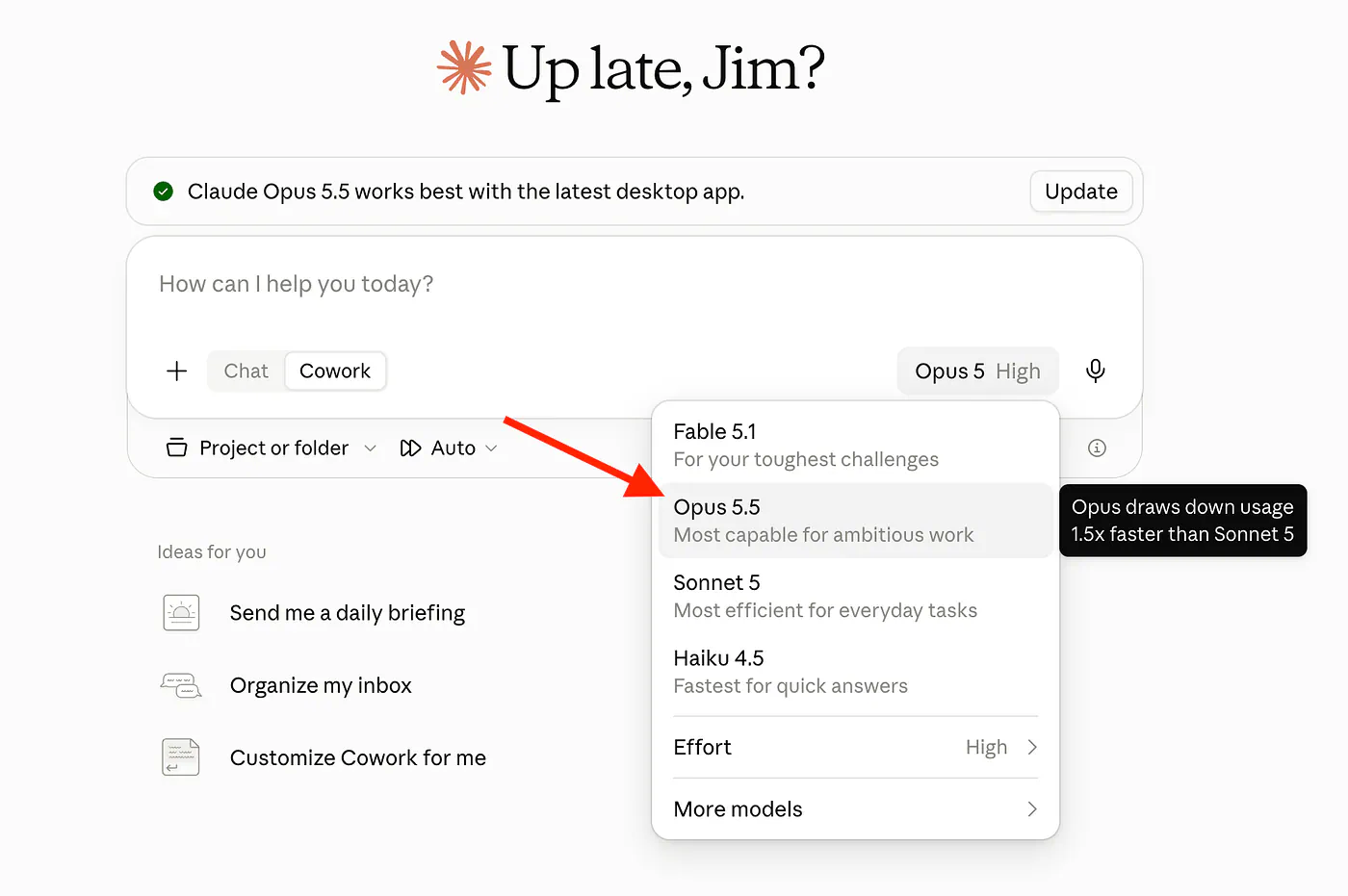
Accessing Opus 5.5 in Claude desktop. Image by Jim Clyde Monge
I haven’t timed Opus 5.5 against Opus 5 on the same project, so I won’t give you a made-up percentage from my own use. It just feels much quicker when I’m working with it.
Anthropic says Opus 5.5 generates output more than 30% faster than Opus 5. That measures output speed. A complete coding job also includes reading files, using tools, running tests, and fixing anything that failed.
Users on Reddit noted that Opus 5.5 was also “crazy fast,” particularly at finding UI bugs.
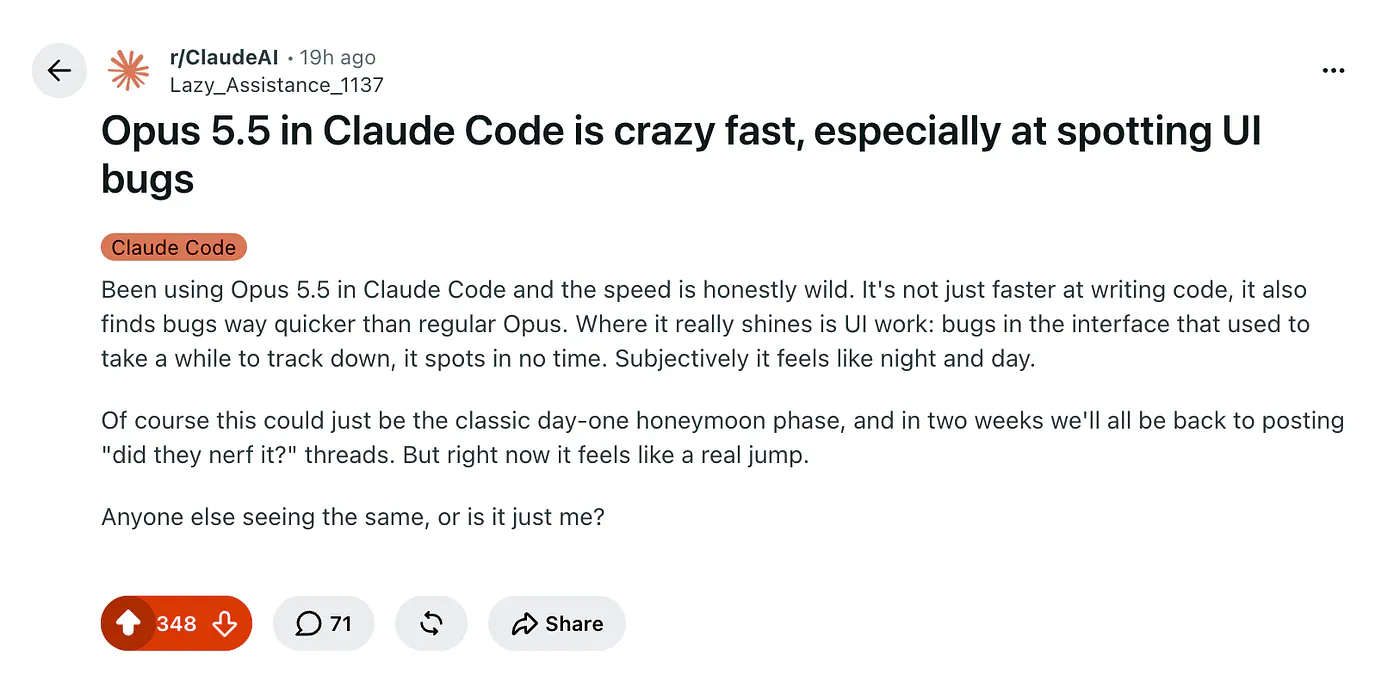
Opus 5.5 in spotting UI bugs. Image by Jim Clyde Monge
Another user asked it to rebuild a website, and it finished the job in four minutes with much better design. How cool is that?

Opus 5.5 Reddit reactions. Image by Jim Clyde Monge
There’s also an optional Fast mode, which Anthropic says can run at up to 2.5 times the standard speed. It costs twice as much per input and output token.
People have been doing all sorts of cool stuff with the model. Boris Chery, the creator and head of Claude Code, gave Opus 5.5 and Fable 5.1 a task to port HAProxy from C to Rust.
Both passed nearly all of HAProxy’s tests, but Opus 5.5 finished in 9.5 hours compared to Fable 5.1’s 12 hours, and for 51% less cost.
Others have used it to generate graphic animations, which, by the way, is blowing up right now on X.
It would be cool if there were an app, powered by Opus 5.5, to generate launch videos and explainer videos by just a prompt or a URL.
The benchmarks
Anthropic’s coding results show a huge improvement over Opus 5. On Terminal-Bench 4.0, a test of command-line tasks, it reports 66.4% for Opus 5.5 versus 52.3% for Opus 5.
Its comparison table shows GPT-6 Astra at 57.9%.
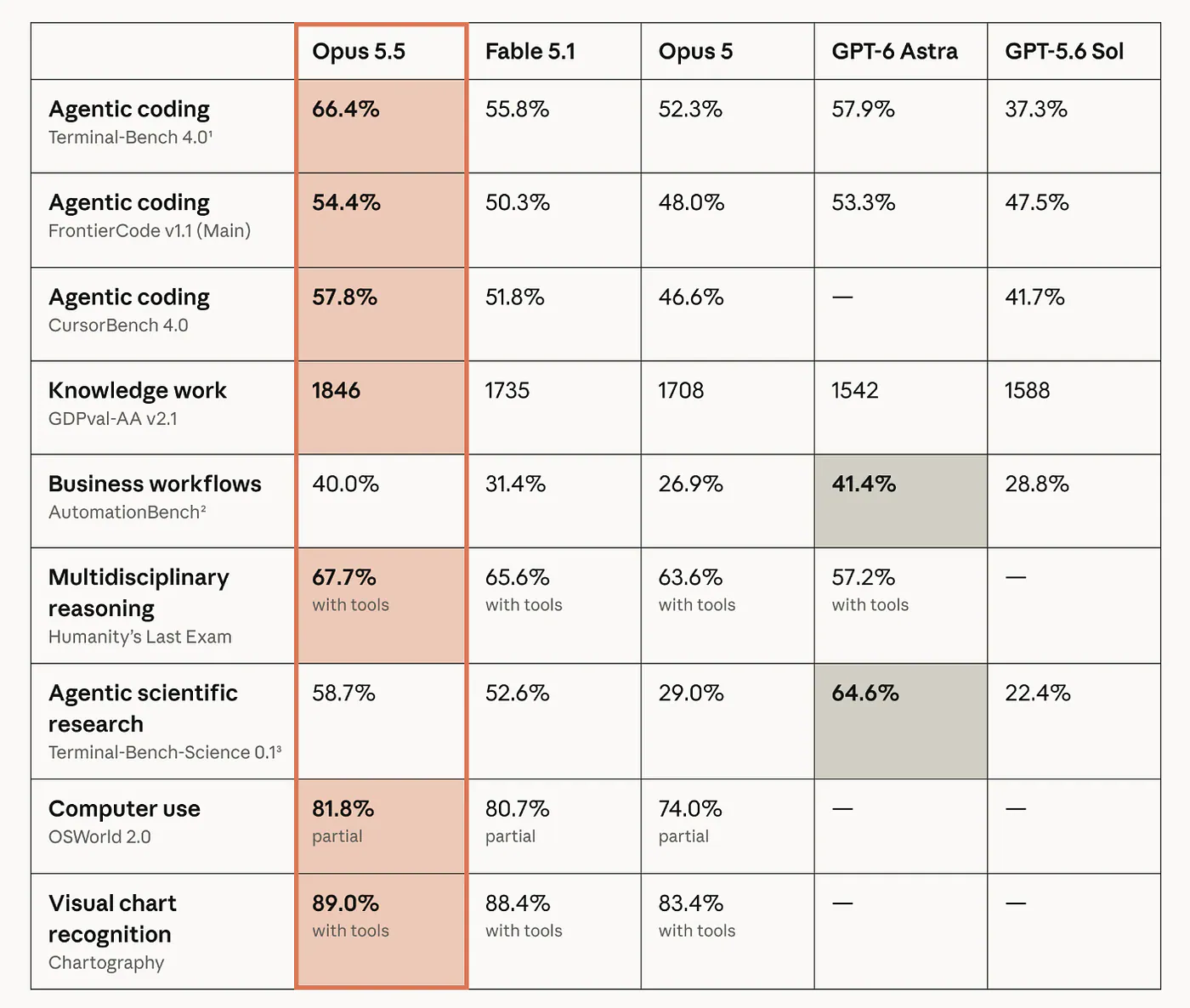
Opus 5.5 benchmarks. Image by Jim Clyde Monge
On FrontierCode, which checks whether code changes are ready to merge, Anthropic reports 54.4% for Opus 5.5, 48.0% for Opus 5, and 53.3% for Astra.
On Artificial Analysis, Opus 5.5 scored 58 on its Intelligence Index at maximum effort.
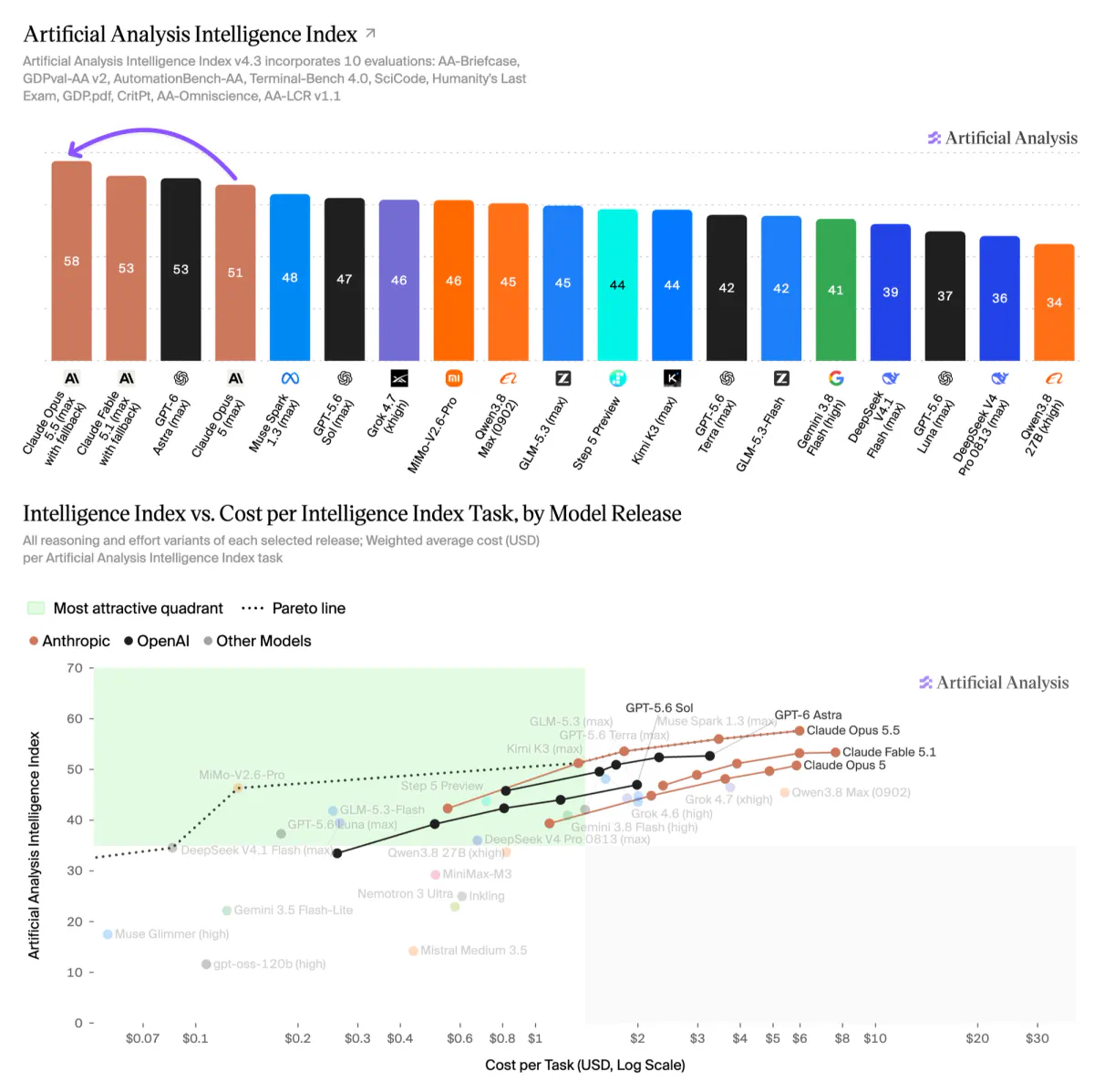
Opus 5.5 benchmarks on Artificial Analysis. Image by Jim Clyde Monge
Opus 5.5 did especially well on its knowledge-work tests, including tasks that require the model to research, analyze, and produce a finished deliverable.
In terms of cost, Artificial Analysis measured about 119,000 output tokens per task from Opus 5.5 at maximum effort, compared with about 73,000 from Opus 5.
In that test, the models cost roughly the same per task despite 5.5’s lower token prices.
Okay, cool. Fine. It’s faster, cheaper, and more capable. But perhaps one of the biggest complaints we have as users is this: Performance decline.
Haven’t you observed it?
Developer Lon Lundgren tried to measure what was happening with Fable 5, an earlier model. After Fable 5 became permanently available in subscription plans, he felt its performance drop.
He logged his Claude Code usage and compared the thinking tokens delivered in July and August while using xhigh or max effort.
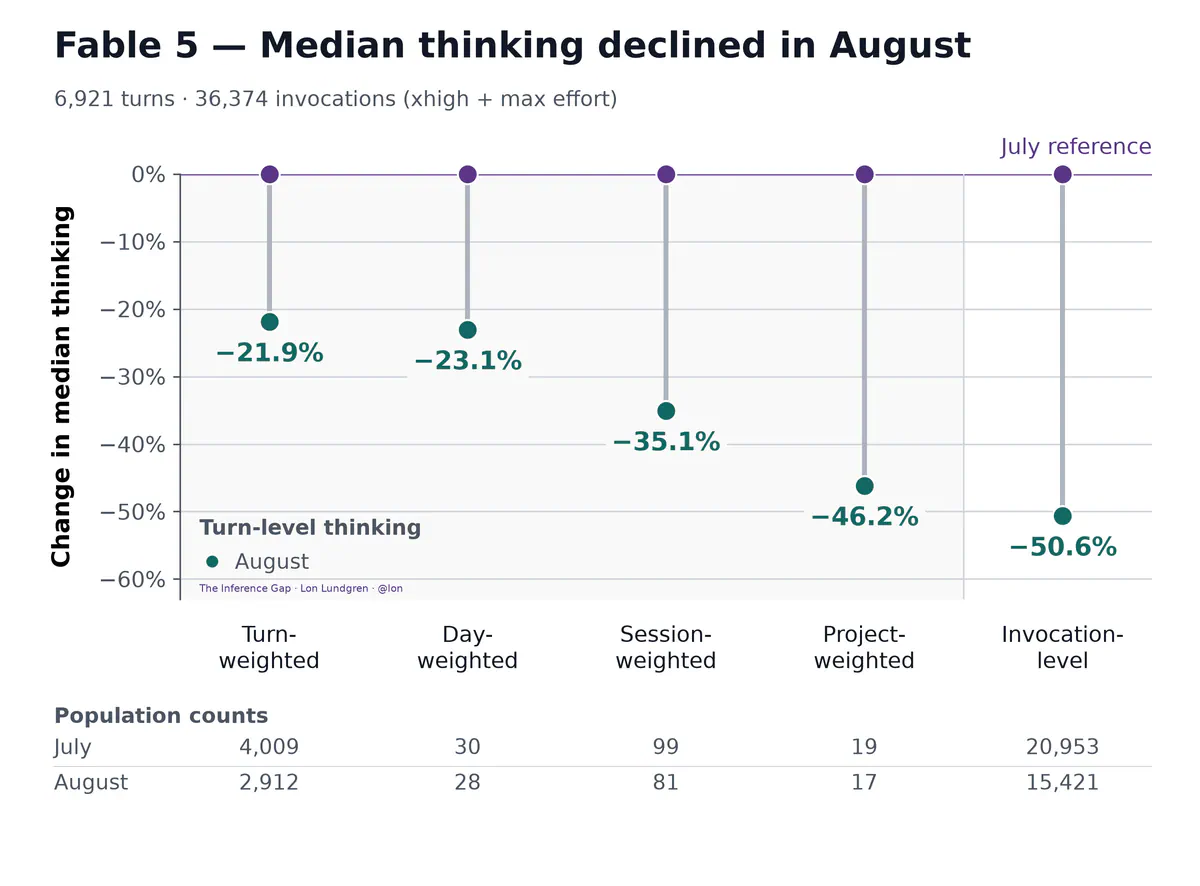
Claude models performance decline. Image by Lon Lundgren
In the chart above, median thinking fell across all five ways he grouped the data. It was down 21.9% when weighted by turn, 46.2% when weighted by project, and 50.6% at the individual invocation level. His July and August comparison covered 6,921 turns and 36,374 invocations.
According to Lon, this wasn’t a one-time drop.
Reasoning fell over the entire period and fluctuated across multi-day episodes.
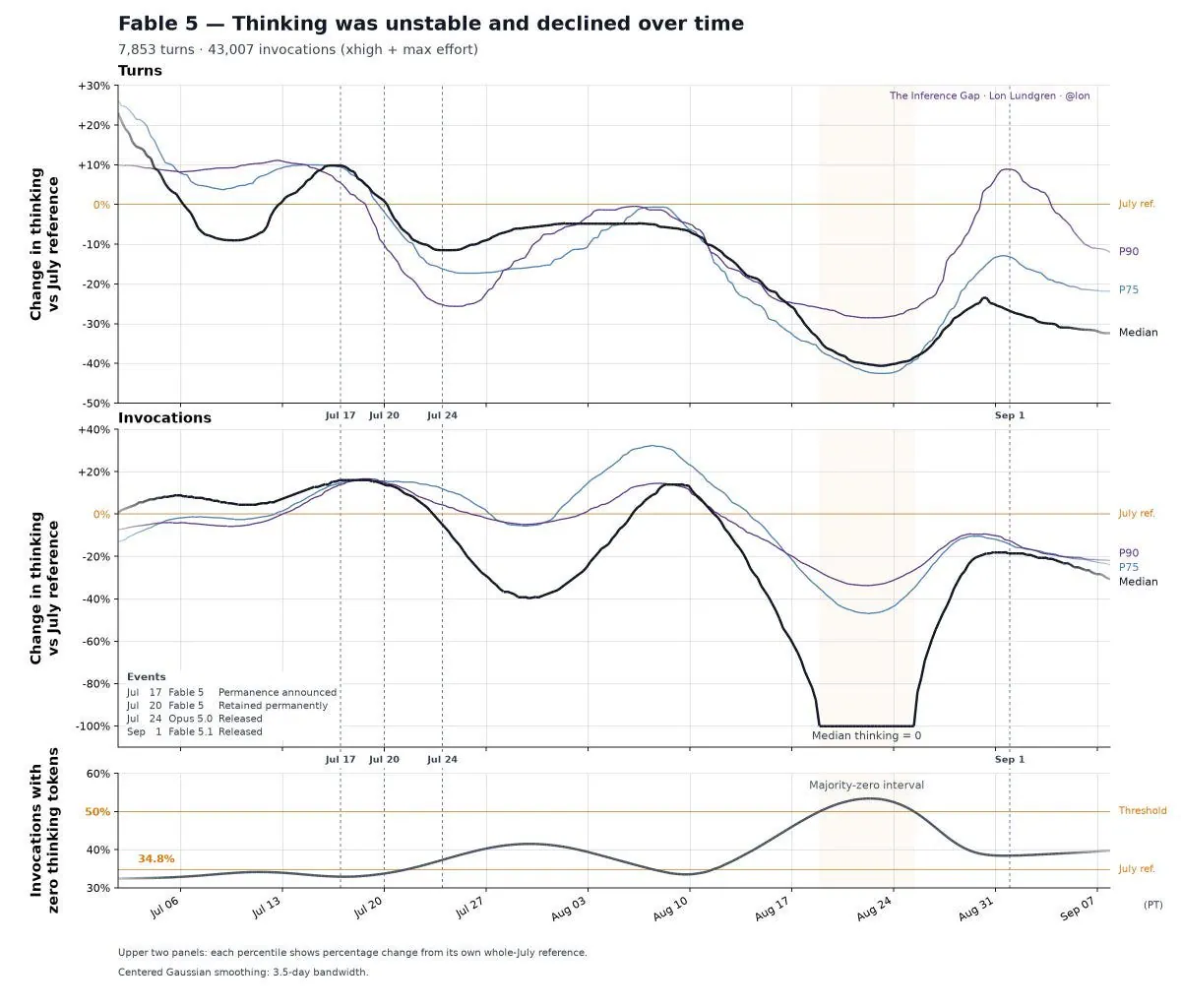
Claude models performance decline. Image by Lon Lundgren
Some of these fluctuations aligned with specific product announcements and releases. He started to see how the model could feel great one day, and terrible the next.
If I pay for a Claude subscription because a model handles difficult work well, I expect Anthropic to be straight with me if that experience changes. If it needs to ration compute as demand grows or make room for a new release, say so.
Quietly giving customers less of the capability they signed up for would be a rug pull, whatever technical name Anthropic gives it.
Let’s talk about the Pricing and Usage
This is just as important as the intelligence of the model.
Opus 5.5 costs $4 per million input tokens and $20 per million output tokens on the Claude API. Opus 5 costs $5 and $25. Cached input reads have dropped from $0.50 to $0.20 per million tokens.

Claude Opus 5.5 pricing and context comparison with other models. Image from Anthropic
That cache discount affects coding agents because they often refer to the same instructions and project files across many steps.
Fast mode costs $8 per million input tokens and $40 per million output tokens.
Anthropic says Opus 5.5 costs about 40% less than Opus 5 on typical workloads at default settings.
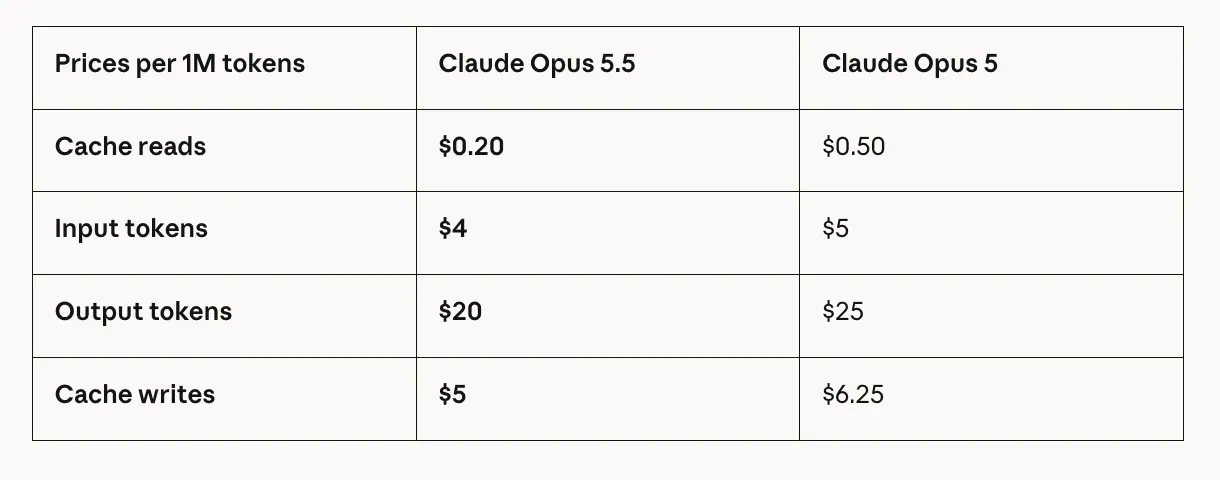
Claude Opus 5.5 pricing and context comparison with Opus 5. Image from Anthropic
Your savings will depend on the task, the effort setting, and how many tokens the model uses to finish it.
Learn more about the pricing details here:
Opus 5 5Anthropic is also raising five-hour usage limits for Pro, Max, Team, and some Enterprise subscriptions. Well, thank goodness because my previous 5-hour limit usually gets exhausted in as fast as 15 minutes!
Final Thoughts
I’m excited to test Opus 5.5 against GPT-6 Astra and the other new models. It feels fast in the Claude app, but I have yet to see its performance in coding. The early feedback is mostly good, and its benchmark results are impressive.
I’m also a bit wary, especially knowing how Anthropic is notorious for nerfing the models as demand grows or as it prepares another release. AI labs have this habit of tweaking and refining models post release.
If I’m paying for a model and relying on it to write code, I want to know when the service behind that model changes in a way I can feel. I’d rather Anthropic tell users what changed than leave everyone wondering whether their prompts, their projects, or the model itself are to blame.
Have you tried Opus 5.5? More importantly, have you noticed a Claude model’s performance change weeks after release?
Sources
- GPT-6 Sol and Lunaopenai.com
- Claude Opus 5.5anthropic.com
- AI slowdowngenerativeai.pub
- Opus 5.5anthropic.com
- model documentationplatform.claude.com
- Jim Clyde Mongemedium.com
- https://x.com/bcherny/status/2102439069053747549x.com
- https://x.com/kevin_t_ngo/status/2102437977435893771x.com
- Artificial Analysisartificialanalysis.ai
- Lon Lundgrenx.com
- https://platform.claude.com/docs/en/models/opus-5-5platform.claude.com