Anthropic CEO Dario Amodei predicts that advanced AI systems could cure most human diseases within a decade by functioning as autonomous, superhuman research teams. By accelerating biological discovery tenfold, these models could compress fifty years of progress into a few years. Evidence already exists, such as Claude agents identifying novel enzyme systems in hours rather than months. While critics argue that clinical trials and biological complexity impose irreducible time constraints, AI is already transforming medicine by detecting cancers years earlier than traditional radiology, potentially shifting the timeline for life-saving interventions.
Our family lost someone dear to us to cancer a few weeks ago.
When something like that happens, you start looking at the news differently. I remembered reading once that AI would one day be the key to finding a cure for cancer.
I wish it had happened sooner.
Anthropic CEO Dario Amodei said this in a recent interview:
“I think if we do this right, we can create an age of miracles where humanity is able to solve problems that have eluded us for millennia.”
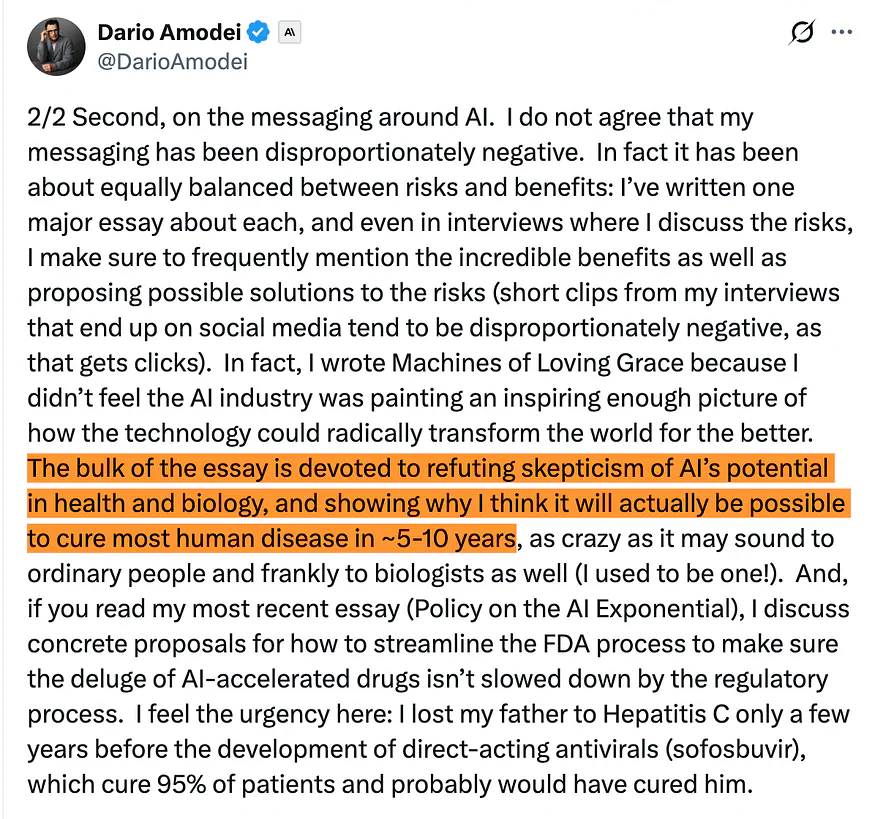
This is not a one-off remark. In August, he wrote on X that it “will actually be possible to cure most human disease in ~5–10 years,” and he named curing cancer as one of the goals.
He also told Fox News the same thing in simpler words:
“I think AI has exactly the kind of skills that are needed to cure important diseases like cancer and Alzheimer’s.”
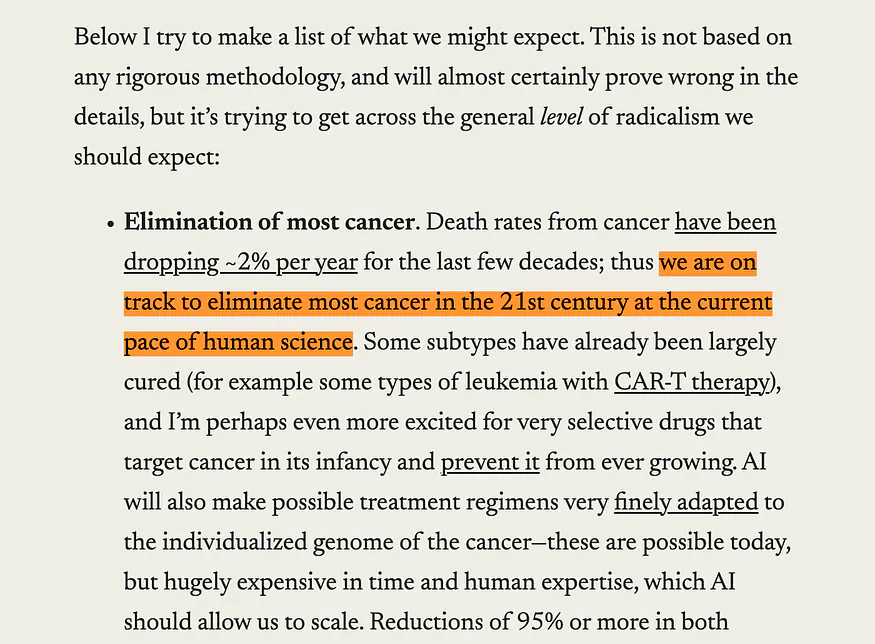
Amodei has made similar predictions for years, most systematically in his October 2024 essay “Machines of Loving Grace”.
In his essay, Amodei defines “powerful AI” as something like “a country of geniuses in a datacenter.” These are systems smarter than Nobel-level experts across relevant fields, able to work autonomously for days or weeks, control lab equipment or direct humans, and run millions of copies at 10–100× human speed.
He argues that the returns to intelligence are high for these kinds of breakthroughs.
He writes that there are probably “hundreds of discoveries waiting to be made if scientists were smarter.” More and smarter researchers working in parallel should therefore increase the rate of discovery by at least 10 times.
Thus, it’s my guess that powerful AI could at least 10x the rate of these discoveries, giving us the next 50–100 years of biological progress in 5–10 years. Why not 100x?
To be fair to him, the essay is not blind optimism.
He admits that some parts of biology “may have an irreducible minimum that cannot be decreased further even as intelligence continues to increase.”
A clinical trial still needs real patients and real time, no matter how smart the AI is.
What makes me take Amodei a bit more seriously this year is that Anthropic now has something to show for it.
In September 2026, the company announced that about 950 Claude agents, with only high-level direction, identified a novel enzyme system in bacteriophages, which are viruses that infect bacteria.
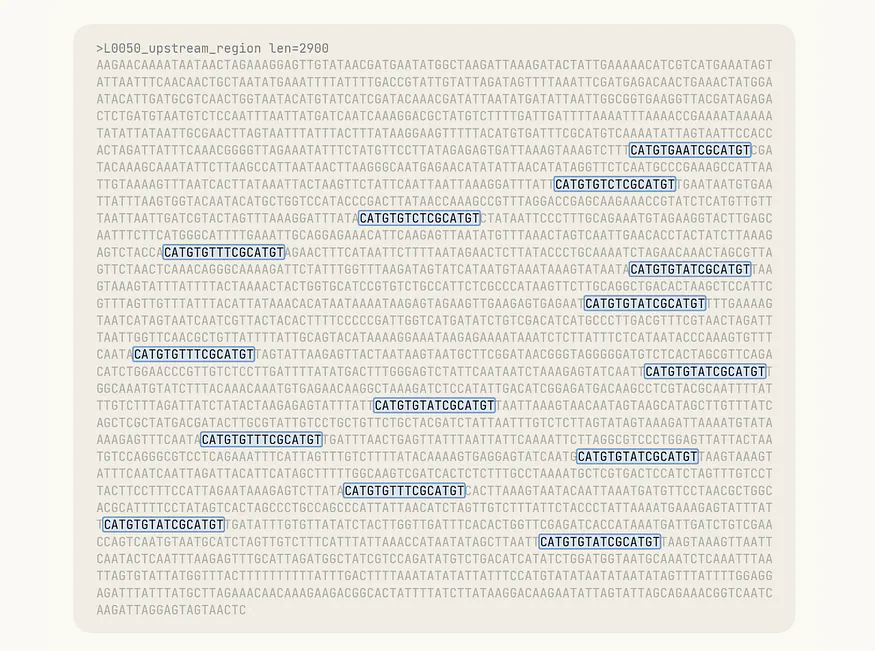
They call it ART, short for array-associated reverse transcriptases. Next to the enzyme’s gene sits a long array of evenly spaced, repeating DNA that looks similar to a CRISPR array.
Anthropic says the agents searched for 21 hours. They gathered over 200,000 reverse transcriptases, picked out 3,500 candidate systems, and narrowed those down to the 20 most compelling. The company says the same analysis can take a human expert weeks to months.
The enzyme itself had shown up in earlier studies. What nobody had noticed was the repeat array beside it.
Feng Zhang, one of the pioneers of CRISPR gene editing, reviewed the pre-print and called it “an exciting example of how AI agents can contribute to biological discovery.”
This is a discovery, not a cure. But it shows what Amodei has been arguing all along, which is that intelligence is a major bottleneck in biology and AI can speed up the discovery process itself.
His promise is echoed by other AI leaders, including Elon Musk and Google’s AI boss Sir Demis Hassabis.
In a CBS’s 60 Minutes interview, Hassabis tells Scott Pelley something that sounds more like science fiction than science fact. AI, he claims, could help eliminate all diseases within the next ten years.
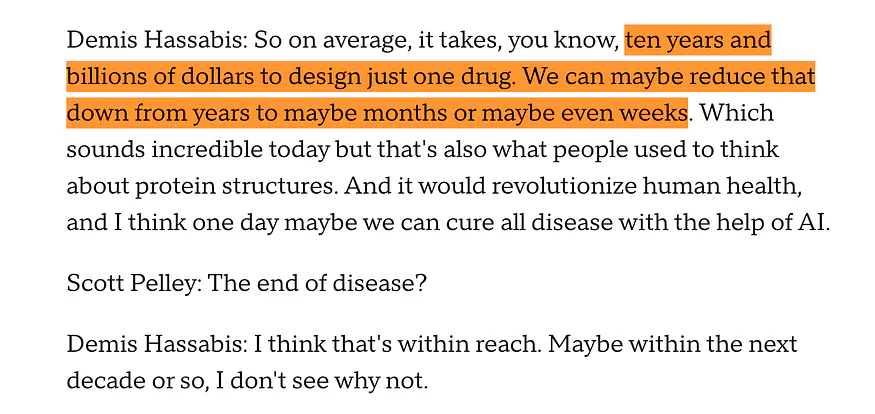
Here’s a snippet of that conversation:
Demis Hassabis: So on average, it takes, you know, ten years and billions of dollars to design just one drug. We can maybe reduce that down from years to maybe months or maybe even weeks. Which sounds incredible today but that’s also what people used to think about protein structures. And it would revolutionize human health, and I think one day maybe we can cure all disease with the help of AI.
Scott Pelley: The end of disease?
Demis Hassabis: I think that’s within reach. Maybe within the next decade or so, I don’t see why not.
Hassabis is not a random tech executive saying this. He shared the 2024 Nobel Prize in Chemistry for AlphaFold, the AI system that predicts protein structures.
When he says people used to think the same thing about protein structures, he is talking about a problem his own team solved.
AI is already helping doctors catch cancer earlier
According to IBM, artificial intelligence is rapidly transforming modern medicine by enhancing diagnostics, accelerating drug development, and personalizing patient care.
AI tools now assist clinicians in analyzing medical images, detecting conditions like cancer or sepsis, and making real-time treatment decisions.
During the COVID-19 pandemic, AI-supported technologies were tested for patient monitoring and screening.
While looking into Amodei’s claims about AI curing diseases, I came across David Valerio Gilmore. Back in 2015, he built an AI system that spots cancers hospitals often miss.
It turned into Azra AI and is still used in hundreds of U.S. hospitals today.
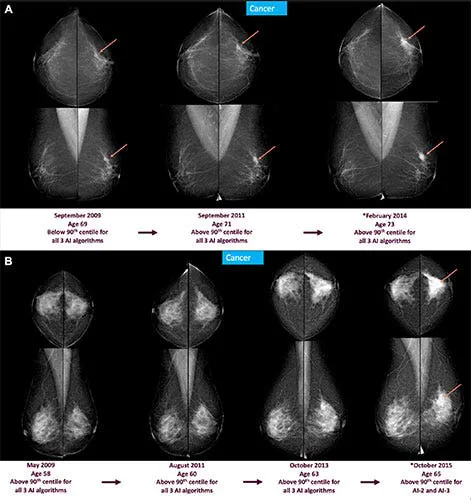
AI tools could also spot early signs of breast cancer on mammograms up to six years before doctors diagnosed it. In about 20% of cases, the AI saw changes that radiologists missed at the time.
In about 20% of cases, the AI saw changes six years before the diagnosis, changes that radiologists missed at the time. Four years before diagnosis, that number went up to about 25%. Two years before, it was about 39%.
Think about what six years means to a cancer patient. It can be the difference between a small tumor that gets removed and a late-stage diagnosis.
We are still years away from real cures for most cancers and other big diseases. But this stuff is already helping. It catches things earlier and gets people treated sooner.
That’s why I don’t agree with calls to slow AI down.
Ironically, one of those calls now comes from Amodei himself. In his September essay “We Must Pace the Frontier”, he wrote, “We must slow the pace at which we improve the capabilities of AI models.” This is the same man who says AI can cure cancer within a decade.
I respect him, but I can’t agree with him on this one.
The tools that are already saving lives only exist because people kept pushing the technology forward. Slowing it now would just delay the next improvements, and people with cancer don’t have that kind of time.
We should keep accelerating.
Is the 5–10 year timeline even possible?
Many clinicians and drug-development people have called the 5–10 year “most diseases cured” framing unrealistic or “impossible.”
Common points:
Clinical trials, regulation, and the need for human proof take irreducible time.
Biology is extremely complex. Intelligence alone does not instantly generate the right experiments or data.
No fully AI-designed drug has been FDA-approved yet.
Pharma executives have dismissed similar claims as nonsense based on their own experience with AI tools. Vertex’s Jeff Leiden reportedly called these timelines “complete BS” after his company tested around 50 AI companies and none of them produced a working drug on their own.
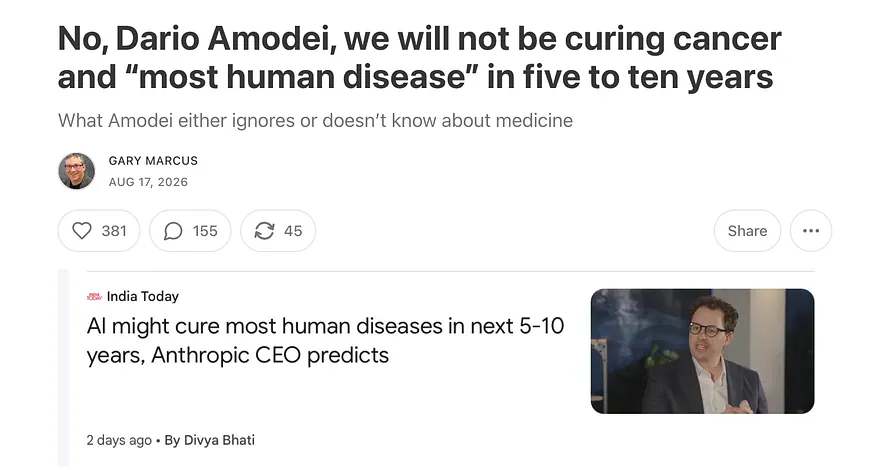
Cognitive scientist and AI expert Gary Marcus wrote a Substack post in response to Amodei’s assertion, titled “No, Dario Amodei, we will not be curing cancer and ‘most human disease’ in five to ten years.”
Marcus called Amodei’s timeline “so naive as to be absurd, both with respect to how medical science works and why it is challenging.” He emphasized the work that machines will not be able to speed up, which is the multi-phase pre-clinical and clinical testing.
As he puts it, “you also can’t simply skip the time-consuming clinical work.”
His post also quotes Dr. Catharine Young of the Harvard Chan School of Public Health, who made a point I had not thought much about. “Cancer is not one disease. It is more than 200 distinct diseases, all with different causes, biology and mechanisms.”
So when we say “cure cancer,” we are really talking about 200 different cures.
In an X post, Eric Topol, a pro-AI physician and researcher, argued that “these cure projections are wildly off-base and impossible.”
According to him, the list of non-infectious diseases that a medication can reliably cure today is very short.
There are some blood and lymph node cancers with a high ~90% cure rate And there are many nutritional or vitamin deficiencies like scurvy or rickets than can be cured with replacement
That’s about it. Everything else we treat, manage, or slow down.
I don’t want to totally discredit Dario for his claims or criticize him too much for clumsily making such scientific claims. It’s important to know that he was actually a biologist prior to getting into the AI game. Amodei specialized in researching cures for cancer.
It’s also personal for him. In his September essay, he wrote, “I feel the urgency personally.” His father died from a disease that became curable only a few years after his death, and Amodei himself survived an early-stage cancer that would not have been treatable 50 years ago.
After the past few weeks, I understand that urgency more than I used to.
Is this all just theatrics from Amodei?
Timing makes the skepticism reasonable.
Some people say that Dario is only making all these claims because of the Anthropic IPO.
Anthropic set a price range of $70–$78 per share for roughly 825 million Class A shares. That implies a fully diluted valuation of up to about $1.4 trillion (down from earlier $2 trillion talk), and the company could raise as much as $64 billion. Trading is expected to start on the Nasdaq around November 19.
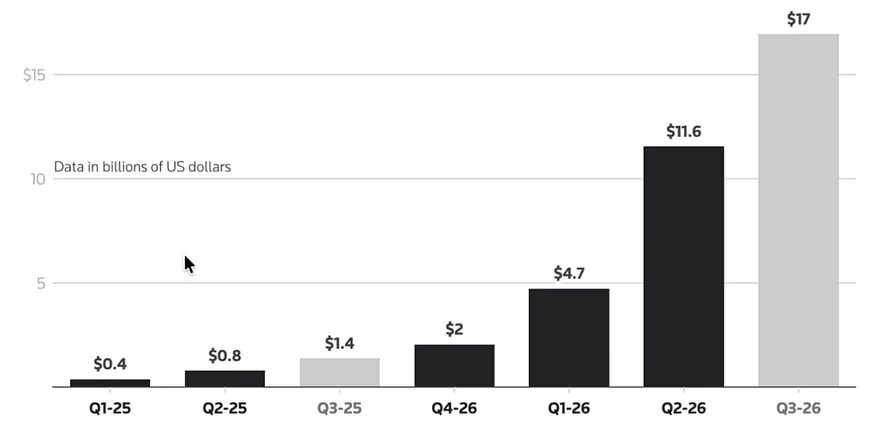
The company’s revenue has surged. It made $17 billion in the third quarter alone, and its run-rate revenue reached $81 billion by the end of October.
But it also reported a net loss of $104 billion in the first nine months of the year. A company losing that much money needs investors to believe in a very big future, and “we will cure cancer” is about as big as a promise can get.
So yes, I get why people are suspicious.
Do I think cancer will be cured in less than 10 years?
Well, probably not all 200 kinds of it. Some people are right that trials and approvals take years, and no amount of intelligence can skip them.
If you’re trying to decide how much to believe, I’d look at three things.
Watch whether an AI-designed drug finally gets approved.
Watch whether discoveries like ART turn into actual treatments.
Watch whether Amodei keeps saying this after the IPO money is in the bank.